
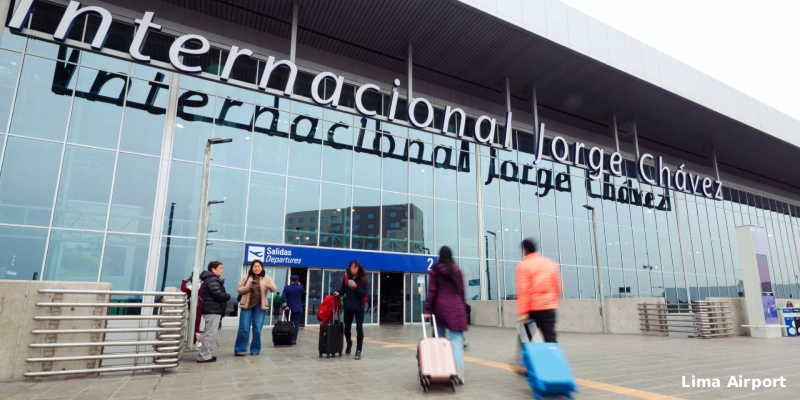
The Latin American and Caribbean Air Transport Association (ALTA) expressed concern over the lack of willingness from the involved parties to move towards balanced solutions regarding the implementation of the Transfer Airport Usage Fee (TUUA) at Jorge Chávez International Airport. According to the organization, despite the existence of technical studies and concrete proposals presented by the industry, no measures have been adopted to safeguard the country’s air connectivity or the sustainability of its primary hub for international connections.
A Decision That Weakens Regional Competitiveness
In recent years, various governments have recognized air connectivity as a key driver for economic development, tourism, and regional integration. However, according to ALTA, decisions such as the application of the Transfer TUUA move in the opposite direction, weakening Peru’s competitiveness compared to other regional connection hubs.
This scenario is particularly sensitive for Lima, which has been consolidating its position as a strategic point within regional air traffic, thanks to its role as a connecting airport between international destinations.
Technical Studies Presented by the Industry
ALTA, together with the International Air Transport Association (IATA), promptly presented technical studies that demonstrated the feasibility of more balanced alternatives. These proposals, according to the association, would benefit the airport operator without affecting air connectivity or connecting traffic.
The relevance of these analyses is heightened in a context where Jorge Chávez International Airport has shown sustained growth over the past year, reinforcing its role within the regional air network.
→ LEVEL Announces New Direct Route Between Barcelona and Lima Starting June 2026
Route Cancellations and Loss of Connectivity
The effects of the measure have already begun to materialize. Peru-based airlines have been forced to cancel new routes and established services as a direct consequence of the Transfer TUUA. To date, eight cancellations of international routes have been announced, representing a concrete loss of connectivity for the country.
Each discontinued service reduces the options available for passengers, weakens connecting traffic, and affects the sustainability of international operations that use Lima as a connecting point.
Role of Connecting Traffic in Airport Growth
The concern increases when considering the historical role that connecting traffic has played in the airport’s development. Between 2009 and 2019, transfer passengers grew at an average annual rate of nearly 10%, contributing to positioning Lima as a relevant regional connection hub.
Technical estimates from the sector warn that the Transfer TUUA could break this growth trajectory. Starting from a base of close to 9.2 million international passengers in 2025, the reduced dynamism implies that by 2041, Lima could see 21.7 million fewer international passengers compared to a scenario without the TUUA.
Impact on Tourism, Employment, and the Economy
Historically, the growth of international tourism by air has evolved in line with the airport’s international traffic. Between 2009 and 2019, international tourists entering Peru by air increased from 1.3 to 2.64 million, with an annual rate close to 7.4%.
As a result of the slowdown in connecting traffic, by 2041 the country could fail to receive around 5.3 million international tourists by air. This scenario would imply that approximately USD 6.3 billion in tourism-related Gross Domestic Product and nearly 369,000 jobs would not be generated that year. In cumulative terms between 2025 and 2041, the impact from reduced tourism activity would represent around USD 40 billion in lost revenue.
Call to Review the Measure
ALTA warns that this decision is directly affecting the country’s air connectivity, with clear consequences for tourism, employment, and Peru’s economic growth. The association reiterates the need to immediately review the implementation of the Transfer TUUA and maintains its willingness to provide technical evidence to move towards balanced solutions, aimed at protecting passengers and safeguarding the connectivity that the country and the region require.
Related Topics

Romanian Carrier Dan Air Files for Insolvency Protection Amid Mounting Debt

Etihad Airways Launches Nonstop Flights Between Abu Dhabi and Luxembourg

Norwegian Expands Spanish Network With Three New Direct Routes to Oslo and Copenhagen for Summer 2027

ITA Airways Opens Ticket Sales for New Rome–Caracas Route


Plataforma Informativa de Aviación Comercial con 13 años de trayectoria.