Avianca Breaks the Historical Correlation Between Growth and Emissions in Commercial Aviation
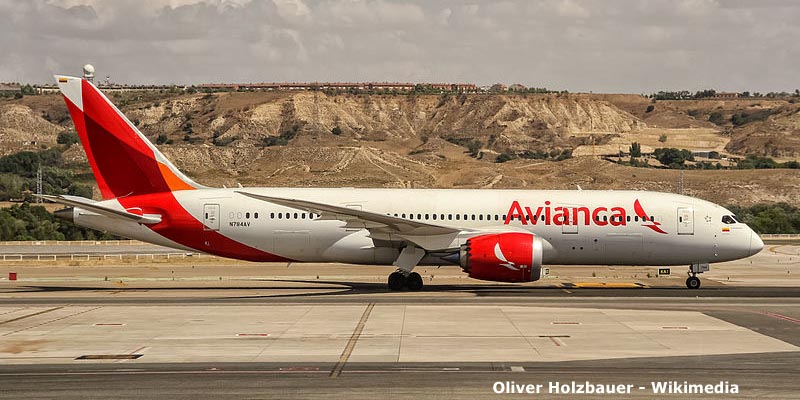




In an industry where greater capacity usually means higher emissions, Avianca is demonstrating that this relationship is not inevitable. Between 2019 and 2024, the Colombian airline achieved something rare on a global scale: significant growth while reducing its total carbon footprint. The available data reveals a case worthy of attention from both corporate management and technical fleet and operational analysis.
Sustained Growth with a Smaller Environmental Footprint
According to data from EmeraldSky, Avianca increased its total capacity measured in Available Seat Kilometers (ASK) by 18.1% over the past five years. Simultaneously, its total carbon emissions fell by 5.1%.
In commercial aviation, this decoupling of growth and emissions remains the exception, not the norm. Most airlines still treat it as a long-term objective, dependent on sustainable aviation fuels or technologies not yet available at scale. Avianca, on the other hand, achieved it with operational and fleet decisions already implemented.
The key question is not whether the result is relevant, but how it was built.
A Fleet Transformed from the Ground Up
Retirement of Less Efficient Aircraft
The starting point was a deep reconfiguration of the fleet. Avianca retired nearly two-thirds of its Airbus A319s, eliminated its first-generation Airbus A321s entirely, and phased out its oldest A330s on long-haul routes. It also completely ceased operations with regional jets and turboprops, simplifying its operational portfolio.
These decisions reduced complexity and removed aircraft with poorer fuel consumption per seat performance, even when their average age was not necessarily extreme.
→ Avianca Expands Its Premium Flight Experience on Domestic Routes
More A320neo and More Boeing 787
In their place, the airline incorporated a significantly greater number of Airbus A320neo aircraft, along with additional A320ceos, and expanded its fleet of Boeing 787s for long-range operations.
The result was not just a more homogeneous fleet but a structural improvement in energy efficiency, particularly relevant in high-density markets in Latin America.
More Seats, Better Fuel Use
One of the most significant changes was the increase in the average size of the aircraft. In 2019, the typical Avianca aircraft offered 144 seats. Today, that number reaches 181 seats. This was achieved by reconfiguring the entire fleet, both narrow-body and wide-body aircraft.
Although the average fleet age rose slightly to 9.5 years, reflecting global pressures in the aviation supply chain, the net effect was positive: more capacity per flight and lower consumption per seat transported.
Operating More, Flying Better
By 2024, Avianca had already recovered the level of air operations from 2019, but with a key difference: it now generates more capacity with larger aircraft and slightly longer average routes.
The exit from turboprop operations meant that total flight time did not grow significantly, even as the average distance of segments increased. This operational balance was crucial in preventing the increase in ASK from translating into a proportional increase in fuel consumption.
Metric that Makes the Difference: Carbon Intensity
The combined impact of all these decisions is reflected in a critical industry indicator:
- 2019: 82.6 grams of carbon per Available Seat Kilometer
- 2024: 66.3 grams per Available Seat Kilometer
This represents a reduction of nearly 20% in carbon intensity, a result very few airlines have achieved on this scale, especially without relying on disruptive technological changes.
The Avianca case shows that operational sustainability does not depend exclusively on future promises. It requires discipline in fleet planning, difficult decisions to retire still-functional aircraft, and a consistent commitment to efficiency over growth for its own sake.
Related Topics

EasyJet Expands UK Winter Network with Three New Routes and Resumed Flights to Kosovo
Lufthansa Group Hangar One Opens Its Doors on August 1

European Union to Tighten Airline Ownership Rules: A Blow to Bids for easyJet

Ryanair Reports 34% Drop in Quarterly Profits Driven by Surge in Fuel Costs Amid War in Iran

Plataforma Informativa de Aviación Comercial con 13 años de trayectoria.