
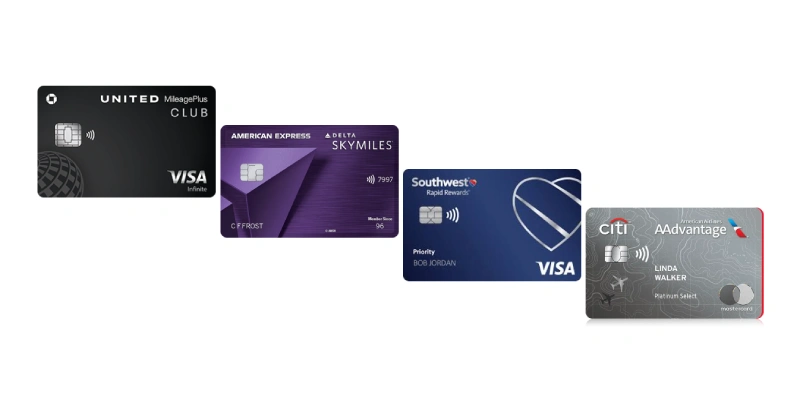
The loyalty programs of U.S. airlines—one of the industry’s most stable and profitable revenue streams—could face a structural risk if President Donald Trump’s proposal to cap credit card interest rates at 10% moves forward.
Consultants, bankers, and industry executives issued this warning during the Airline Economics conference held this week in Dublin. While the initiative currently lacks a clear regulatory framework or defined legislative support, it has triggered alarms across an ecosystem where airlines increasingly rely on selling miles to card-issuing banks to sustain profitability.
Loyalty Programs: Financial Engine of Modern Aviation
Over the last decade, frequent flyer programs have evolved from mere marketing tools into genuine cash-generating machines. The business model is well-established: banks purchase miles from airlines to distribute to their cardholders; as customers spend more, more miles are issued, and capital flows steadily to the airlines.
According to Pooja Gardemal, Director at BK Associates, this scheme depends directly on the profitability of the credit card business. A 10% cap on interest rates would eliminate a substantial portion of bank margins and drastically alter the value they are willing to pay for each mile.
“If a 10% limit is set, a huge portion of the profit disappears, and the value per mile changes radically,” Gardemal noted before the attendees in Dublin.
Economic Sensitivity Amidst Political Uncertainty
Trump has proposed implementing the cap for a one-year period, though he has not detailed how it would be enforced or which regulatory mechanisms would be utilized. The measure would require Congressional action. Despite mentions of a potential start date of January 20, no effective changes occurred on that day.
The banking sector has reacted sharply. JPMorgan Chase CEO Jamie Dimon characterized the idea as a potential “economic disaster,” warning that it could severely restrict credit access for broad consumer segments.
Potential Impact on Giants Like Delta and United
The figures at stake are massive. Delta Air Lines received $8.2 billion from American Express in 2025 and aims to reach $10 billion annually through its co-branded card program. Its CEO, Ed Bastian, acknowledged it is premature to evaluate a proposal that may not materialize, but the revenue volume underscores exactly what is at risk.
At United Airlines, Chief Commercial Officer Andrew Nocella confirmed the company maintains constant dialogue with JPMorgan, its primary financial partner. While United would also be affected, Nocella believes their exposure might be lower than that of competitors, as their customers typically hold higher credit scores and lower delinquency rates.
Airlines as “Lifestyle Brands” in Jeopardy
A report by leasing firm Avolon, published ahead of the aviation finance summit, highlights that U.S. airlines have transformed into “lifestyle brands”. These carriers use loyalty and credit card revenue to offset structurally loss-making areas of the traditional airline business.
Anne Correa, Senior Vice President of Modeling at MBA Aviation, warned that an interest rate cap would modify consumer behavior and redefine the economic value of loyalty programs, based on discussions held with banking entities.
Limited Impact for High-Income Earners?
Not everyone in the industry shares the same level of concern. Some executives pointed out that high-net-worth customers—who concentrate a significant portion of spending and loyalty program value—would not be affected.
“Only people with resources will be able to qualify for cards with a 10% rate,” stated Michael Miller, Managing Director at Barclays, who also considered it unlikely that the proposal would be sustained over time.
For now, Trump’s initiative remains in the realm of political uncertainty. However, the debate has clearly demonstrated the extent to which the financial stability of U.S. airlines is inextricably linked to loyalty programs and the credit card industry.
With information from Reuters
Related Topics

Caracas and Margarita Airports Have Potential to Attract Private Investment but Require Legal Certainty, Says ACI-LAC
Sydney Airport Near-Miss Rate Exceeds Australian National Average by 20%

Global Air Passenger Demand Drops 0.8% in August Weighed Down by Middle East Slump

Colombia Surpasses 39.4 Million Air Passengers Between January and August 2026


Plataforma Informativa de Aviación Comercial con 13 años de trayectoria.