
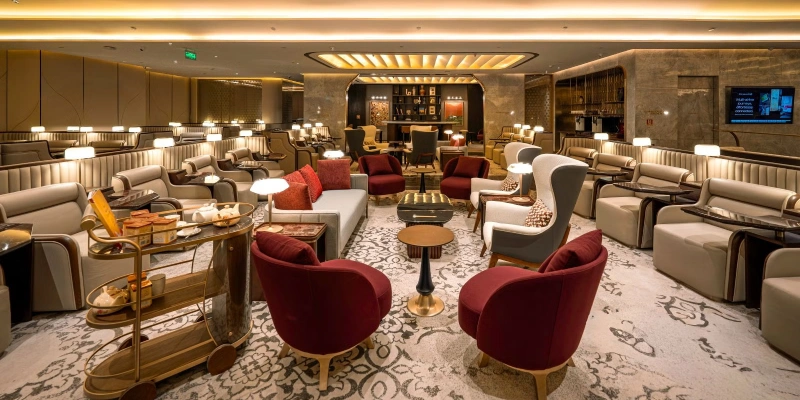
The transformation of Air India has just materialized in one of the most symbolic spaces for any global airline: its flagship VIP lounge. With the opening of The Maharaja Lounge in Terminal 3 of Indira Gandhi International Airport in New Delhi, the company is sending a clear message to the market: the ground experience is now a central piece of its strategic repositioning and its ambition to compete head-to-head in the international premium segment.
More than just a simple lounge, the new space is presented as a physical manifesto of the “New Air India Experience.” It combines contemporary design, carefully integrated historical references, and a service offering aimed directly at high-value passengers: First Class, Business Class, Gold and Platinum members of the Maharaja Club, and eligible Star Alliance customers, starting February 16, 2026.
A Flagship Lounge as a Strategic Statement
Air India explicitly defines The Maharaja Lounge as its first flagship VIP lounge, a distinction of significant importance. This is not an isolated opening, but rather the blueprint for a future network of modernized lounges that the airline plans to deploy across airports in India and abroad.
According to Campbell Wilson, CEO and Managing Director of Air India, the Delhi lounge represents a “significant milestone” within the company’s transformation process. This statement is backed by a concrete promise: substantial investments to create more platforms of this type in the countries where Air India flies, with the explicit goal of redefining luxury and comfort for its passengers.
From a corporate perspective, the message is twofold. On one hand, the airline seeks to elevate brand perception at key hubs. On the other, it understands that the ground experience—especially in high-yield markets—is a competitive differentiator as relevant as the onboard product.
Design: Indian Heritage Reinterpreted through a Contemporary Lens
The project was conceptualized by Hirsch Bedner Associates (HBA), one of the most renowned hospitality design firms globally. The result is a space that avoids both ornamental excess and generic minimalism, opting instead for a restrained sophistication aligned with Air India’s renewed visual identity.
The visual narrative of the lounge establishes a deep connection with the country’s culture and history through carefully selected art pieces that celebrate Indian heritage without being overly literal. This approach reinforces one of the brand’s historical pillars: the warm and distinctive hospitality that has been associated with the figure of the Maharaja for decades.
→ Air India Orders More Boeing 737s and Makes Strategic Leap with Airbus A321XLR
Ambient lighting, refined furniture, and clear zoning allow the space to feel modern and functional, yet with an unequivocally Indian personality. For Air India, the lounge is not just a waiting area, but an emotional prelude to the journey.
Intelligent Zoning: A Lounge that Adapts to the Passenger
One of the most relevant elements of The Maharaja Lounge is its structured zoning, designed to respond to the various moods and needs of the premium traveler. Far from the concept of a homogenous hall, the space offers differentiated experiences:
- The Aviator’s Bar: Aviation History and Mixology With a speakeasy atmosphere, this bar pays tribute to a foundational milestone of Indian aviation: JRD Tata’s 1932 flight from Karachi to Bombay. The nod is structural, not just symbolic: the ceiling replicates the propeller of the Puss Moth, the aircraft used on that historic journey. The drink selection matches the narrative, featuring a carefully curated cellar of wines and whiskies for the connoisseur.
- The Globetrotter’s Study: The Productive Haven For the corporate passenger—or those who simply enjoy silence—this area serves as a workspace and reading room. It is a serene corner equipped with a selected collection of fiction and non-fiction books, ample power outlets, and high-speed connectivity.
- Serenity Area: True Rest Before the Flight This area offers an entirely different environment: calm, isolation, and recovery. Equipped with individual recliners, this space is designed for passengers to disconnect, relax, or simply close their eyes before boarding.
First Class Lounge: When Luxury Becomes Experiential
Within The Maharaja Lounge, the experience is elevated even further for First Class passengers, featuring exclusive areas and services that reinforce product differentiation.
- Crystal Bar: Described as the pièce de résistance of the First Class area, it combines contemporary luxury with subtle traditional Indian motifs. The use of glass enclosures creates a brilliant visual effect, making it one of the most photogenic spots in the lounge.
- Tarmac Views: The First Class seating and dining areas offer direct views of the apron, allowing guests to watch takeoffs and landings. This detail connects emotionally with aviation enthusiasts and adds an experiential component that is difficult to replicate.
- Sleep Suites: Perhaps one of the most relevant services for long-haul passengers is the availability of exclusive sleep suites. Designed for truly restorative rest, these suites allow travelers to arrive at their flight in better physical condition, complemented by personalized details like wake-up calls with fresh juices or hot beverages.
Elevated Gastronomy: Beyond the Traditional Buffet
The culinary aspect is another pillar of The Maharaja Lounge. Air India offers a curated dining experience with a wide selection of Indian and international dishes, complemented by live cooking stations.
- Beverage on Wheels: Inspired by traditional gueridon service, this concept brings mixology directly to the passenger’s seat. Each cocktail is crafted by a specialized mixologist and tells a story linked to Indian culture or Air India’s heritage.
- Tea Programme: In a country where tea is an institution, Air India introduces an innovative program with infusions prepared on the spot to the passenger’s preference, served from an aesthetically designed cart.
- Mail Service: Among the most unique details is the introduction of exclusive Maharaja-themed postcards, intended as souvenirs. This simple gesture aims to create a memorable, immersive experience, reminding the traveler that Air India seeks to reconnect with the emotional component of air travel.
With The Maharaja Lounge in Delhi, Air India reformulates its value proposition for the premium passenger. The balance between heritage, contemporary design, and thoughtfully planned services reflects an airline that understands the experience begins long before takeoff.
Related Topics
End of an Era: Lufthansa Retires Airbus A340-600 Fleet After 23 Years of Service

ITA Airways Celebrates Its Fifth Anniversary
Condor Launches Daily Flights Between Berlin and Abu Dhabi

Lufthansa in Talks to Acquire Remaining 50.1% Stake in TAP Air Portugal Following Initial Entry


Plataforma Informativa de Aviación Comercial con 13 años de trayectoria.