
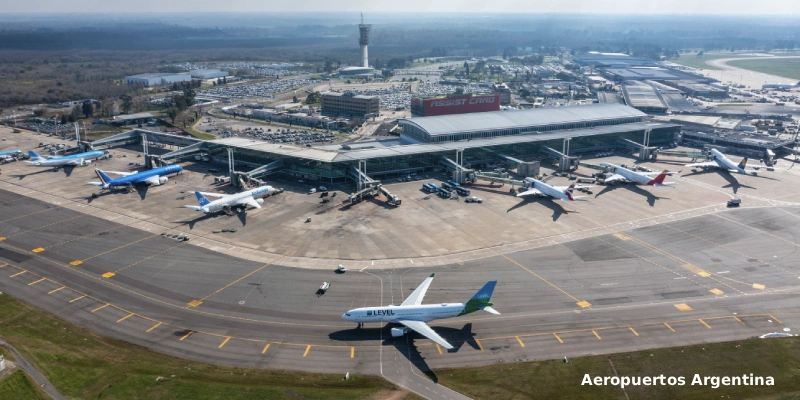
Ezeiza International Airport is embarking on a comprehensive works plan with an investment exceeding 100 million dollars. Driven by Aeropuertos Argentina, the project focuses on operational efficiency, safety, infrastructure capacity, and an overall improvement of the passenger experience.
The program, developed in conjunction with the National Airport System Regulatory Body (Orsna), encompasses strategic interventions in airside, landside, technology, and air cargo in response to sustained growth in activity. In 2025, Ezeiza recorded 12 million passengers—a 5.10% increase over 2024—solidifying its position as the primary entry and exit point for tourism in Argentina. Currently, 31 airlines operate at the airport, offering direct connections to 55 international and 35 domestic destinations.
Expanded Apron, Runway Rehabilitation, and Lighting Upgrades
New “Golf” Apron for Seven Narrow-Body Aircraft Among the most significant airside works is the creation of the new “Golf” apron. It is designed to allow the simultaneous operation and parking of seven narrow-body aircraft with dedicated ramp space. This addition will enable the airport to absorb higher activity levels and optimize position management, particularly during peak demand hours.
Rehabilitation of Secondary Runway 17-35 and Its Intersection with 11-29 The plan also includes the rehabilitation of secondary runway 17-35 and its intersection with the main runway, 11-29. The goal is to strengthen operational capacity and efficiency while ensuring adequate infrastructure for the airport’s future development.
- As a result of these works, operations will be restricted exclusively to runway 11-29 between October 25 and November 11.
- During this period, the runway will operate with a temporary limitation of 1,850 meters, compared to its current 3,300 meters.
- This reduction will require airlines to adjust operational plans for larger aircraft, though conditions will be maintained to sustain operations according to each company’s performance criteria.
→ Argentina Breaks Records: January 2026 Marks Highest Historical Level of Passengers and Operations
Lighting, Taxiway, and Ramp Support
The program further includes:
- A complete remodeling of the beacon lighting ring, which is vital for takeoff and landing assistance.
- Repaving of the “Alfa” taxiway.
- Construction of new maintenance modules for ramp operations.
These interventions aim to bolster critical infrastructure and reduce operational risks associated with the wear and tear of pavements and lighting systems.
Sustainability: Renewable Energy and Full Water Treatment
In parallel, the airport will incorporate a renewable energy supply system for five operational positions. Additionally, a reverse osmosis water treatment plant will be inaugurated. This facility will allow for the treatment of 100% of the water used at the airport, integrating sustainability criteria into daily operations.
Domestic Terminal Expansion and New Services
The domestic arrivals terminal will be expanded by 1,200 m², incorporating:
- Five new boarding gates, bringing the total to 12.
- A total pre-boarding area of 3,500 m².
- A new VIP lounge.
- New gastronomic offerings.
- A dedicated space for children.
Technological Modernization: Over 1,700 Next-Generation Peripherals
From a technological standpoint, a comprehensive replacement of the terminal operating system used by airlines will be performed. This update includes more than 1,700 peripherals, such as:
- Check-in computers and boarding gate equipment.
- Self check-in and self bag drop kiosks.
- Security checkpoints and monitors.
- Boarding printers and passport readers.
All these devices will be state-of-the-art and compatible with biometric processes—technology already available at migration controls.
Cargo: New Unified Courier Terminal and Perishables Expansion
In the cargo segment, Aeropuertos Argentina Cargas will build a 12,000 m² Unified Courier Terminal (TUC). Additionally, the perishables export area will be expanded from 4,500 m² to nearly 7,000 m² of temperature-controlled surface. The plan also includes a new access route to the Ricchieri Highway to facilitate internal traffic at the terminal and optimize ground logistics.
Continuation of a Transformation Process Started in 2025
These works build upon improvements implemented in 2025, which included:
- Expansion of the domestic boarding area.
- New gastronomic and service options.
- Creation of the “Sala de Calma” (Calm Room), designed for the well-being of individuals on the autism spectrum.
- Renovation of the Inspection and Registration Point (PIR).
- A new VIPClub premium lounge and a new terminal for car rental companies.
- The addition of new commercial retail spaces.
This investment plan of over US$100 million not only seeks to keep pace with growing demand but also to elevate operational standards, strengthen critical infrastructure, and expand logistical capacity.
Related Topics
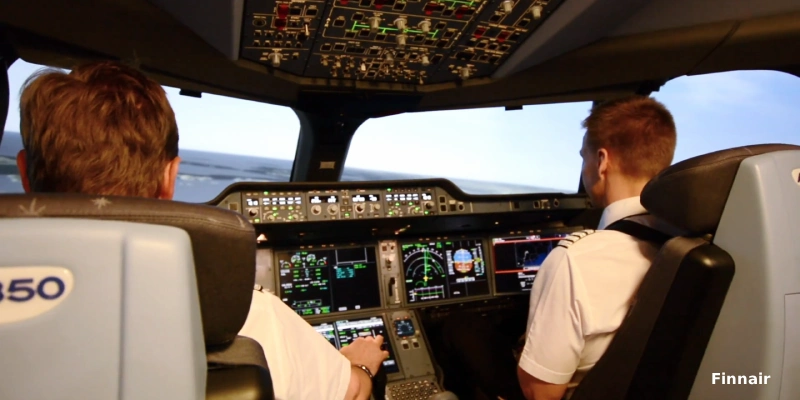
Finnair Adapts Pilot Training to Counter Daily GPS Jamming in the Baltic Region

Ryanair CEO Rules Out Fuel Surcharges, Predicts Bankruptcies and Further European Consolidation

Condor Expands European Network from Frankfurt with Athens, Florence, and Stockholm

Iberia Begins Countdown to Its Centenary: Unveils Commemorative Livery and Event Program

Plataforma Informativa de Aviación Comercial con 13 años de trayectoria.