
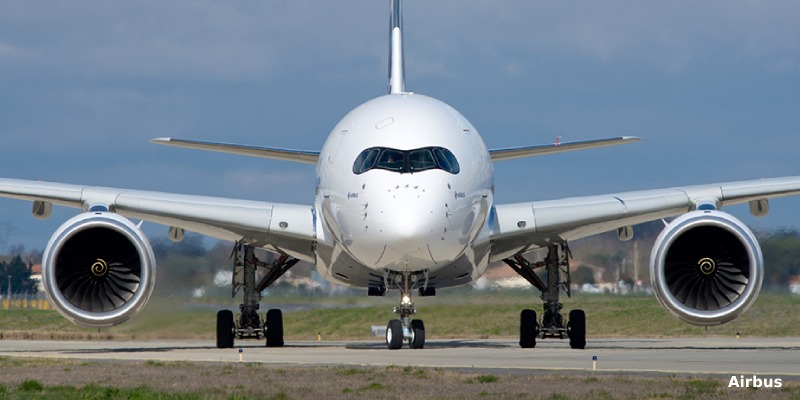
The long and complex history of United Airlines’ order for 45 Airbus A350 aircraft has entered a new phase of uncertainty. In a regulatory filing released this Thursday night, the airline confirmed the existence of a contractual dispute with Rolls-Royce—the sole engine provider for the model—adding a new chapter to one of the most extensive fleet acquisition sagas in modern commercial aviation.
This conflict does not merely reopen questions regarding the delivery schedule. It also places significant pressure on the tripartite relationship between the airline, the manufacturer, and the engine supplier—a critical balance in contracts valued at billions of dollars.
An Order with a 16-Year History
The original A350 order dates back to 2009, one year prior to the merger between United Airlines and Continental Airlines. At that time, Continental was a staunch supporter of Boeing and maintained exclusive ties with the American manufacturer.
Since then, the A350 agreement has been restructured, postponed, and modified repeatedly. In its most recent investor presentation, United maintains the 45 A350s in its portfolio with arrivals scheduled for after 2027, although it no longer provides a specific delivery timeline. In its previous annual report, the airline had indicated deliveries were expected beyond 2026.
The absence of a concrete date introduces an additional level of strategic ambiguity at a time when long-haul fleet decisions are decisive for network planning and cost structure.
Contractual Dispute with Rolls-Royce: The Core of the Conflict
Contract Signed in 2010 and $175 Million Prepayment
United revealed that in 2010, it signed a long-term contract with Rolls-Royce for the acquisition of engines and associated maintenance services for the A350. In 2017, the airline made a prepayment of $175 million to the British manufacturer.
According to the version presented by United, Rolls-Royce allegedly breached the contractual terms in December of last year. Consequently, the airline demanded the return of the $175 million, plus an additional unspecified amount.
→ Blue Sky Takes Flight: JetBlue and United Activate Cross-Selling of Flights
Rolls-Royce denies having violated the contract. According to United, the manufacturer refused to return the funds and argued that the responsibility for the breach lies with the airline itself. Both companies now contend that the other party owes them money.
A spokesperson for Rolls-Royce stated that the company has fulfilled its obligations under the agreements in effect since 2010, though they declined further comment due to ongoing legal proceedings. The spokesperson also described United as a “valued customer” and expressed confidence in their position, characterizing the situation as a “historical matter” they hope to resolve to strengthen the relationship.
Direct Impact on United’s A350 Program
The critical element of this dispute lies in the fact that Rolls-Royce is the sole engine provider for the Airbus A350. No alternative exists, which turns any contractual conflict into a direct operational risk for the model’s entry into service.
Airbus, for its part, declined to comment. The European manufacturer keeps the order in its published backlog, in what industry sources describe as a routine move to preserve contractual rights.
Pressure of the Triangle: Airline, Manufacturer, and Engine Supplier
Industry analysts note that major commercial aviation contracts involve complex tripartite relationships between the airline, the aircraft manufacturer, and the engine supplier.
In what appears to be an indirect reference to Airbus, United indicated that it is evaluating the implications this dispute might have for other involved parties.
Cancellation or Order Conversion?
This uncertainty is not new. Repeated postponements have fueled market speculation regarding the possibility that United may:
- Definitively cancel the A350 order.
- Convert it into other Airbus models, such as aircraft from the A321neo family, which the airline has acquired in large quantities.
United has linked its decision to the analysis of its long-term widebody replacement needs, specifically for its aging Boeing 767 and 777 fleets. However, until there is a clear resolution to the conflict with Rolls-Royce, the future of the A350 in United’s fleet remains in limbo.
With information from Reuters
Related Topics

FAA Clears Path for Boeing 737 MAX 10 Certification After Dismissing Flight Software Safety Risks
Ethiopian Airlines Orders Ten Boeing Freighters: Eight 777-8Fs and Two 777Fs to Boost Global Logistics Network

US Transportation Secretary Rules Out Safety Risks From Boeing 737 MAX Software Glitch
FAA Delays Boeing 737 MAX 10 Certification Following Software Issue

Plataforma Informativa de Aviación Comercial con 13 años de trayectoria.