
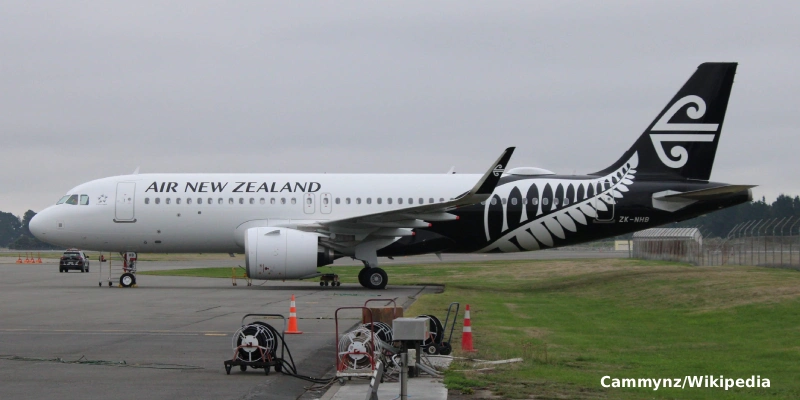
The escalation of hostilities in the Middle East has triggered a sudden spike in aviation fuel prices, forcing Air New Zealand and other international carriers to reduce capacity and modify flight paths to avoid no-fly zones.
Air New Zealand Reduces Operational Capacity
New Zealand’s flag carrier announced Thursday that it will cut 5% of its flight schedule, amounting to approximately 1,100 scheduled services through early May. This decision is a direct response to rising fuel costs stemming from the conflict in Iran, which is impacting even rural routes far removed from the combat zone.
The airline’s CEO, Nikhil Ravishankar, reported that nearly 44,000 passengers—out of 1.9 million projected for this period—will require reaccommodation due to adjustments in domestic and international flight schedules. Among the most affected sectors are:
- Wine Regions: Marlborough will see a reduction in its air services.
- West Coast Cities: New Plymouth will also experience a decline in flight frequency over the coming weeks.
The company’s shares fell 1% following the announcement, a trend mirrored by other industry giants such as Cathay Pacific, Qantas Airways, and Japan Airlines.
→ Cirium Reveals Most Punctual Airlines for February
Fuel Crisis and Airspace Closures
The conflict has generated the most significant crisis in the aviation industry since the pandemic. The use of drones and missiles has severely restricted airspace in the Middle East, forcing airlines to cancel routes or seek costly alternatives.
Impact on Oil Prices
The situation worsened following explosive-laden boat attacks against tankers in Iraq. Iran has warned that the global market must prepare for a scenario where oil reaches $200 per barrel.
In response, several airlines have implemented emergency measures:
- Fare Increases: Air New Zealand, Qantas Airways, Scandinavia’s SAS, and Thai Airways have announced ticket price hikes.
- Fuel Surcharges: Cathay Pacific adjusted its surcharges across all routes effective March 18, as the price of jet fuel has doubled since the beginning of the month.
Reconfiguration of International Routes
Faced with the closure of strategic air corridors and attacks on Gulf infrastructure (such as drone activity near Dubai International Airport), passenger flows are shifting drastically.
- Via the United States to Europe: Air New Zealand is prioritizing its long-haul routes through the U.S. to connect passengers with Europe, bypassing closed airspace in the Middle East.
- Gulf Cancellations: Cathay Pacific has canceled flights to Dubai and Riyadh through the end of March, instead increasing capacity to London and Zurich to capture Asia-Europe demand avoiding the conflict zone.
- Indirect Benefits: Thai Airways reported an increase in passenger uptake for those seeking secure routes toward the European continent.
Threat to Supply Security in Oceania and Asia
The crisis is not only a matter of cost but also of availability. Scott Charlton, CEO of Sydney Airport, expressed concern regarding fuel supply in Australia, which is entirely dependent on imports and the stability of international shipping lanes. The Sydney hub consumes nearly 40% of the country’s fuel and maintains a reserve of only 25 to 30 days.
Meanwhile, Vietnam has warned that its domestic airlines could face a critical fuel shortage as soon as next month due to global supply chain disruptions.
The airline industry faces a landscape of high volatility, where profitability and operational continuity depend on the evolution of the conflict and the ability of carriers to secure alternative routes and fuel supplies in a market with record-breaking prices.
Related Topics
LATAM Airlines Strengthens Regional Leadership with Five Honors at the 2026 World Travel Awards

Copa Airlines Restores Operations Following Seismic Activity in Panama and Expands Commercial Flexibility Policies

Arajet Resumes Direct Flights Between Punta Cana and Guayaquil

LATAM Airlines Announces Nonstop Flights Between Santiago de Chile and Caracas Starting in January


Plataforma Informativa de Aviación Comercial con 13 años de trayectoria.