
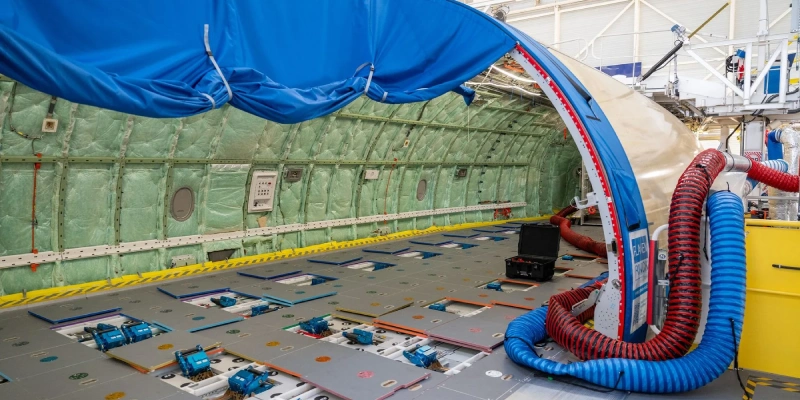
Airbus has commenced the ground testing phase for the A350F, marking a critical milestone in the development of its new freighter aircraft. This stage, taking place on the Final Assembly Line (FAL), is essential for validating the integration of innovative systems and ensuring the aircraft meets certification standards prior to its maiden flight.
“Co-design” Approach: Innovation from Definition
The development of the A350F has introduced an unprecedented level of complexity, leading Airbus to implement a “co-design” strategy. Guillaume Terrien, head of ground test design for the A350F, highlights that a close collaboration between the FAL test design team and the primary engineering teams began as early as the definition phase in 2021.
This approach allowed testability constraints on the production line to be considered from the preliminary stages of aircraft design. The objective is clear: to facilitate future testing and optimize assembly and verification processes.
Key Systems and Technical Challenges of the A350F
The freighter variant of the A350 is not merely a modification of the passenger model; it introduces entirely new or deeply modified systems, primarily concentrated in the cabin and cargo areas. Among the most notable systems currently undergoing testing are:
- Main Deck Cargo Loading System (CLS): A complex network featuring hundreds of electrical components.
- Main Deck Cargo Door (MDCD): A critical structure requiring both manual and electric cycle testing.
- Tail Tipping Warning System (TTWS): Designed to prevent the aircraft from tipping back onto its tail during loading and unloading processes.
- Waste and Water Management: Including a drainage system on the main deck to evacuate cleaning water or melted snow.
- “Smart Freighter” Connectivity: An advanced onboard monitoring and connectivity system.
→ Airbus Leads ECLIF-X Project: A Mission to Eliminate Climate Impact of Contrails
Challenge of Drainage and Tipping Control
One of the most significant challenges in ground testing is the drainage system. To verify watertightness and proper evacuation across the 50-meter main compartment, teams flood the system with more than 180 liters of water. This test is conducted with the aircraft floor at zero degrees of inclination, using specific equipment to fill all piping.
On the other hand, the Tail Tipping Warning System (TTWS) utilizes specialized equipment that “tricks” the sensors by simulating a landing gear extension to validate that audible and visual alarms activate immediately, safely halting the cargo loading system.
Serial Production vs. Certification Testing
The testing program is divided into two main branches to ensure quality and safety:
1. Serial Ground Tests
These tests verify the conformity of system integration on each specific aircraft produced. Out of approximately 200 ground test instructions for a passenger A350, 40% have been specifically created or modified for the A350F.
An innovative example is the CLS Wiring Self-Check Test. Using automated software from the cockpit, the system can verify more than 1,300 cables in just a few minutes, drastically optimizing production times.
2. Development and Certification Tests
Performed exclusively on the two flight test aircraft (MSN 700 and MSN 701), these tests are requirements for validation by authorities such as the European Union Aviation Safety Agency (EASA). The A350F has 55 specific ground testing requirements.
- Maximum Load Test: The aircraft is subjected to a load of 111 tonnes (equivalent to the weight of about 18 elephants) to ensure structural and cargo door functionality.
- Development Pressurization Test: Unlike the standard test, the test aircraft include additional instrumentation such as cameras, displacement sensors, and microphones on the cargo door to monitor its behavior under pressure.
The ground testing phase is the definitive step in ensuring that the aircraft built on the Final Assembly Line exactly matches the digital design requirements. With 40% of test procedures redesigned and 60 specific certification tests underway, the A350F program is progressing as planned, paving the way for its upcoming test flights and its future entry into service in the global air cargo market.
Related Topics

FAA Clears Path for Boeing 737 MAX 10 Certification After Dismissing Flight Software Safety Risks
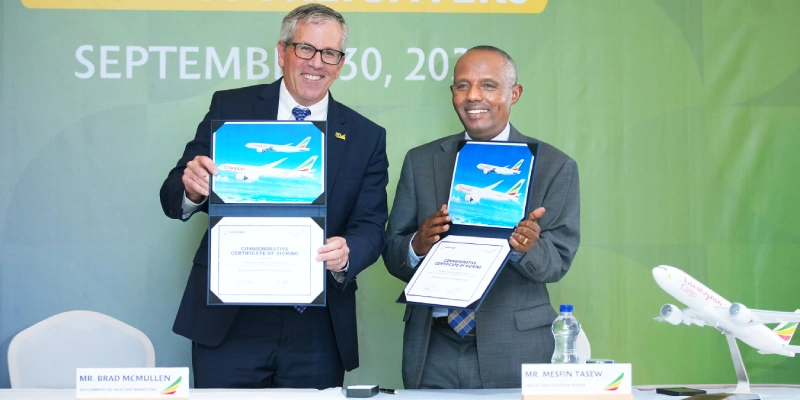
Ethiopian Airlines Orders Ten Boeing Freighters: Eight 777-8Fs and Two 777Fs to Boost Global Logistics Network

US Transportation Secretary Rules Out Safety Risks From Boeing 737 MAX Software Glitch
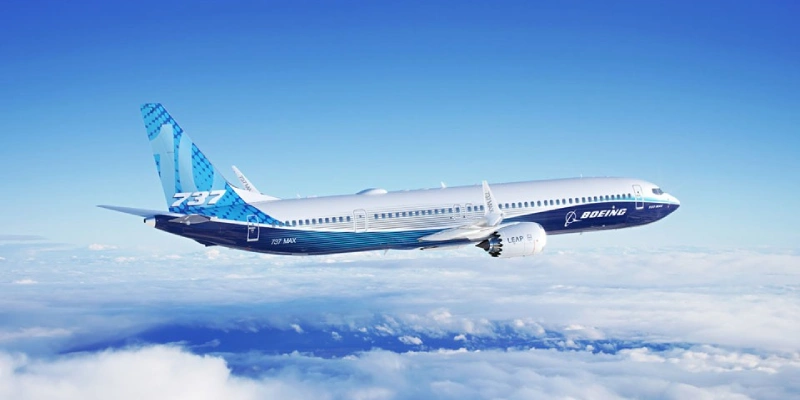
FAA Delays Boeing 737 MAX 10 Certification Following Software Issue

Plataforma Informativa de Aviación Comercial con 13 años de trayectoria.