
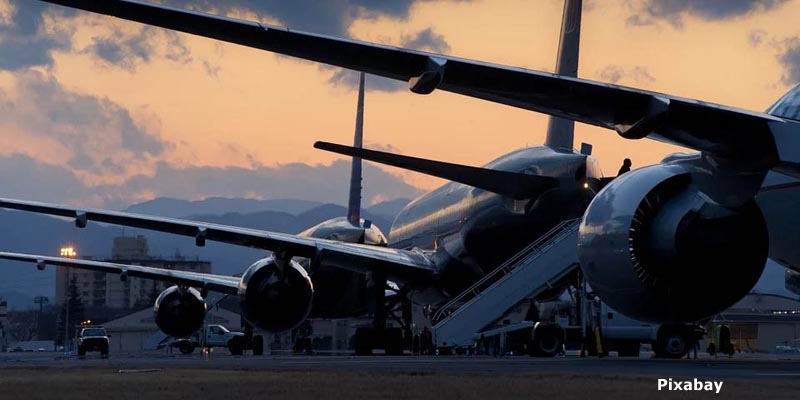
The closure of key transit hubs in the Middle East, resulting from the conflict involving the United States and Israel against Iran, has triggered a drastic surge in airfares between Asia and Europe. The paralysis of strategic airports, such as Dubai International (DXB), has severely restricted capacity, forcing passengers to seek costly alternative routings and exhausting seat availability for several days.
Collapse of Gulf Connectivity
Major hubs across the Persian Gulf have remained closed for the fourth consecutive day as of this Tuesday. This disruption directly impacts Dubai International Airport, the world’s busiest terminal for international passenger traffic, which typically handles over 1,000 daily flights.
This situation has effectively eliminated a significant portion of the supply on high-demand routes, such as those connecting Australia to Europe, where carriers like Emirates and Qatar Airways traditionally maintain a dominant market share.
Record Fares and Lack of Availability
The acute shortage of seats has driven prices to exceptional levels across various airlines in the Asia-Pacific region:
- Cathay Pacific Airways: There is no economy class availability for the Hong Kong-London route until March 11. The cost of a one-way ticket for that date has climbed to HK$21,158 ($2,705.28), four times the standard fare of HK$5,054.
- Qantas Airways: The Australian flag carrier is showing no economy seats on its usual routes via Perth or Singapore to London until March 17, with one-way prices starting at A$3,129 ($2,220.03). As an alternative, expensive connections via Los Angeles or Johannesburg are being offered.
- Thai Airways: European flights are completely sold out. A one-way ticket from Bangkok to London for March 15 is quoted at 71,190 baht ($2,265), only returning to normal levels of 27,045 baht by March 18.
- Chinese Airlines: On the Beijing-London route, where a typical round-trip ticket costs less than 10,000 yuan, Air China currently only has business class availability for immediate departures, with one-way fares reaching 50,490 yuan.
*With information from Reuters
→ Global Passenger Traffic Starts 2026 with 3.8% Growth and Record Load Factor
Operational Challenges and Alternative Routing
To circumvent restricted airspace in the Middle East, airlines operating direct flights are implementing strategic diversions:
- Northern Route: Overflying the Caucasus and subsequently Afghanistan.
- Southern Route: Traversing Egypt, followed by Saudi Arabia and Oman.
- Via North America: Some Australian passengers are opting to connect through hubs such as Houston.
While these alternatives allow operations to continue, Subhas Menon, Director General of the Association of Asia Pacific Airlines (AAPA), warned that increased flight times and fuel burn, combined with rising oil prices, could undermine airline profitability and keep fares elevated in the long term.
Conversely, firms such as Alton Aviation Consultancy suggest that airlines with hubs located outside the conflict zone—including Singapore Airlines, Turkish Airlines, and Cathay Pacific—could see short-term gains due to the shift in passenger demand.
Related Topics
American Airlines Expands Venezuela Network with New Nonstop Route Between Miami and Barcelona

United Airlines Accelerates Starlink Rollout: Reaches Nearly Half of Daily Flights and Launches Real-Time Fleet Tracker

Southwest Overhauls Rapid Rewards Program with New Platinum Tier, Airport Lounges, and Starlink Satellite Connectivity
JetBlue Launches New Fort Lauderdale–Cali Route


Plataforma Informativa de Aviación Comercial con 13 años de trayectoria.