
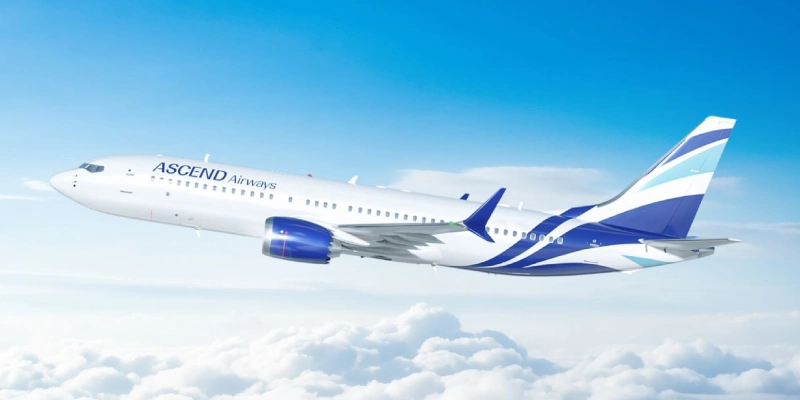
The British carrier Ascend Airways has ceased operations after just three years of activity, leaving 161 employees affected by an immediate liquidation process. The collapse of the company highlights the growing vulnerability of UK operators in the face of soaring fuel prices and a loss of competitiveness compared to their European peers.
Cessation of Operations and Labor Impact
The airline’s management informed its crews this Monday regarding the immediate cessation of all activities. The news was disclosed internally after flight YD187, arriving from Muscat, touched down at London Stansted Airport.
According to internal testimonies, employees had already feared this outcome due to an accumulation of unpaid invoices and the deep financial difficulties the company had been struggling with for months. The primary factors cited by the administration for the closure include:
- Fuel Costs: A massive surge in the price of aviation turbine fuel (Jet A-1).
- Domestic Expenses: High operating costs within the United Kingdom compared to the European Union.
- Contractual Difficulties: An inability to secure new service contracts.
→ British Airways Expands Network with Launch of New Routes to St. Louis and Guernsey
Strategic Challenges and Competitiveness
Ascend Airways, which operated under an ACMI (Aircraft, Crew, Maintenance, and Insurance) model providing aircraft for other companies such as Oman Air, Air Sierra Leone, and TUI Airways, failed to realize the core pillars of its recovery plan.
A critical turning point was the failed attempt to obtain the IATA Operational Safety Audit (IOSA) certification in March. This certification would have allowed the airline to access higher-yield international routes. Furthermore, negotiations with potential rescue partners collapsed when they refused to take on a sufficient number of aircraft to maintain operational viability.
A determining factor in the bankruptcy was the cost gap. According to sources close to the company, operating in the UK is approximately 40% more expensive than in the rest of Europe due to the heavy tax burden.
Energy Crisis: A Threat to the European Industry
The case of Ascend Airways could be the first symptom of a deeper crisis in regional aviation. Jet fuel benchmark prices in Europe reached $1,838 per tonne in early April, more than doubling the $831 recorded in February.
József Váradi, CEO of Wizz Air, has warned that other European operators could face liquidation by September if prices remain at current levels. Key projected causes and consequences include:
- Geopolitical Pressure: The conflict in Iran and instability in the Strait of Hormuz—vital for oil and gas flows—are expected to keep prices elevated for up to 18 months.
- Capacity Adjustments: A drastic reduction in flight supply is expected following the summer season.
- Lufthansa, for example, has already canceled 20,000 short-haul services due to a lack of profitability.
- Vulnerability of Legacy Carriers: Even national flag carriers like British Airways and Air France could be forced to make significant cuts due to liquidity shortages.
The closure of Ascend Airways highlights a hostile operating environment in the UK, where the combination of high taxes and energy volatility is stifling companies with lower liquidity.
Related Topics

Avianca Bolsters Argentina Connectivity: Daily Service to Cordoba and Revamped In-Flight Experience
British Airways Expands Network for Summer 2027: Touches Down in Tanzania and Boosts Latin American Capacity by 25%

Copa Airlines Restores Second Daily Flight to Caracas, Venezuela

Avianca Strengthens Cross-Border Network: Launches Daily Flights Between Bogotá and Maracaibo, Venezuela


Plataforma Informativa de Aviación Comercial con 13 años de trayectoria.