Scoot Strengthens Growth Strategy with Order for 11 Airbus A320neo Family Aircraft
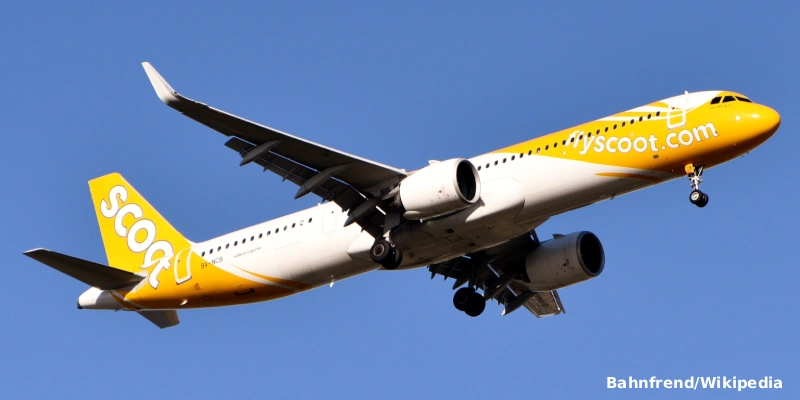




Scoot, the low-cost subsidiary of Singapore Airlines (SIA), has announced the addition of 11 Airbus A320neo family aircraft, a strategic move designed to expand its route network across Asia-Pacific and improve operational efficiency.
Fleet Expansion and Operational Capabilities
The airline has formalized a firm order for five additional aircraft and exercised purchase options for another six, stemming from a previous agreement reached with Airbus in 2014. With this transaction, Scoot’s order book for the A320neo family rises to a total of 20 units.
These new aircraft will be equipped with Pratt & Whitney PW1100G-JM engines, with progressive deliveries scheduled to begin in 2028. The cabin configuration will remain a single-class layout, optimized for the low-cost carrier (LCC) business model:
- Airbus A320neo: 186 seats.
- Airbus A321neo: 236 seats.
→ Singapore Airlines to Enhance In-Flight Connectivity with Starlink Technology
Strategic Connectivity and Network Flexibility
The incorporation of these aircraft will allow Scoot to operate with greater flexibility within a flight radius of five to six hours. This range is essential for strengthening Singapore’s connectivity with key markets in Southeast and North Asia, further consolidating Changi Airport as a global aviation hub.
Leslie Thng, CEO of Scoot, emphasized that the fleet’s versatility—which combines Embraer E190-E2 regional jets, Airbus narrowbodies, and Boeing 787 Dreamliner widebodies—enables the company to efficiently cover short, medium, and long-haul routes, complementing the SIA Group’s global network.
Projections for 2026
By June 2026, Scoot expects to reach the following operational milestones:
- 85 destinations within its global network.
- Operating 50% of the routes connecting to Singapore via Changi.
- Exclusive management of 37 destinations where no other airlines operate from Singapore, stimulating traffic flow in underserved markets.
Scoot’s investment in the A320neo family underscores its confidence in the long-term recovery of the aviation sector in the Asia-Pacific region. By modernizing its fleet with more efficient technology, the airline not only secures its commercial growth but also reinforces Singapore’s competitiveness as a world leader in aviation.
Related Topics
FAA Delays Boeing 737 MAX 10 Certification Following Software Issue

Boeing Detects 737 MAX Software Glitch Affecting Automated Navigation Guidance During Landing

Akasa Air in Talks With Boeing for Over 200 737 MAX Jets
Alaska Air Targets Boeing 737 MAX 10 Certification by Late September
Plataforma Informativa de Aviación Comercial con 13 años de trayectoria.