
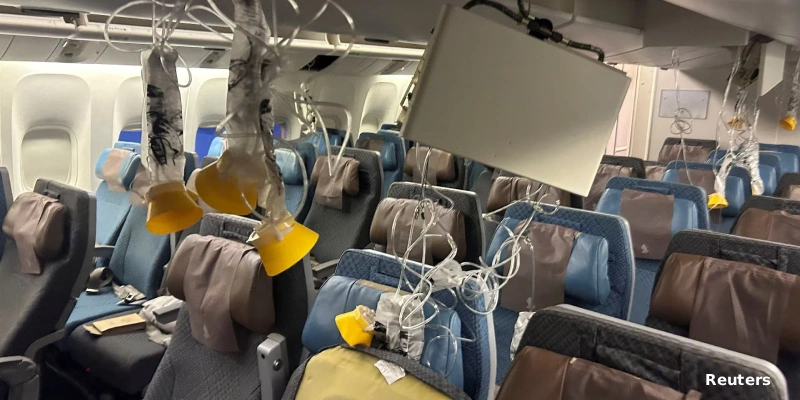
The final report on Singapore Airlines Flight 321, which encountered severe turbulence in May 2024, reveals that the aircraft’s weather radar system may have malfunctioned. The incident, which resulted in one passenger fatality and dozens of injuries, raises industry-wide alarms regarding the reliability of onboard weather detection equipment.
Key Findings by the Transport Safety Investigation Bureau
Singapore’s Transport Safety Investigation Bureau (TSIB) issued a 59-page final report following an in-depth investigation into the incident, which occurred at flight level 370 (37,000 feet) over Myanmar.
While the investigative body refrained from directly attributing responsibility for the incident to the flight software, the document’s conclusions strongly indicate that a weather radar malfunction “cannot be ruled out” as the triggering factor in the chain of events.
The flight crew of the aircraft—a Boeing 777-300ER operating the route from London to Singapore—stated that the aircraft’s radar system showed no convective weather formations or systems of concern on their displays before entering the area of severe turbulence.
Tragic Cabin Toll
The impact of the turbulence was devastating for occupants who were not secured in their seats:
- Fatalities: A 73-year-old British national lost his life.
- Serious Injuries: 56 individuals sustained severe injuries after being violently thrown against the cabin ceiling.
- Minor Injuries: 23 people were reported to have sustained minor injuries.
Given these circumstances, the investigation underscored the critical importance of keeping seatbelts fastened at all times, as the vast majority of serious injuries occurred among passengers who had unfastened their restraint systems.
→ Flight Data Reinforces Hypothesis of Deliberate Act in China Eastern Boeing 737 Crash
Maintenance History and Manufacturer Discrepancies
Technical analysis of the aircraft’s maintenance logs brought to light revealing data regarding the prior performance of the weather detection equipment:
- General Statistics: Out of 29,000 flights operated by the airline across its Boeing 777 fleet between May 2023 and July 2025, 103 flights reported anomalies associated with the weather radar, representing just 0.36% of total operations.
- Erroneous Display Logs: Within that sample, 36 specific cases of weather displays showing incorrect readings were documented.
- Direct Precedents of the Airframe: The aircraft involved in the incident logged three identical events prior to the May 2024 flight. The most recent occurred just six days before the accident, when the pilots observed external storm activity while the radar display showed inaccurate data.
During technical inspections after that prior flight returned to Singapore, maintenance personnel verified that the right-side display exhibited an incorrect storm development level compared to the data on the left-side display. However, the weather radar manufacturer (whose name was not disclosed) refuted part of these diagnoses, claiming that recommended testing manuals and procedures were not followed.
Industry Recommendations and Airline Actions
The TSIB report urges aircraft manufacturers to design new methodologies to certify the proper functioning of radar displays and to structure clear manuals so that pilots can troubleshoot display technical issues mid-flight.
For its part, the airline expressed its respect for the final report, extending a renewed apology to passengers and crew members for the traumatic experience. The company reported that it has already implemented substantial improvements in its operations:
- Integration of advanced tools for turbulence anticipation and detection.
- Mandatory recurrent training programs focused on turbulence management and radar utilization for all flight and cabin crews.
- A formal commitment to adopt any supplementary technical guidelines issued by regulatory authorities, the radar manufacturer, and the airframe manufacturer.
Related Topics

Delta Strengthens Transatlantic Network for Summer 2027 with New Routes from Detroit and Boston to Europe
Qantas Confirms Nonstop Sydney–New York Flights to Launch in 2028

Breeze Airways Retires Its Final Embraer 190, Consolidates an All-Airbus A220 Fleet

US to Seek Additional $30 Billion to Modernize Air Traffic Control System and Airports


Plataforma Informativa de Aviación Comercial con 13 años de trayectoria.