
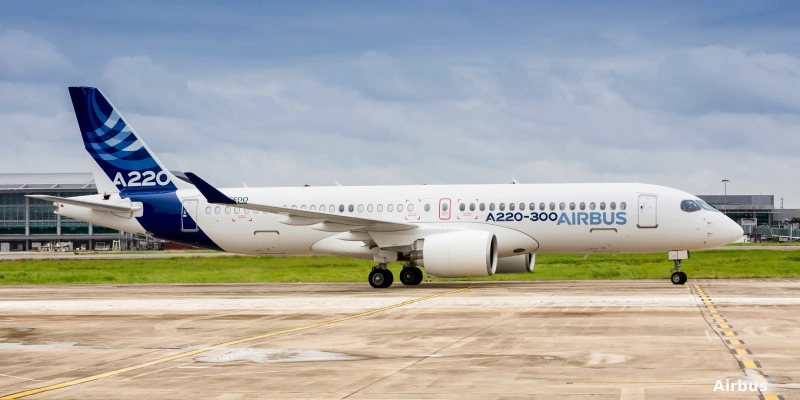
Airbus has decided to temper expectations regarding the launch of a stretched version of its A220 aircraft. The European airframer is currently torn between the range requirements of airlines and the cautious stance of aircraft leasing companies, a deadlock that pushes back the likelihood of an immediate announcement at the upcoming Farnborough Airshow, according to several industry sources.
Technical Dilemma: Lower Seat-Cost at the Expense of Range
Airbus has been marketing a relatively modest upgrade proposal for the A220 to the industry, described by internal sources as a “simple stretch.” This variant is designed around the following parameters:
- Expanded Capacity: It would carry approximately 180 passengers, compared to the 160-seat capacity of the current largest model.
- Operating Efficiency: It would deliver an estimated 10% reduction in seat-mile costs.
- No Major Structural Changes: It does not envision an increase in maximum takeoff weight (MTOW) or a costly upgrade to the Pratt & Whitney engines.
However, this technical configuration comes with a direct performance penalty: the aircraft would suffer a reduction in range. This loss of autonomy means not all airlines are willing to sacrifice stage length, thereby shrinking the pool of potential launch customers. Commenting on the situation, aviation analyst Rob Morris noted that “airlines are probably convinced of the economics, but not necessarily the performance.”
Compounding this scenario are the ongoing durability issues plaguing the current Pratt & Whitney powerplants—a clear source of frustration among airline executives gathering in Brazil for the International Air Transport Association (IATA) summit. In fact, Mark Nasr, Chief Operations Officer at Air Canada, confirmed that range remains a critical factor to verify: “One of the questions we will have to examine is the range of the aircraft.”
→ Airbus Ramps Up May Production: Renders 81 Commercial Aircraft Delivered
Program Financial Viability and Pressure from Embraer
The launch of a larger variant, which would be positioned in the market as the proposed A220-500, is vital for the financial future of the program. Airbus acquired the aircraft program in 2018 after Canadian manufacturer Bombardier ran out of liquidity.
Currently, the A220 program remains in the red and has been losing campaigns to its Brazilian rival, Embraer. A stretched variant would allow Airbus to:
- Renegotiate supplier contracts.
- Substantially lower production costs.
- Finally drive the program toward profitability.
Despite this commercial urgency, the immediate pressure to roll out a new model eased recently after AirAsia placed a major order for 150 units of the existing variant.
Lessor Apprehension and the Shadow of the A320neo
Another major hurdle stems from the lukewarm response of powerful aircraft leasing firms. Airbus is carefully assessing the cannibalization risk this new aircraft might pose to sales of its cash-cow narrowbody, the A320neo family, whose size sits just above the planned A220-500.
Lessors fear that a larger A220 would directly impair the market value of their existing A320neo portfolios. According to industry sources, lessors have such high exposure to the asset type that “the last thing they need is a new airplane; the less disruption, the better for them.” On his part, analyst Morris points out that this anxiety should not delay the project indefinitely, given that the A320 market enjoys deep liquidity and a highly resilient customer base.
From a “Big Year” to Timeline Uncertainty
Airbus’s rhetoric has shifted noticeably over recent months. In January, during the Airline Economics conference in Dublin, the manufacturer struck an optimistic tone with financiers, asserting that 2026 would be a “big year” for the A220.
However, months later, prospective buyers report they have yet to receive the technical specs typical for an aircraft nearing its launch window. In April, Airbus Chief Executive Guillaume Faury cooled expectations, telling reporters that the launch “remains a question of when… rather than if, but it is not for now.”
With the Farnborough Airshow scheduled for late July, a senior Airbus executive conceded that an announcement during the event is now “unlikely,” though the company has not entirely ruled out a launch later in the year. For now, an official company spokesperson concluded prudently: “We are studying all options; no decisions have been made.”
Related Topics

FAA Clears Path for Boeing 737 MAX 10 Certification After Dismissing Flight Software Safety Risks
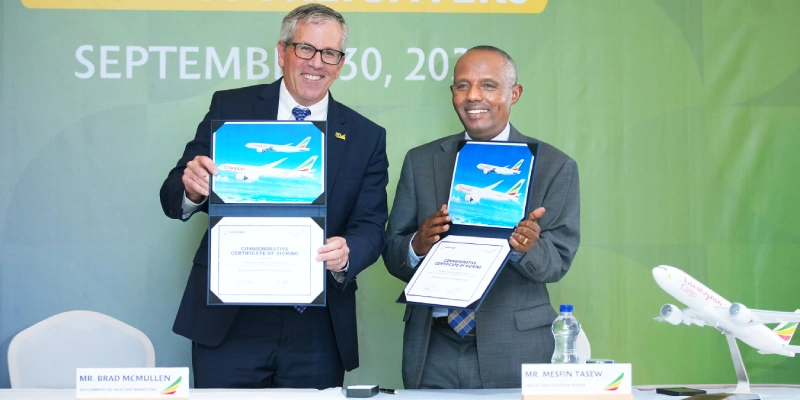
Ethiopian Airlines Orders Ten Boeing Freighters: Eight 777-8Fs and Two 777Fs to Boost Global Logistics Network

US Transportation Secretary Rules Out Safety Risks From Boeing 737 MAX Software Glitch
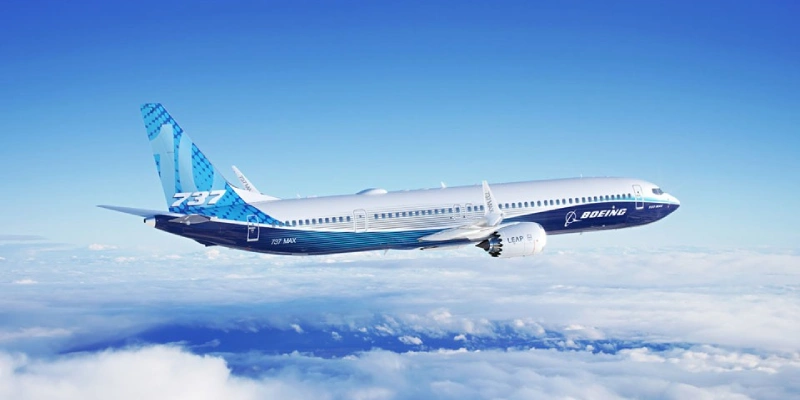
FAA Delays Boeing 737 MAX 10 Certification Following Software Issue


Plataforma Informativa de Aviación Comercial con 13 años de trayectoria.