
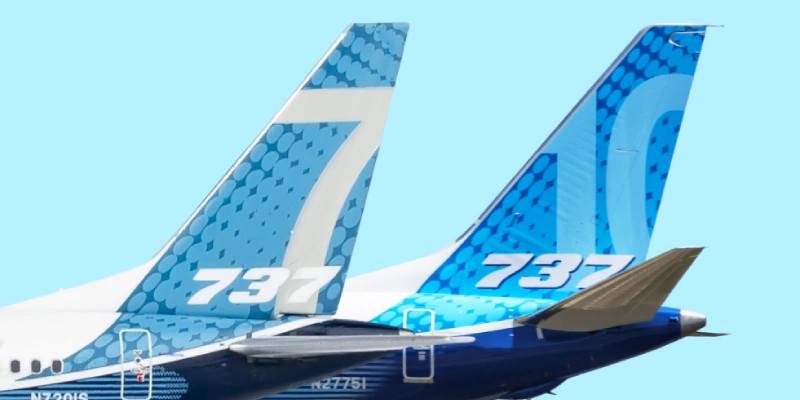
The US Federal Aviation Administration (FAA) and the European Union Aviation Safety Agency (EASA) are moving forward with the approval of the two newest variants of the Boeing 737 MAX. This milestone will mark the conclusion of an exhaustive technical validation process, allowing both regulatory authorities to turn the page and transition into a new operational phase.
Final Strides in New Variant Validation
Aviation authorities in the United States and Europe have confirmed significant progress in the type certification efforts for the Boeing 737 MAX 7 and Boeing 737 MAX 10 models. According to leading regulatory spokespersons, the remaining workload is focused on the final documentation review and ensuring complete alignment between the criteria of both agencies.
EASA Executive Director Florian Guillermet highlighted that the MAX 10 variant is currently a top priority for the European agency. According to Guillermet, the process is in a highly intensive phase of processing the relevant paperwork, with an estimated timeline of just a few weeks to conclude based on the current schedule.
Meanwhile, FAA Deputy Administrator Chris Rocheleau described the pending tasks as a process focused on fine-tuning the final regulatory details, ensuring absolute confidence between the certification offices of both aviation superpowers.
→ Southwest Airlines Remains Committed to Boeing 737 MAX 7, Projects 2027 Operational Debut
Approval Timeline and Technical Development
Projections for the entry into service (EIS) of these aircraft reflect specific timelines for each model:
- Boeing 737 MAX 7: FAA Administrator Bryan Bedford anticipated that this variant—a shrunk version of the MAX 8 and MAX 9 models, which have already accumulated tens of thousands of flight hours—will receive its official type certification this summer.
- Boeing 737 MAX 10: The highest-capacity variant of the program is expected to secure regulatory approval before the end of the current year.
Despite the operational maturity of the MAX family, Boeing experienced protracted delays in certifying the -7 and -10 variants due to a technical issue related to the engine anti-ice system. Nevertheless, authorities have confirmed that there are currently no major hurdles or critical milestones remaining that would jeopardize the closure of the process.
Strengthening Bilateral Relations and Risk Management
This regulatory advancement also underscores a substantial improvement in international cooperation between both watchdogs. Relations between EASA and the FAA became strained following the fatal Boeing 737 MAX crashes in 2018 and 2019, which were linked to faulty software and oversight failures. This led the European agency to adopt a much stricter, independent review approach toward the US manufacturer’s designs.
Today, both Rocheleau and Guillermet have praised the excellent state of institutional ties. The FAA expects EASA to validate the certification of both new aircraft concurrently with the US approval or shortly thereafter.
To consolidate this synergy over the long term, the FAA and EASA are working on a data-sharing agreement—a strategic tool designed to streamline joint certification processes and enhance risk management in civil aviation.
The culmination of this intense administrative period will allow the aviation industry to officially integrate the MAX 7 and MAX 10 models into the global market.
Related Topics
End of an Era: Lufthansa Retires Airbus A340-600 Fleet After 23 Years of Service

ITA Airways Celebrates Its Fifth Anniversary
Condor Launches Daily Flights Between Berlin and Abu Dhabi

Lufthansa in Talks to Acquire Remaining 50.1% Stake in TAP Air Portugal Following Initial Entry

Plataforma Informativa de Aviación Comercial con 13 años de trayectoria.