

Copa Airlines has no plans to modify its financial strategy and will maintain its stance of not hedging fuel, despite the recent price surge linked to the war in Iran. Pedro Heilbron, the airline’s CEO, stated in an interview with Reuters during the International Air Transport Association (IATA) Annual General Meeting in Rio de Janeiro, that the company relies on its strong balance sheet and pricing adjustments to mitigate the situation.
The Panamanian flag carrier has operated without using fuel hedges for over a decade and does not intend to change course. The CEO explained that they are absorbing the cost directly; while yields have been adjusted, this does not cover 100% of the increase, representing a partial impact on the company.
Globally, airlines have increased fares in response to higher energy costs, though these hikes are constrained by competition and demand sensitivity. The airline industry expects fuel prices to decrease gradually and progressively.
Strong Liquidity and Stable Regional Demand
Copa Airlines’ flexibility to navigate current market volatility is built upon the following financial and operational pillars:
- Conservative Balance Sheet and High Liquidity: These provide the company with the necessary headroom to remain resilient against global economic shifts.
- Healthy Demand in Latin America: The regional market remains robust, supported by the strengthening of local currencies in key markets, such as Brazil.
- Efficient Connectivity Model: Copa Airlines operates a successful hub-and-spoke model out of Panama, efficiently connecting diverse destinations across the Americas.
→ Copa Airlines Restores Its Venezuela Network: Resumes Flights to Barcelona
Strategic Fleet Expansion Through 2034
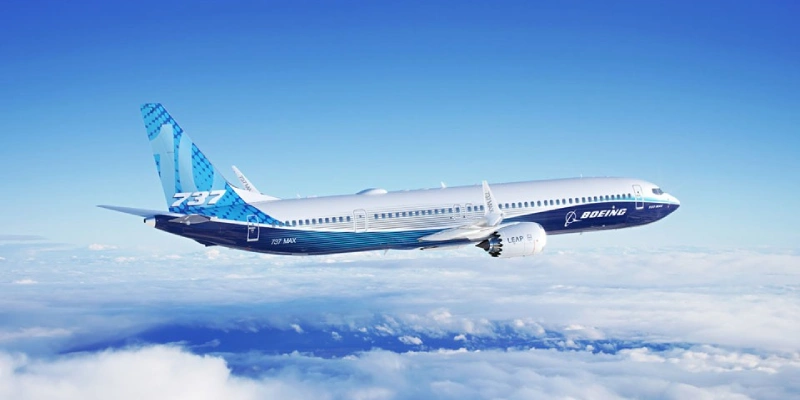
Copa Airlines, which operates an all-Boeing 737 fleet, is moving forward with growth plans aligned with the American manufacturer’s delivery schedule.
To secure its expansion and fleet renewal, the company recently agreed to acquire up to 60 Boeing 737 MAX aircraft. Given the high global demand for new aircraft experienced by both Boeing and Airbus, securing production slots in advance is crucial to avoid delivery gaps. For this reason, the new order is scheduled for delivery between 2030 and 2034.
Flexibility in 737 MAX Variant Selection
The purchase agreement grants the airline flexibility across the various variants of the MAX family, including options for the highest-capacity model, the Boeing 737 MAX 10, which is currently undergoing certification. At present, the company is evaluating the future composition of its fleet and has not made a final decision on which specific variant it will prioritize.
Regarding the US manufacturer’s performance, Heilbron noted that Boeing’s operational efficiency has shown notable improvements, reflected in deliveries arriving on time or even slightly ahead of schedule.
Related Topics

US Lifts Restrictions on Mexican Carriers Following Bilateral Air Transport Agreement Dispute

Resumption of Direct US–Lebanon Flights Faces Setbacks Following Technical ICAO Report
FAA Poised to Certify Boeing 737 MAX 10 Next Week Following Key Safety Review Clearance

Air Canada and United Airlines Boost Transborder Connectivity with New Routes for Summer 2027


Plataforma Informativa de Aviación Comercial con 13 años de trayectoria.