
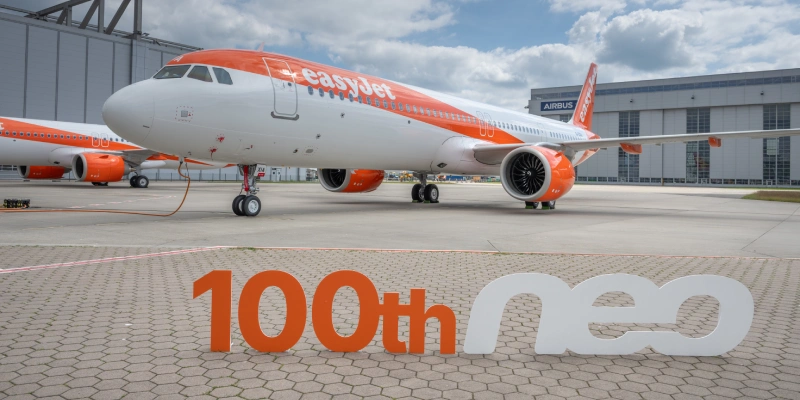
easyJet has taken delivery of its 100th Airbus A320neo family aircraft in Hamburg, Germany. This milestone underscores the company’s ongoing commitment to fleet modernization and operational efficiency enhancements.
easyJet Fleet Expansion and Modernization
The milestone aircraft, manufactured by Airbus, joins easyJet’s all-Airbus fleet, which now totals 359 aircraft. This latest delivery reflects the airline’s ongoing transition toward newer, more fuel-efficient technologies as part of its global decarbonization strategy.
Fleet renewal is a critical component of easyJet’s short- and medium-term strategy. Older aircraft are being progressively replaced by A320neo family models, supporting the airline’s target of achieving a 35% reduction in carbon emissions intensity by 2035.
In-Flight Experience Innovation: The ‘Airspace’ Cabin
All of easyJet’s new NEO aircraft will feature Airbus’s next-generation ‘Airspace’ cabin. This design introduces multiple enhancements focused on both passengers and crew:
- Ambience and Design: Features upgraded lighting and a refined color palette across all cabin fixtures, including sidewalls and lavatories, fostering a modern, calm, and welcoming environment for customers.
- Enhanced Accessibility: Equipped with new braille indicators on row numbering signage to assist visually impaired passengers in locating their seats.
- Space and Hygiene: Provides additional shoulder-level space, redesigned lavatories with touchless features to optimize hygiene, and an increased emphasis on the use of recycled and repairable materials.
- Crew Optimization: Cabin crew will benefit from redesigned forward and aft galleys with expanded storage capacity, incorporating double ovens in both the front and rear for the first time on A320 and A321neo models.
→ Air France-KLM Leaves Door Open to a Potential Investment in EasyJet
Cutting-Edge Technical Efficiency and Sustainability
Future aircraft delivered to the carrier will incorporate fixed, non-retractable Light Emitting Diode (LED) runway lights. Eliminating the legacy lighting previously located on the nose landing gear reduces aerodynamic drag and aircraft weight, while simultaneously improving optical performance and system reliability.
At an operational and environmental level, the A320neo family aircraft—powered by CFM International LEAP-1A engines—deliver superior performance:
- Fuel Performance: Deliver up to a 20% reduction in fuel burn and CO₂ emissions per seat compared to previous-generation aircraft.
- Noise Mitigation: Achieve an estimated 50% reduction in the noise footprint.
- Alternative Fuels: Currently capable of operating with up to a 50% blend of Sustainable Aviation Fuel (SAF), with a roadmap to achieve 100% SAF compatibility by 2030.
- Data Management: The utilization of digital systems backed by the Skywise platform will support more efficient, data-driven operations.
These efficiency enhancements underpin both the reduction of operating costs and the mitigation of environmental impact in the short term.
David Morgan, Chief Operating Officer (COO) of easyJet, emphasized the significance of this milestone: “The delivery of our 100th A320neo family aircraft is a significant milestone for easyJet. These aircraft are central to our strategy to operate a more efficient fleet and reduce our environmental footprint, while continuing to elevate the travel experience for both our customers and our crews.”
For his part, Johan Pelissier, President of Region Europe and Head of Commercial Europe for Commercial Aircraft at Airbus, stated:
“The delivery of the 100th A320neo reflects the shared DNA of innovation between Airbus and easyJet. By integrating the world’s most efficient single-aisle aircraft at this scale, we are doing more than expanding a partnership; we are actively redefining the future of sustainable aviation.”
The continuous fleet modernization through the integration of highly efficient aircraft reaffirms easyJet’s strategy to mitigate its carbon emissions intensity in the immediate future. This technical evolution not only drives the airline’s financial performance through cost optimization but also solidifies the transformation of the flight experience across the European market.
Related Topics
AirAsia in Talks with Malaysian Government Over Potential Financial Support Amid Economic Headwinds and Soaring Fuel Costs
LOT Polish Airlines Launches Direct Flights Between Warsaw and Bangkok
Lufthansa Group Boosts Connectivity to Japan, Reaching Up to 50 Weekly Flights in Summer 2027

Thai Airways Cuts Flights and Faces Baggage Handling Collapse Following Severe Bangkok Flooding

Plataforma Informativa de Aviación Comercial con 13 años de trayectoria.