
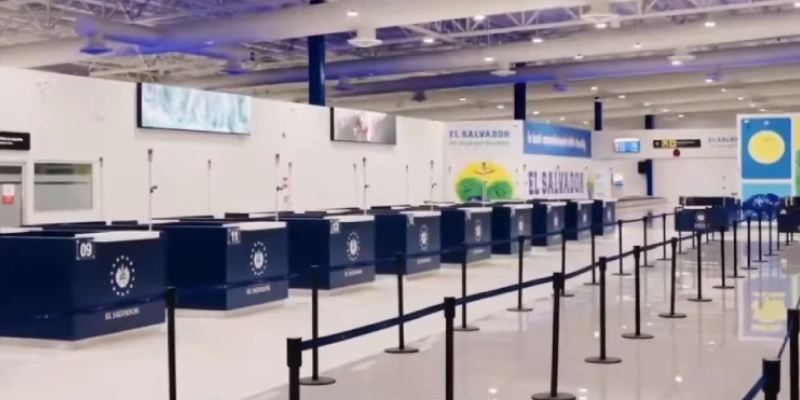
El Salvador International Airport has officially inaugurated a new arrivals terminal spanning over 24,000 square meters of infrastructure. This expansion is designed to modernize passenger handling, optimize immigration flows, and substantially increase the operational capacity of the country’s primary aviation hub.
Operational Efficiency and Reduced Wait Times
The new infrastructure will position the airport terminal as one of the most modern and efficient in the Central American region. The project introduces critical upgrades to passenger processing, successfully reducing wait times through a highly effective flow.
The new terminal’s key operational capacities include:
- Hourly Processing Capacity: The new space can handle up to 4,500 passengers per hour.
- Baggage Handling: The automated system can process up to 16,500 bags within the same one-hour window.
- Immigration Desks: Control processes have been optimized to service each passenger within a 30-second to one-minute timeframe.
Thanks to this performance, authorities estimate that travelers will be able to complete the entire deplaning and arrivals process in a maximum of 30 minutes, comfortably beating the established international standard of 45 minutes for such procedures.
→ New Sydney International Airport to Begin Operations in October
Strategic Investment and Infrastructure Development
The inaugural tour of the facilities was led by the President of the Republic, Nayib Bukele, alongside Federico Anliker, president of the Autonomous Port Executive Commission (CEPA).
The project required a $50 million investment, executed over an eight-month construction period and financed entirely through the port authority’s own funds. This expansion is not an isolated event; rather, it is integrated into a strategic investment portfolio for the national aviation sector that already exceeds $320 million. The new facilities fully incorporate revamped Immigration and Customs areas, as well as new baggage reclaim carousels.
Passenger Experience Innovation and Thematic Design
Focus on Inclusion and Family Wellness
The terminal has been designed according to universal accessibility criteria under a family-friendly concept. The new facilities feature dedicated processing lanes for:
- Children and families.
- Senior citizens.
- Passengers with disabilities.
- Pets (under a pet-friendly framework).
Tourism-Focused Infrastructure and Thematic Architecture
In line with the country’s tourism attraction strategy, the infrastructure includes a dedicated baggage carousel exclusively for surfboards. Furthermore, the building’s architectural design pays homage to local natural elements, utilizing structures that emulate ocean waves and an upper roof shaped like a surfboard.
Long-Term Projections
The commissioning of this project aims not only to address immediate operational needs but also to secure the country’s competitiveness over the medium and long term. According to CEPA projections, the new infrastructure incorporates all the amenities and technical scale required to meet passenger demand for the next 10 years, consolidating the airport as the largest, most modern, and most efficient aviation hub in Central America.
Related Topics
American Airlines to Build Network’s Largest Admirals Club at Charlotte

US Department of Transportation Closes Airline Data Privacy Review Without Penalties

Southwest Unveils Record-Breaking Summer 2027 Schedule With Major Expansion in Austin, Nashville, and San Diego
Alaska Airlines Challenges Delta in Seattle, Taking its Offensive to Long-Haul Routes


Plataforma Informativa de Aviación Comercial con 13 años de trayectoria.