
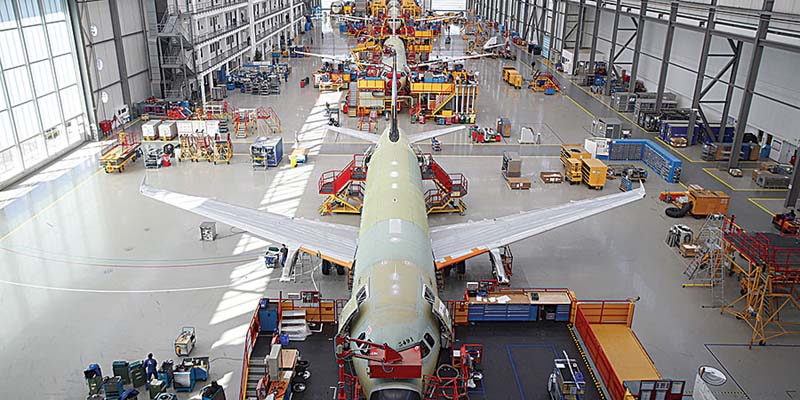
During the International Air Transport Association’s (IATA) inaugural World Engineering and Maintenance Symposium held in Madrid, the organization identified four urgent priorities to address persistent failures in the aerospace supply chain. These operational disruptions generated a massive cost for airlines, amounting to at least $11 billion over the course of 2025.
Aerospace Supply Chain Crisis by the Numbers
The mismatch between supply and demand in the airline industry has reached historic levels. Currently, the aircraft order backlog exceeds 18,000 units, forcing the sector to keep older fleets operational and raising the global average fleet age to a record 15.2 years.
Willie Walsh, IATA’s Director General, warned in his Air Transport Industry Report that the sector is operating with a deficit of more than 5,000 more fuel-efficient replacement aircraft that airlines had already factored into their plans. This shortfall translates directly into lost efficiency gains, higher lease rates, and a notable increase in maintenance costs—a situation set to worsen due to currently high fuel prices.
For his part, Stuart Fox, IATA’s Director of Flight and Technical Operations, highlighted that the stability of airline operations is being impacted by multiple concurrent factors:
- Delayed deliveries of new aircraft.
- Engine durability issues.
- Shortages of materials and spare parts.
- Limited capacity in Maintenance, Repair, and Overhaul (MRO) services.
→ “Save a Life, Not a Bag”: IATA Launches Global Passenger Safety Campaign
IATA’s Four Priorities to Strengthen the Sector
To reverse this situation, the association presented four key measures at the symposium aimed at restructuring the aerospace supply chain and building resilience:
1. Optimize Supply Chain Visibility
IATA called on Original Equipment Manufacturers (OEMs) to share earlier and more reliable information regarding delivery delays, repair turnaround times (TAT), component availability, and detected bottlenecks. This will enable airlines to plan the operation of their global networks more efficiently.
2. Open the Aftermarket
A call was made for more manufacturers to adhere to the principles of the IATA-CFM agreement, promoting greater competition in the secondary market through access to third-party MRO services, alternative parts, and approved repairs. Historic commercial restrictions on repair manuals, tooling, authorized repair networks, and spare parts distribution limit airlines’ ability to implement safe, certified alternatives. This reduces commercial options, prolongs lead times, and drives up overall costs.
3. Unlock the Value of Data, Digitalization, and AI
The association urged deep integration between airline maintenance systems and external market intelligence. The use of Artificial Intelligence will facilitate inventory management, identify material shortages, streamline repair-or-replace decisions, and reinforce warranty claims by predicting demand and reducing manual labor. As examples of progress, collaboration with the International Airlines Technical Pool (IATP) and the free availability of the MRO SmartHub platform through a data-sharing program were highlighted.
4. Build Human Talent Capacity
In light of a Boeing forecast estimating that 710,000 new maintenance technicians will be needed over the next 20 years, IATA urged a review of recruitment, training, and licensing processes to reduce preparation times and improve workforce stability. Proposed solutions include expanding training capacity, eliminating unnecessary bottlenecks in qualifications, and creating greater mutual recognition of competencies at an international level.
Feasible Regulatory Mandates: The Call to ICAO
Beyond the internal logistics chain, IATA requested realistic and globally coordinated timelines for the implementation of mandates requiring new onboard equipment or avionics upgrades. Regulatory compliance deadlines must strictly consider critical factors such as equipment certification times, actual market availability, and industry installation capacity.
These concerns have already been formally presented to the International Civil Aviation Organization (ICAO), specifically regarding regulations linked to the Global Aeronautical Distress and Safety System (GADSS), Runway Overrun Awareness and Alerting Systems (ROAAS), and Automatic Dependent Surveillance-Broadcast (ADS-B).
“This is not about delaying safety. It is about making safety feasible. Global safety advancements require globally coordinated implementation schedules that reflect certification, equipment availability, and installation capacity,” Fox stated.
Despite the heavy pressure facing the international logistics ecosystem, IATA leadership emphasized that the current outlook is not a cause for pessimism, but rather an urgent call for organized action. The success of these measures will not constitute a complete fix on its own, but it will signify a fundamental step for OEMs, suppliers, MRO shops, lessors, regulators, and airlines to work together in building the resilient supply chain that global connectivity demands.
Related Topics

American Airlines to Build Network’s Largest Admirals Club at Charlotte

British Airways Launches Multi-Million-Pound Heathrow Airport Lounge Transformation
Venezuela Opens Temporary Domestic Arrivals Terminal at Maiquetia Airport

Caracas and Margarita Airports Have Potential to Attract Private Investment but Require Legal Certainty, Says ACI-LAC


Plataforma Informativa de Aviación Comercial con 13 años de trayectoria.