
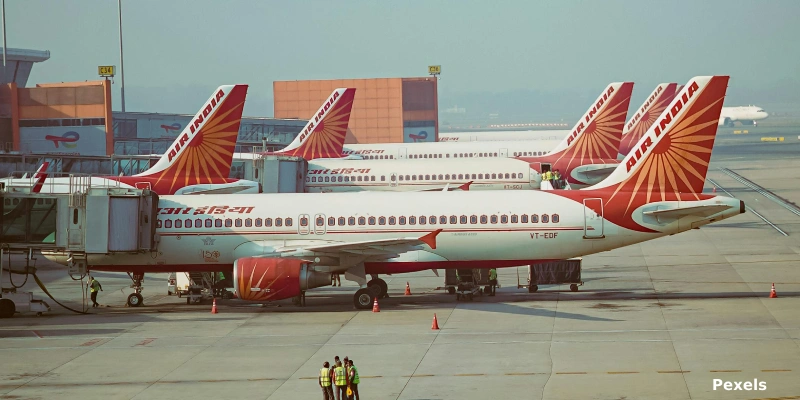
The Government of India will inject 100 billion rupees (approximately $1 billion) into state-owned oil marketing companies to cap jet fuel prices and shield domestic carriers from mounting cost pressures. The measure aims to stabilize airline operations and prevent soaring fuel expenses from being passed directly onto passenger airfares.
A Financial Lifeline Amid Escalating Costs
Aviation Turbine Fuel (ATF) accounts for nearly 40% of the operating costs for airlines in India. Recently, the country’s domestic aviation industry warned that carriers might be forced to ground flights unless the government intervened urgently to regulate fuel pricing.
The government subsidy will be provided as a financial advance to state-controlled oil retailers. Once the market stabilizes, these retailers will be required to return any remaining funds interest-free.
In exchange for this financial backing, the framework establishes a strategic quid pro quo: airlines must commit to purchasing their ATF exclusively from state-owned refineries for a period of up to three years.
→ Air India Boosts Premium Strategy with Debut of Its First Maharaja Lounge in San Francisco
Impact on Refiners and the Price Cap
The mechanism implemented by the government sets a price ceiling for jet fuel at 75.6 rupees per liter for domestic carriers. This figure sits significantly below the 104.9 rupees per liter currently charged at New Delhi’s Indira Gandhi International Airport.
While this price cap provides immediate relief to airline balance sheets, the measure would have severely compounded losses for refiners had the compensation fund not been established. Information Minister Ashwini Vaishnaw detailed that the fund will be used specifically to reimburse state refiners for under-recoveries stemming from selling fuel below market rates.
Under Pressure: Currency Depreciation and Geopolitical Tensions
In addition to volatility in the global energy market, Indian carriers are navigating a complex macroeconomic landscape:
- Weakening Rupee: The depreciation of the local currency against the US dollar has significantly driven up airlines’ foreign currency obligations, complicating aircraft lease payments and overseas airport fees.
- Prior Volatility: Reflecting the acute tension in the sector, state-run Indian Oil Corp. briefly doubled domestic fuel prices in April—a move it was forced to roll back within hours following fierce protests from airlines. Refiners subsequently kept prices frozen throughout May and June.
This assistance package builds on a series of measures India has implemented since the outbreak of the Iran conflict to safeguard its air connectivity. Key initiatives include discounts on aircraft landing and parking fees, capping aviation fuel hikes, and reducing fuel taxes for flights operating out of Delhi and Mumbai—the country’s primary aviation hubs.
The Indian government has confirmed that further details and the fine print regarding the execution of this economic contingency plan will be formally announced at a later date. For now, the subsidy secures the continuity of flight operations and mitigates the imminent risk of route suspensions in one of the world’s fastest-growing commercial aviation markets.
Related Topics

American Airlines to Build Network’s Largest Admirals Club at Charlotte

British Airways Launches Multi-Million-Pound Heathrow Airport Lounge Transformation
Venezuela Opens Temporary Domestic Arrivals Terminal at Maiquetia Airport

Caracas and Margarita Airports Have Potential to Attract Private Investment but Require Legal Certainty, Says ACI-LAC


Plataforma Informativa de Aviación Comercial con 13 años de trayectoria.