
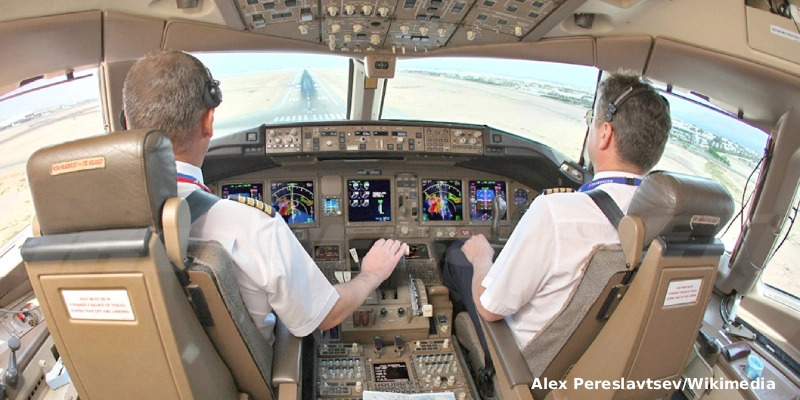
A government panel in India has proposed a new pilot licensing model that shifts a greater portion of training to advanced flight simulators, reducing actual flight hours, Reuters reported. The initiative aims to accelerate crew training and address the critical staffing shortages currently hamstringing airline expansion plans across the country.
MPL Model: Innovation in Crew Training
The proposal is based on the Multi-Crew Pilot Licence (MPL), a certification originally introduced by the International Civil Aviation Organization (ICAO) in 2006. This model has already been adopted by various countries across Europe, Asia, and the Middle East, complementing traditional training pathways, and is currently utilized by global carriers such as Qatar Airways and easyJet.
According to a preliminary 19-page report dated June 3, India is evaluating this mechanism to structure a pipeline of young first officers tailored specifically to the operational needs of each airline as they expand their fleets.
Shift in Practical Flight Hours
The fundamental difference between the traditional framework and the new proposal lies in the distribution of training hours:
- Current Regulation: Requires a minimum of 200 hours in actual aircraft.
- MPL Proposal: Cadets will complete between 100 and 120 hours in training aircraft, including at least 20 hours of solo flight time.
- Simulation Phase: The remainder of the practical instruction will be transferred to commercial airliner simulators through an alternative pathway designed to shorten graduation timelines.
The technical panel’s report underscores that an increased reliance on flight simulators can mitigate operational risks, allowing students to undergo more focused practice for emergencies and critical scenarios. The panel emphasized that this does not diminish the rigor of the training but rather redistributes its focus; therefore, it should not be interpreted as a “shortcut” despite the reduction in actual flight hours.
→ Final report on Air India Boeing 787 crash delayed as engine analysis remains incomplete
An Urgent Response to the Aviator Shortage
The airline industry in India is facing a severe deficit of technical cockpit crew. IndiGo, the country’s largest carrier, logs an average of just 7.6 pilots per narrowbody aircraft—a figure that sits significantly below the global average, which is estimated at nearly 10 pilots per aircraft.
This operational strain led to critical consequences last December when IndiGo was forced to cancel thousands of flights due to inadequate planning ahead of the transition to new flight and duty time limitations (FTL) governing crew schedules.
In addition to accelerating the training pipeline, the MPL offers a strategic advantage for local operators regarding talent retention: during the early stages of a pilot’s career, this license is less transferable between airlines, which could mitigate high employee turnover.
Industry Debate: Corporate Backing vs. Technical Skepticism
The document was drafted by a committee led by a senior official from India’s Directorate General of Civil Aviation (DGCA) and featured input from representatives of Air India, IndiGo, and flight training organizations (FTOs).
At the corporate level, the proposal enjoys strong backing. Ashim Mittra, Senior Vice President of Flight Operations at IndiGo, formally stated during August consultations that the MPL is necessary to “support aviation growth while ensuring safety as a core pillar.”
However, the project has drawn reservations from traditional flight instructors. The Association of Flight Training Organizations submitted a letter on June 9 warning that cutting actual flight hours could weaken cadets’ stick-and-rudder skills and their aeronautical decision-making during unexpected events. Consequently, they formally requested the DGCA to establish a mandatory minimum of 150 hours in actual aircraft.
Even the government draft acknowledges this risk, noting that some pilots trained under this framework might exhibit “weaker manual flying instincts and lower confidence when dealing with unexpected situations independently.”
Next Steps
The regulatory committee has requested airlines to submit their final feedback and comments on the proposal. After processing the industry’s input, the commission will present the definitive report to the head of the DGCA to determine the viability and potential implementation timeline of this licensing reform in the country.
Related Topics

American Airlines to Build Network’s Largest Admirals Club at Charlotte

US Department of Transportation Closes Airline Data Privacy Review Without Penalties

Southwest Unveils Record-Breaking Summer 2027 Schedule With Major Expansion in Austin, Nashville, and San Diego
Alaska Airlines Challenges Delta in Seattle, Taking its Offensive to Long-Haul Routes

Plataforma Informativa de Aviación Comercial con 13 años de trayectoria.