
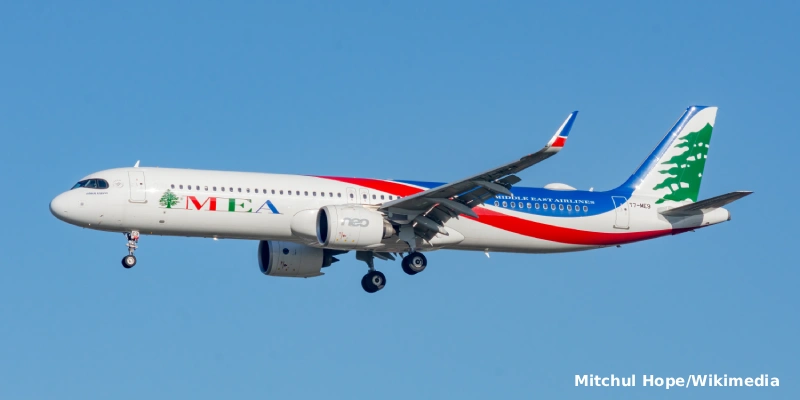
Lebanon’s civil aviation authority has initiated a safety audit of Middle East Airlines (MEA), Reuters reported exclusively. The move follows complaints from pilot unions alleging that crews are operating near airstrike zones and face penalties for reporting safety incidents.
A Strategic Carrier Under International Scrutiny
Lebanon’s flag carrier, based in Beirut, operates a fleet of approximately 20 aircraft connecting the country to Europe, the Middle East, and West Africa. Nationally, MEA has been recognized for maintaining the country’s connectivity during armed conflicts and financial crises, sustaining an economy that heavily relies on tourism and expatriate remittances. However, the operating environment has become critical since military strikes in the region intensified, with multiple bombardments landing near Lebanon’s primary airport.
The International Federation of Air Line Pilots’ Associations (IFALPA) formally expressed its concerns in a letter sent to the Central Bank of Lebanon, the airline’s majority shareholder. The federation’s president, Ron Hay, described transporting civilian passengers through conflict zones under wartime conditions as an “unacceptable risk,” dismissing the narrative that these operations are heroic. For its part, the airline defended its safety record, arguing that its flights into hostile areas are conducted under strict risk assessments coordinated with the government and the local regulator.
Audit Details and Financial Pressures on Flight Crews
The Director General of the Lebanese Civil Aviation Authority (LCAA), Mohammed Aziz, notified the pilots’ federation of the commencement of an operational safety audit to assess the concerns raised. Although the airline stated that preliminary reviews confirmed compliance with safety regulations, the regulatory authority indicated that the audit process remains ongoing and that a mediation process between the company and flight crews is being maintained.
The dispute with technical personnel is heavily influenced by the economic crisis Lebanon has suffered since 2019:
- Salary Structure: Following the financial collapse and the devaluation of base salaries, the majority of MEA pilots’ income depends on per-flight pay, creating a direct financial incentive to continue operating in high-risk scenarios.
- Allegations of Retaliation: Pilot unions point out that reporting involuntary errors—intended to improve safety—has been penalized by forcing crew members into retraining programs, which suspends their flight pay and translates into a financial penalty. The airline denies these accusations, labeling them unfounded and defending that training assignments correspond strictly to regulatory requirements.
Concern Among Global Aviation Alliances
The situation has escalated beyond Lebanese borders. Various pilot groups have contacted SkyTeam, the global airline alliance of which MEA is a member alongside carriers like Air France and Delta Air Lines.
Regulations from the U.S. Federal Aviation Administration (FAA) and the European Union Aviation Safety Agency (EASA) mandate that companies under their jurisdictions conduct audits of their codeshare partners. In this regard, Air France confirmed that it regularly audits its commercial partners, while Delta and SkyTeam management indicated they are closely monitoring the development of the situation in Beirut.
Questions Over Regulator Funding
Another point of friction identified by IFALPA is the financial support MEA provides to LCAA personnel. Internal financial records revealed that employees dedicated to aviation safety received direct financial compensation from the airline. The pilot federation warned that this arrangement compromises independence and whistleblowing capacity within the system.
MEA argued that this financial support was coordinated with the Lebanese government to prevent the total collapse of airport infrastructure after air traffic controllers’ salaries dropped by more than 90% due to currency devaluation. The airline emphasized that this assistance does not interfere with the authority or independence of the LCAA, clarifying that neither the agency’s directors nor the assigned auditors receive these funds. The outcome of the mediation and the LCAA’s final report will determine international confidence in the operational standards of Lebanese air connectivity.
Related Topics

LATAM Airlines Announces Nonstop Flights Between Santiago de Chile and Caracas Starting in January

Satena to Launch Direct Flights Between Montería and Panama City in October

LATAM Airlines Dismisses Rumors Regarding the Creation of a Venezuelan Subsidiary

Avianca Bolsters Argentina Connectivity: Daily Service to Cordoba and Revamped In-Flight Experience

Plataforma Informativa de Aviación Comercial con 13 años de trayectoria.