
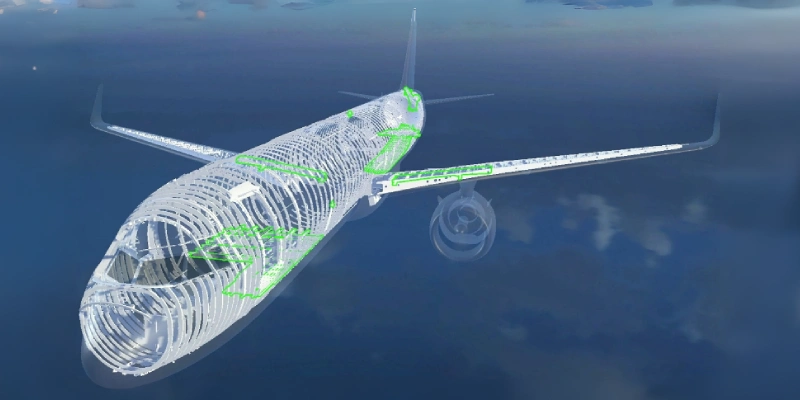
Airbus has launched the STEP4 incremental improvement program to retroactively transfer design and production innovations developed for the brand-new A321XLR to the rest of the A320 Family. This strategy unifies the single-aisle platform for the next decade and optimizes industrial processes to sustain the manufacturer’s ambitious target of delivering 1,000 aircraft annually.
Origins of the STEP4 Program: Connecting the Present with the Future
Since its original launch more than four decades ago, the Airbus A320 Family program has undergone a continuous cycle of technological evolution to maintain its leadership in the single-aisle segment. The program’s most recent milestone was reached in late 2024, when the ultra-long-range variant, the Airbus A321XLR, formally entered commercial service with its launch operator, Iberia.
However, while the A321XLR was in the final stages of design and production, development teams at the European consortium were already structuring the next step to safeguard the platform’s competitiveness heading into the next decade. This incremental improvement project has been grouped under the acronym STEP4 (standing for Synchronized Targeted Embodiment Point 4). The fundamental objective of STEP4 is to improve industrial producibility on assembly lines, simplify maintenance, and ensure that the single-aisle aircraft family remains competitive beyond 2030.
A321XLR: New Standard for Fleet Technical Commonality
The first direct benefit or “quick win” of the STEP4 program consists of transferring multiple innovations originally conceived specifically for the A321XLR and infusing them back into the high-volume Airbus A321neo and Airbus A320neo models. Most importantly for operators, this transfer is achieved without altering operational commonality with the thousands of A320 Family aircraft already in active service worldwide.
The transferable design features from the XLR to be integrated into the standard A321neo include:
- Simplified and lightened wing: The wing design from the XLR is adopted, incorporating a single-slotted inboard flap. This structural element directly replaces the traditional A321neo’s double-slotted inboard flap system.
- Electronic rudder (e-Rudder): A next-generation control system that offers significant structural weight savings compared to a conventional analog rudder, while increasing reliability and noticeably reducing maintenance costs for airlines.
- Updated flight control laws: New software directives to optimize the aircraft’s dynamic response.
- Multifunctional runway light system: An upgrade to external optical systems for enhanced visibility and safety during ground and night operations.
- Optional forward temperature zones: An optimized system that improves comfort in the forward section of the passenger cabin (business class).
“We are applying the best ingredients from our XLR development into our high-volume platform, the A321neo. How are we doing this? By ‘marrying’ several new features—including the improved wing—that we originally developed for the XLR and are now implementing back onto the A321neo.”
Aerodynamic and Payload Optimization
In line with the simplification of the inboard flap, the A321neo will benefit from the Enhanced Takeoff Performance Improvement Package (ETOC). This technology, which originally debuted on the A350 and was subsequently adapted for the A330neo, optimizes takeoff performance and increases aircraft payload on challenging runways by introducing high-precision intermediate flap positions.
Cross-Functional Innovations Across the Single-Aisle Family
The STEP4 package is not limited to cloning XLR developments onto other aircraft; it goes a step further by incorporating entirely new structural and systems upgrades that directly address requests from global airline operators.
Both the A321XLR and the A321neo will simultaneously receive the following developments:
- “Cobra Duct” APU air inlet: The Auxiliary Power Unit (APU) air intake has been relocated to the top of the aft fuselage. This modification prevents the ingestion of contaminated air on the ground, drastically improving air quality inside the passenger cabin.
- Advanced dual-deck corrosion protection:
- Upper deck: Implementation of seat tracks manufactured from pure titanium and titanium protective foils over the aluminum tracks in the galleys and lavatories.
- Lower deck: Introduction of high-performance drainage systems, advanced elastomeric sealants, and structural reinforcements on cargo panel thresholds.
- Cabin floor reinforcement: Modification of the floor structure to provide superior cargo flexibility and meet new industry standards for average passenger and baggage weights.
- Increased use of LED technology: Full transition to light-emitting diodes in critical systems such as runway and beacon lights.
- Data systems standardization (nFDIMU): Integration of a new unified flight data interface and management unit across the entire A320 Family, increasing processing speed and streamlining spare parts logistics (higher part number commonality).
Phased Industrialization: The A320neo as the Program Pilot
The smallest model in the family, the A320neo, will also receive as much systems commonality as possible from the A321neo and A321XLR, with the exception of features exclusive to the A321 fuselage (such as the optimized wing, the ETOC package, or the advanced cabin heating system).
However, to mitigate risks associated with introducing major physical changes to high-rate assembly lines, Airbus has structured a phased industrialization strategy using pilot fleets:
- Phase 1 (Initiating with the A320neo): Since the A320neo currently has a lower production volume compared to the A321, it has been selected as the platform to “test and prove” complex structural modifications. The first A320neo aircraft in this pilot fleet are already incorporating and validating titanium tracks, the APU “Cobra Duct,” and corrosion protection packages in production.
- Phase 2 (Scaling to the A321neo): One year after deliveries of the first STEP4 A320neos begin, Airbus will initiate mass production of the first A321neos with the new upgrade package, including the common simplified wing and the new electronic flight controls.
- Phase 3 (Final XLR Upgrade): Finally, the cross-functional improvements of the STEP4 program (such as the “Cobra Duct” system and structural reinforcements) will be natively implemented on the A321XLR lines to definitively unify production across the entire single-aisle range.
With the progressive implementation of the STEP4 standard, Airbus aims not only to upgrade the onboard experience for airlines and their passengers but also to operationally bulletproof its supply chain. By unifying part numbers, simplifying the A321neo’s wing aerodynamics, and accelerating worker learning curves through the A320neo pilot fleet, the European manufacturer is smoothing the industrial path to successfully meet its demanding target of delivering 1,000 aircraft a year, securing the competitiveness of its flagship family well beyond 2030.
Related Topics
Southwest Airlines Evaluates Widebody Aircraft, Eyes Boeing 787
Avolon Orders 250 Aircraft from Airbus and Boeing

FAA Clears Path for Boeing 737 MAX 10 Certification After Dismissing Flight Software Safety Risks
Ethiopian Airlines Orders Ten Boeing Freighters: Eight 777-8Fs and Two 777Fs to Boost Global Logistics Network

Plataforma Informativa de Aviación Comercial con 13 años de trayectoria.