Boeing Nears Engine Anti-Ice Redesign Approval, Clearing Path for 737 MAX 7 and MAX 10 Takeoff
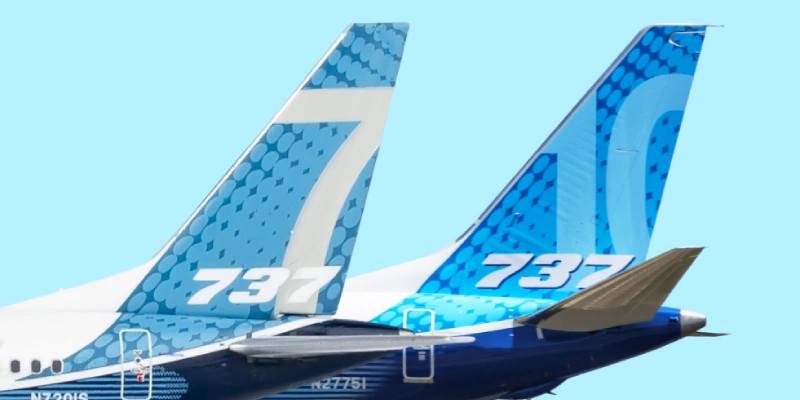




Boeing is in the final stages of securing regulatory approval for a key technical modification to the engine anti-ice (EAI) system of the 737 MAX aircraft family. This redesign directly addresses the risk of overheating and potential engine failure—anomalies that emerged as the primary hurdle to the regulatory certification of the 737 MAX 7 and 737 MAX 10 models.
According to data from aviation analytics firm Cirium, Boeing has already assembled approximately 30 MAX 7 and nine MAX 10 aircraft, which currently remain in storage awaiting delivery. The commercial significance of the higher-capacity variant is indisputable: the MAX 10 accounts for at least 28% of the 737 MAX family’s total backlog.
Rigorous Progress in Flight Test Programs
Progress in the narrowbody variant’s certification campaign has gained critical momentum. The 737 MAX 10 has already completed 98% of its regulatory certification flight tests.
“We have only two flight tests remaining to conclude the process, which we expect to complete very soon,” said Chris Payne, Boeing Vice President and General Manager of the 737 MAX Development Programs.
For its part, the Federal Aviation Administration (FAA) indicated in May that it plans to certify the smaller variant, the 737 MAX 7, during this summer. US carrier Southwest Airlines stands as the primary customer and launch operator for this variant.
Years of Delay and Ceded Competitive Advantage
The cumulative delays in certifying the MAX 7 and MAX 10 have set Boeing’s original timeline back by years. This commercial standstill has allowed its European rival, Airbus, to significantly consolidate and expand its market lead in the strategic single-aisle segment.
→ Boeing Records Highest First-Half Deliveries Since 2018 with 314 Aircraft
Boeing has had to face a considerably more exhaustive and stringent certification process. This increased scrutiny is a response to both the aftermath of the two fatal MAX 8 crashes in 2018 and 2019, and heightened oversight of its production systems and quality control following the January 2024 incident, in which an Alaska Airlines MAX 9 suffered an in-flight door plug blowout.
Technical Benefits of the Solution and Retrofit Strategy
The original engine anti-ice issue was detected in 2021. At the time, regulators permitted in-service variants—the MAX 8, MAX 8-200, and MAX 9—to continue commercial operations under specific operational guidelines, allowing the manufacturer to keep its assembly lines active while pausing the certification of the new variants.
The redesign proposed by Boeing’s engineers yields optimal results that go beyond simply mitigating thermal risk. According to Mike Sinnett, Boeing Senior Vice President of Product Strategy, Product Development, and Future Airplane Programs, engineering evaluations at GE Aerospace’s test facility in Ohio showed that the technical update also reduces engine noise emissions and mitigates fan blade vibration.
It is worth noting that the LEAP-1B engine powering the 737 MAX family is a powerplant developed and manufactured by CFM International, the joint venture between GE Aerospace and French company Safran.
Logistics and Implementation Plan for Active Fleet
For the currently active fleet, Boeing has established the following operational parameters for implementing the technical upgrade:
- Primary maintenance time: The majority of the physical engine system replacement can be executed within a single standard maintenance shift.
- Wiring complexity: The process requires installing new wiring, which represents a more invasive intervention within the engine structure.
- Cost-reduction strategy: The company is working closely with regulators to establish a flexible schedule, aiming for airlines to perform this retrofit during scheduled heavy maintenance checks, thereby preventing daily service disruptions and operational overruns.
Flight Deck Alerting System Modernization
Additionally, the 737 MAX 10 will feature a fully updated flight crew alerting system, officially designated as the enhanced Angle-of-Attack (AOA) system.
This addition directly addresses safety requirements and legislative mandates enacted by the United States Congress. The regulatory framework was substantially tightened following two fatal crashes that claimed 346 lives, leading to a 20-month nationwide grounding of the fleet starting in early 2019.
Bill Quashnock, Boeing’s Deputy Chief Pilot for the 737 program, noted that the goal of this upgrade is to simplify flight deck alerts in the event of potential Angle-of-Attack sensor failures. This avoids overwhelming flight crews with an excessive volume of alarms and complex data—a factor that proved critical in the Indonesia and Ethiopia accidents. All currently operating 737 MAX aircraft must be retrofitted with this new system within a two-year deadline once it receives formal regulatory approval.
Parallel Progress in the Boeing 777-9 Program
In the widebody segment, Boeing is also progressing with the certification campaign for its upcoming long-range model, the 777-9. The program has already surpassed 50% of its official certification flight tests.
According to Terry Beezhold, Vice President and General Manager of the 777-9 Program, the company’s timeline remains “on track” to begin the first commercial deliveries of this widebody variant next year. The manufacturer still faces significant regulatory hurdles ahead, most notably securing Extended-range Twin-engine Operational Performance Standards (ETOPS) approval.
Resolving the engine anti-ice issue represents a crucial step for Boeing’s immediate commercial future. It will not only unlock deliveries of dozens of built and ready-to-fly aircraft but will also equip the manufacturer with the tools necessary to resume competition against Airbus in the highly competitive narrowbody market, all while solidifying the foundation of safety for its global operations.
Related Topics
Avolon Orders 250 Aircraft from Airbus and Boeing
Airbus A321XLR: Reshaping Transatlantic Routes and Replacing Boeing 757
Biman Bangladesh Airlines Signs Order for 10 Airbus Jets
Airbus Picks Up Pace: Delivers 72 Aircraft in September Despite Quality Snags
Plataforma Informativa de Aviación Comercial con 13 años de trayectoria.