Ireland Enacts Key New Law to Unlock Dublin Airport Passenger Cap
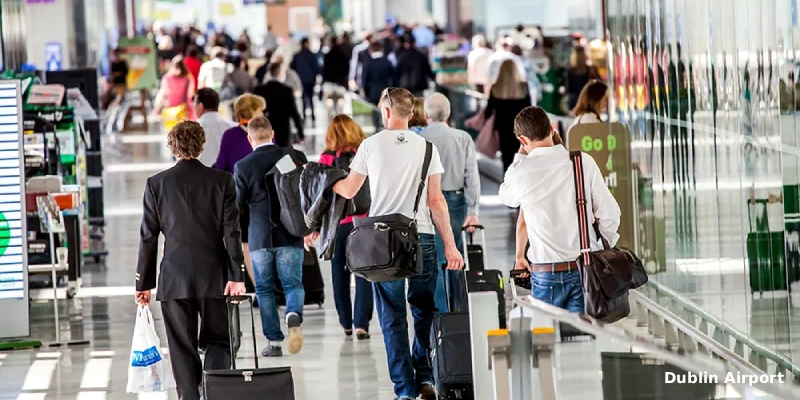




Irish Minister for Transport Darragh O’Brien confirmed that President Catherine Connolly has signed into law new legislation designed to facilitate the removal of the passenger cap at Dublin Airport. Following this legislative milestone, O’Brien announced his intention to immediately activate the relevant provisions of the act, with the expectation of issuing a formal order to modify or lift the cap as soon as the corresponding environmental assessment is completed.
The lifting of the restriction, which the minister initially projected for July, aims to restore operational certainty at the country’s primary gateway, which handles approximately 80% of national air traffic. Currently, the annual cap of 32 million passengers is provisionally suspended pending a ruling from the Court of Justice of the European Union.
Background of a Two-Decade Restriction
The operational limitation at the Irish capital’s terminal dates back to 2007, when urban planning authorities set the limit at 32 million passengers with the original purpose of mitigating traffic congestion on surrounding local roads.
However, market growth far outpaced transport planning forecasts: last year, the airport exceeded this limit by a margin of 4 million passengers.
Bilateral Tensions and Threats to the Transatlantic Market
The political urgency to repeal this restriction is driven not only by domestic dynamics, but also by mounting diplomatic and commercial pressure from abroad:
- U.S. Airlines’ Opposition: United States carriers have expressed categorical rejection of slot and capacity constraints at Dublin.
- Risk of Washington Retaliation: The trade group representing U.S. airlines, alongside Irish operators, warned that the U.S. government could implement reciprocal measures and restrict transatlantic flights from Dublin if the limit were not promptly removed.
- Economic Impact: Aviation industry leaders on the island have consistently warned that maintaining the operational cap will cause irreversible structural damage to Ireland’s economy.
Environmental and Community Discrepancies in the Local Debate
Despite strong economic and connectivity arguments, the measure continues to face pockets of domestic resistance:
- Local Communities: Various resident groups support maintaining the restrictions to protect their quality of life and prevent the collapse of adjacent road infrastructure.
- Environmental Groups: Several environmental organizations have warned that bypassing this regulatory mechanism weakens government oversight of commercial aviation carbon emissions—a sector traditionally characterized by its high carbon footprint.
With the bill signed into law by President Connolly, the Department of Transport will urgently initiate the technical and environmental processes required to formalize the lifting of the restriction.
The long-term development of Dublin Airport will now depend on the speed with which the environmental assessment is finalized and the pending judicial resolution in European courts—factors that will dictate the rules of the game for airlines operating at Ireland’s most critical connectivity hub.
Related Topics

Avianca Flight from Medellin to New York Diverts to Miami Due to Severe Turbulence; At Least Eight Hospitalized

Southwest Airlines Evaluates Widebody Aircraft, Eyes Boeing 787

Air France to Expand US Network with New Direct Flights to Nashville and San Diego for Summer 2027

Icelandair Adds Madrid and St. Louis to Route Network for Summer 2027, Expands Southwest Partnership

Plataforma Informativa de Aviación Comercial con 13 años de trayectoria.