
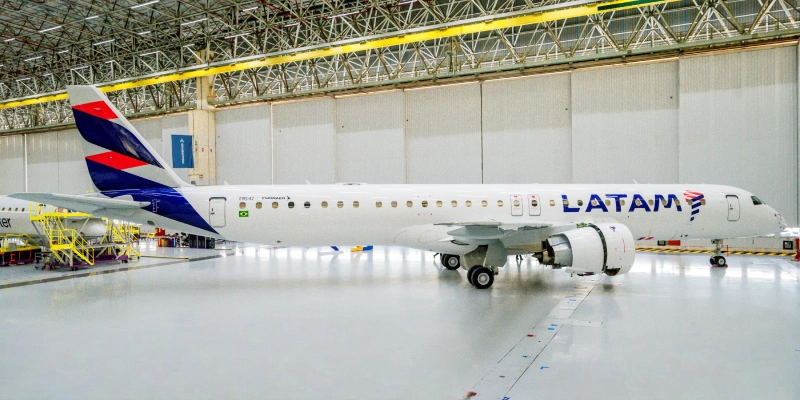
LATAM Airlines Group continues to accelerate its growth and fleet renewal strategy with a historic outlook. The airline group plans to induct more than 40 next-generation aircraft during 2026, enabling it to close the year with over 410 operational aircraft and consolidating one of the largest commercial fleets globally.
An Accelerated Growth Plan for 2026
The company’s expansion has maintained a steady pace throughout the year. During the first half of 2026, the group already integrated 13 next-generation aircraft:
- 7 Airbus A320neos
- 4 Airbus A321neos
- 2 Boeing 787-9 Dreamliners
For the second half of 2026, the company projects the delivery of 28 additional units, bringing the total to more than 40 new aircraft for the year. These inductions will not only reinforce the group’s operational efficiency but will also boost connectivity between South America and the rest of the world.
Regional Flexibility: Introducing the Embraer E190-E2
One of the major developments for the second half of the year is the arrival—for the first time in the group’s fleet—of the Embraer E190-E2. These Brazilian-built aircraft will serve a strategic role:
- Domestic Strengthening: They will be deployed to bolster the domestic network in Brazil.
- Operational Flexibility: They will allow the airline to tailor capacity to demand across various types of regional markets.
“Fleet renewal is one of the most important investments we are driving as a group, as it allows us to grow more efficiently and better respond to the region’s connectivity needs,” said Sebastián Acuto, Vice President of Fleet and Projects at LATAM Airlines Group.
Next Steps: The Airbus A321XLR Debut in 2027
The airline’s roadmap extends beyond the short term. For 2027, the renewal plan includes the debut of the first Airbus A321XLR.
This narrowbody model will be key to the carrier’s medium-haul network, as it will allow non-stop operations on extended-range routes, opening up unprecedented markets for South American connectivity.
Sustainability and Outlook Toward 2030
By the end of the decade, the group projects the addition of up to 130 supplemental aircraft from various manufacturers. This aggressive delivery schedule aims to ensure that, by 2030, more than 50% of the fleet will consist of next-generation models.
This technological overhaul directly aligns with the company’s environmental goals. According to manufacturer data, these new aircraft offer:
- A 20% to 25% reduction in carbon dioxide emissions compared to previous generations.
- A significant optimization in fuel burn.
This optimized performance not only lowers operating costs but also drives LATAM Airlines Group’s commitment to achieving its net-zero emissions target by 2050.
Related Topics
End of an Era: Lufthansa Retires Airbus A340-600 Fleet After 23 Years of Service

ITA Airways Celebrates Its Fifth Anniversary
Condor Launches Daily Flights Between Berlin and Abu Dhabi

Lufthansa in Talks to Acquire Remaining 50.1% Stake in TAP Air Portugal Following Initial Entry


Plataforma Informativa de Aviación Comercial con 13 años de trayectoria.