
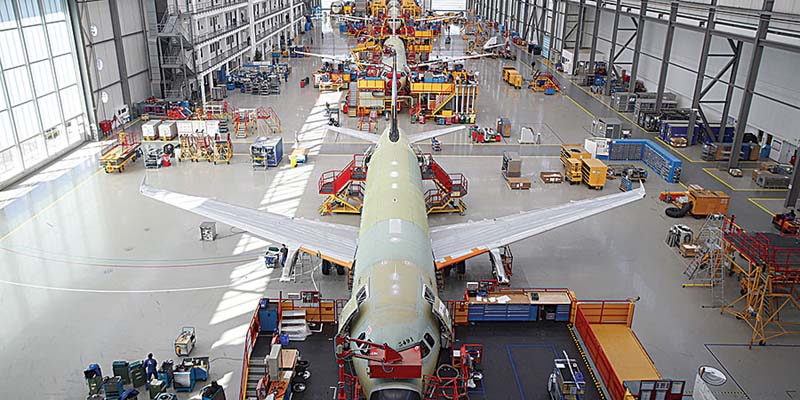
European aircraft manufacturer Airbus delivered 67 aircraft in July, matching its delivery volume for the same period last year. This brings the company’s year-to-date total to 418 aircraft delivered following a slow operational start to the year.
To achieve its corporate guidance of “around 870” deliveries by year-end, Airbus will need to maintain an average delivery rate of 90 aircraft per month over the remainder of the year.
During last week’s financial results presentation, CEO Guillaume Faury expressed growing confidence in meeting the full-year target, clarifying that the wording “around 870” aircraft is consistent with a final delivery volume of up to 890 units. Furthermore, industry sources indicated that there is an internal push for staff to breach the 900-delivery threshold.
As part of the earnings presentation, executive management adopted a more conciliatory stance toward Pratt & Whitney amid ongoing disputes regarding engine supplies.
Commercial Activity: Confirmed China Orders and Leasing Deals
On the commercial front, Airbus booked a total of 204 gross orders in July following a modest showing at the Farnborough Airshow. This brings the manufacturer’s year-to-date total to 1,024 gross orders (1,090 orders prior to cancellations).
Notable adjustments recorded in the latest period include the cancellation of 15 Airbus A330neo aircraft by AirAsia X, a move that forms part of a commercial restructuring aimed at acquiring 150 Airbus A220 aircraft.
Key Commercial Agreements Breakdown:
- Asian Market: Commercial agreements were confirmed for the purchase of dozens of aircraft destined for Chinese carriers: 40 A320neo family aircraft for Hainan Airlines and 25 A350-900s for China Eastern.
- Aircraft Leasing Sector: The company officially added an order signed at Farnborough to its backlog for 100 Airbus A320neo family aircraft from Irish lessor giant SMBC Aviation Capital.
Despite the moderate delivery pace logged in the first half of the year and persistent supply chain bottlenecks surrounding engine manufacturers, the consolidation of firm orders in key growth markets like China, alongside strong backing from global lessors, keeps Airbus on a solid competitive trajectory for the end of the fiscal year.
Related Topics

FAA Clears Path for Boeing 737 MAX 10 Certification After Dismissing Flight Software Safety Risks
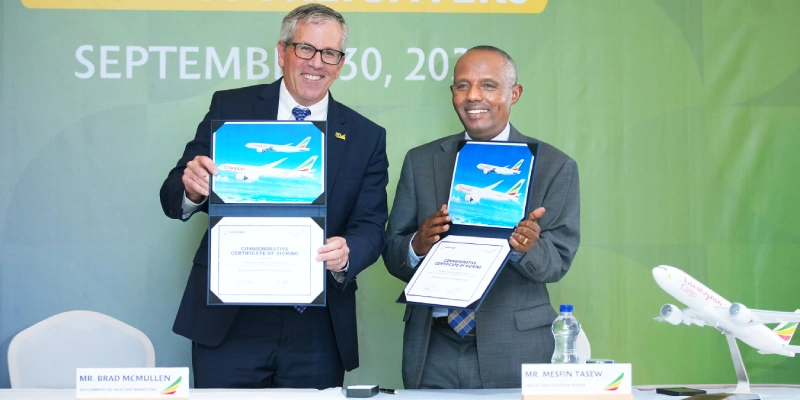
Ethiopian Airlines Orders Ten Boeing Freighters: Eight 777-8Fs and Two 777Fs to Boost Global Logistics Network

US Transportation Secretary Rules Out Safety Risks From Boeing 737 MAX Software Glitch
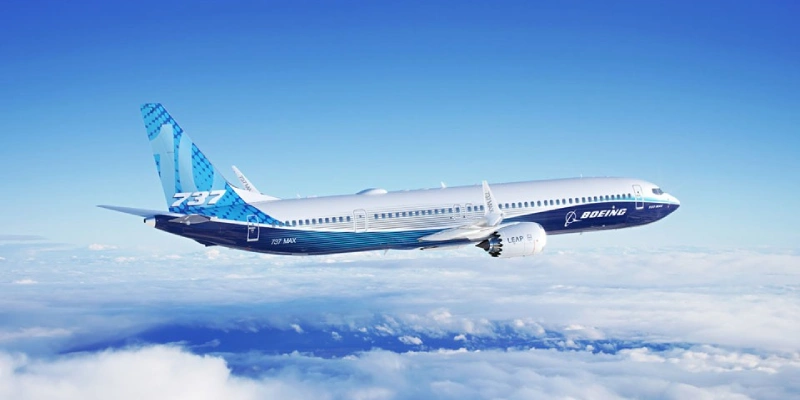
FAA Delays Boeing 737 MAX 10 Certification Following Software Issue


Plataforma Informativa de Aviación Comercial con 13 años de trayectoria.