
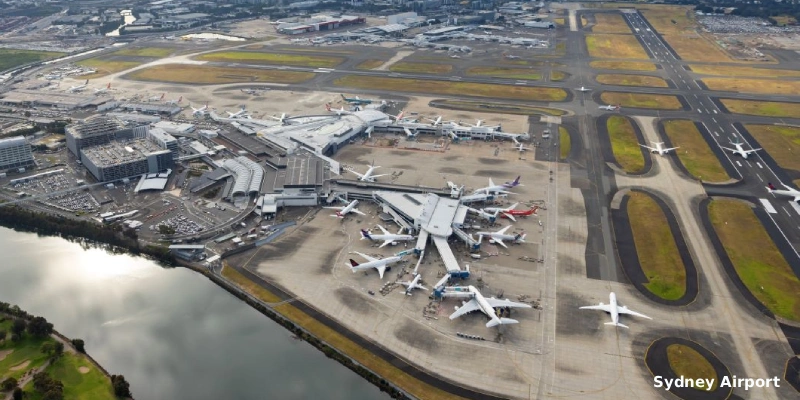
Internal records and call recordings obtained exclusively by Reuters reveal that several air traffic controllers on duty during a near-collision between two Qantas aircraft at Sydney Airport on July 27 had been identified as being at high risk of fatigue.
The incident occurred when a landing Qantas turboprop narrowly avoided a Boeing 737 from the same airline that had been cleared to cross the runway. This marked the first of six loss-of-separation incidents recorded at Sydney Airport over roughly a one-month period.
Of the 10 controllers on duty at the time of the event:
- 5 controllers were classified as Category “H” (High risk of fatigue).
- 1 controller held an “M” (Medium risk) assessment.
- 1 controller maintained an “L” (Low risk) evaluation.
- 3 controllers had no fatigue risk ranking assigned.
Additionally, the shift manager confirmed on an internal call that two of the three controllers directly involved in the safety-critical maneuver were assessed at high fatigue risk, while the third was at medium risk. Speaking with an air traffic management director, the manager described the staffing situation as “a bit crazy,” noting that while no collision occurred, the team was left shaken by how close the aircraft came.
Fatigue Risk Assessment and Operational Pressure
The fatigue management system in place does not directly measure an individual’s physical exhaustion; instead, it uses an automated assessment incorporating workload parameters and roster patterns to calculate estimated risk levels.
→ Qantas to Advance Airbus A380 Fleet Retirement to Mid-2028
When elevated ratings occur, required mitigation measures must be approved by shift managers or traffic management directors and include:
- Extending rest periods.
- Capping traffic volume assigned to an individual controller.
- Ending shifts early.
However, controllers speaking on condition of anonymity indicated that it is common practice for personnel to remain on position despite high-risk classifications. High traffic density and acute staffing shortages hamper the effective execution of these mitigations, with one controller stating they had never seen a colleague pulled from duty for being deemed too fatigued to work.
Meanwhile, Scott Nugent, president of Civil Air—the union representing roughly 85% of Australian air traffic controllers—stated that an increasing number of shifts in recent years have shown elevated fatigue risk levels, reflecting reduced rest opportunities and extended duty hours. Nugent explained that chronic understaffing drives mandatory overtime and cuts into rostered days off, intensifying operational pressure on frontline staff.
Internal documents presented by Airservices Australia in Canberra revealed that during the six weeks leading up to August 28, the Sydney sector experienced an unusually high surge in short-notice sick leave, severely undermining the agency’s ability to fully staff operational shifts.
Regulatory Framework and International Context
Globally, Flight Duty Period (FDP) limits and duty-time regulations for air traffic control are not standardized; individual aviation authorities must design their own Fatigue Risk Management Systems (FRMS).
| Country | Maximum Consecutive Duty Days / Shifts Allowed |
|---|---|
| Australia | Up to 10 consecutive shifts (including overtime and emergencies) / Maximum 80 continuous hours. |
| Canada | Up to 8 consecutive days. |
| United States | Up to 6 consecutive days. |
Both Civil Air and local controllers noted that working 10 consecutive days before receiving a single day off is a common occurrence in Australia.
Persistent staffing shortages remain a shared challenge across global airspace networks. In the United States, a report by the National Academies of Sciences, Engineering, and Medicine revealed that controller overtime expenditure surged over 300% between 2013 and 2024, topping $200 million in the past year alone.
Next Steps and Ongoing Investigation
Airservices Australia, the government agency responsible for managing the country’s air traffic controllers, declined to comment on the fatigue logs due to the active investigation.
The Australian Transport Safety Bureau (ATSB) is currently investigating all six incidents recorded at Sydney Airport to determine whether systemic issues or common safety deficiencies contributed to the sequence of events.
Related Topics

Aeromexico Plans to Launch Flights to Caracas in Q1 2027 and Evaluates Making Santiago Seasonal Route Year-Round
Copa Airlines Ramps Up Americas-Wide Campaign for Margarita Island Ahead of Porlamar Route Launch
LATAM Airlines Strengthens Regional Leadership with Five Honors at the 2026 World Travel Awards

Copa Airlines Restores Operations Following Seismic Activity in Panama and Expands Commercial Flexibility Policies


Plataforma Informativa de Aviación Comercial con 13 años de trayectoria.