
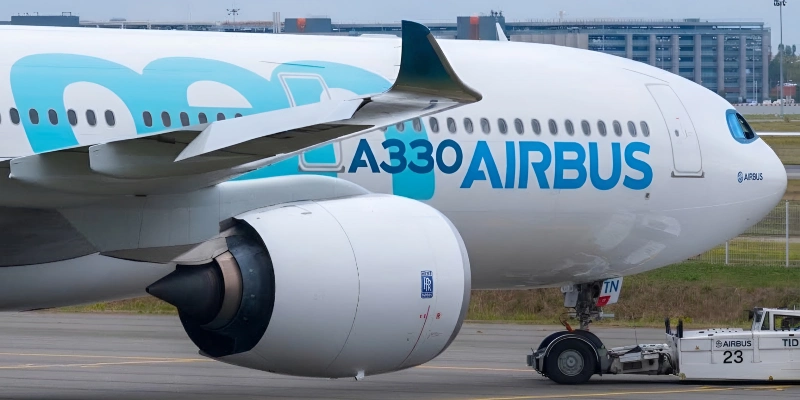
European planemaker Airbus was forced to slow down deliveries of its A330neo model over the summer after discovering a loose tool in the tail section of an aircraft during production. The event temporarily disrupted delivery flows for the widebody jet while safety inspections were conducted across the entire assembly line.
An Isolated Quality Issue Detected During Pre-Delivery Inspection
The incident came to light during a pre-delivery inspection when a tool was identified inside the aircraft’s structure. Specifically, the finding occurred within the horizontal stabilizer—the component responsible for controlling the aircraft’s pitch attitude.
In a statement issued via email, the company confirmed the situation:
“We confirm that we recently identified an isolated quality issue on an A330 horizontal tailplane. This led us to inspect A330s in the production process, slowing monthly deliveries over the summer. The root cause has been identified and A330 deliveries have resumed.”
Although production of the horizontal stabilizer takes place at Airbus facilities in Spain, the company did not specify the exact location of the aircraft when the object was left or discovered. Additionally, a source familiar with the matter clarified that this incident is unrelated to the recent wave of strikes recorded across the Spanish plants.
→ Qantas to Advance Airbus A380 Fleet Retirement to Mid-2028
Impact on Summer Delivery Figures
The verification and inspection process completely halted commercial delivery flows for the model through mid-summer:
- June: 0 A330 deliveries.
- July: 0 A330 deliveries.
- August: Projected delivery of a single A330.
Risk of Foreign Object Damage in the Aerospace Industry
The discovery falls under the category of Foreign Object Damage (FOD)—a technical concept encompassing tools, rags, or other items left unintentionally in improper locations during manufacturing or maintenance phases.
To mitigate these risks, the aviation industry has implemented advanced monitoring technologies:
- Radio-Frequency Identification (RFID).
- Internet-connected tools for real-time inventory tracking and control.
The operational safety risk posed by these events was recently highlighted by the Australian Transport Safety Bureau (ATSB) in a report on a maintenance failure involving an in-service aircraft, warning that the presence of FOD can severely compromise the safe operation of an aircraft.
Normalization of Operations
After identifying the root cause of the issue and completing the required inspections on assembly-line aircraft, Airbus confirmed that deliveries for the A330 family have formally resumed, putting an end to the logistical disruption.
Related Topics

Boeing Posts Best Month of 2026 With 57 Aircraft Delivered in September
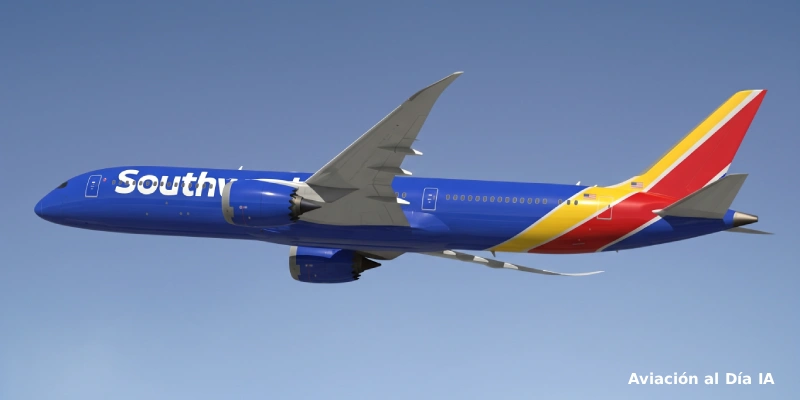
Southwest Airlines Evaluates Widebody Aircraft, Eyes Boeing 787

Avolon Orders 250 Aircraft from Airbus and Boeing

FAA Clears Path for Boeing 737 MAX 10 Certification After Dismissing Flight Software Safety Risks


Plataforma Informativa de Aviación Comercial con 13 años de trayectoria.