

During a Morgan Stanley conference on Wednesday, Boeing Chief Executive Kelly Ortberg conceded that stabilizing the 737 MAX production rate at 47 aircraft per month is taking “longer than expected.”
Following the executive’s remarks, shares of the aerospace manufacturer dropped 2.5% immediately, closing the trading session down 4.5%.
Ramping up delivery rates for the narrowbody twin-engine jet is critical to the airframer’s financial recovery following years of consecutive crises that have left the company saddled with nearly $26 billion in net debt and substantial reputational damage.
737 MAX Variant Certification Status
On the regulatory front, Ortberg provided updates on the progress across the narrowbody family:
- Boeing 737-10: Ortberg anticipated that the largest variant in the program will be certified “very soon.” The process is running several years behind schedule—a critical milestone given that the model accounts for roughly 30% of all 737 family orders.
- Boeing 737-7: As a reminder, the smallest variant was certified by U.S. regulators earlier this year.
→ Korean Air and Boeing Finalize Historic Order for 103 Aircraft Valued at $36.2 Billion
Supply Chain Bottlenecks on the Boeing 787 Dreamliner
The company’s widebody program is also grappling with supply chain headwinds. Plans to increase the Boeing 787 Dreamliner production rate to 10 aircraft per month have been pushed back due to engine supply delays.
Boeing is currently sustaining an assembly rate of eight 787s per month. However, protracted certification timelines for premium-class seating have weighed on actual customer delivery rates.
“While we might have a pretty good factory rollout rate of eight a month, you’re going to see lumpiness month-to-month on 787 deliveries,” Ortberg explained.
Skepticism Over Potential New China Order
Ortberg also tempered expectations held by some industry analysts regarding an imminent mega-order from China during next week’s Washington summit between U.S. President Donald Trump and Chinese President Xi Jinping.
By way of background, China committed to acquiring 200 aircraft during the meeting between both leaders in Beijing last May.
Direct Impact on Free Cash Flow
The slower ramp-up across the 737 MAX and 787 Dreamliner final assembly lines has forced a revision of the company’s financial targets.
Boeing Chief Financial Officer Jay Malave noted that the company is unlikely to hit the $3 billion free cash flow mark—the high end of the guidance issued in January—and instead projects generating approximately $2 billion, tracking the midpoint of its financial outlook.
Related Topics
Lufthansa Group Boosts Connectivity to Japan, Reaching Up to 50 Weekly Flights in Summer 2027
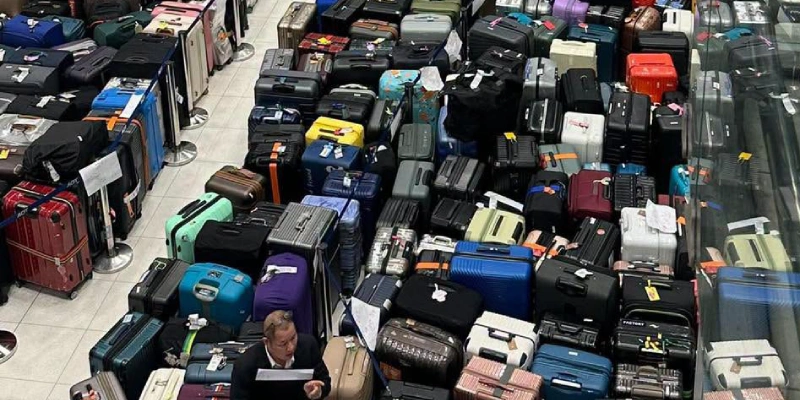
Thai Airways Cuts Flights and Faces Baggage Handling Collapse Following Severe Bangkok Flooding

Akasa Air in Talks With Boeing for Over 200 737 MAX Jets
Embraer Nears Key Regional Jet Order from Japan Airlines

Plataforma Informativa de Aviación Comercial con 13 años de trayectoria.