

Breeze Airways has formally completed its transition to a homogenous fleet after phasing out its last Embraer 190 from commercial service on September 7. With this milestone, the U.S. carrier consolidates the entirety of its flight operations around the Airbus A220-300.
The End of an Era: Breeze Airways’ Final Embraer Flight
At 17:55 local time on September 7, Embraer 190 registration N120BZ concluded flight MX320 between Orlando and Louis Armstrong New Orleans International Airport, marking the definitive final landing of the Brazilian regional jet family with the airline.
The 19-year-old aircraft was the carrier’s last active unit of the type, following the prior retirement of airframe N128BZ on August 9.
This transition brings to a close an operational cycle spanning nearly six years dating back to the company’s early startup phase, eliminating the mixed fleet operations the carrier maintained across both aircraft types over the past four years.
Origins, Certification, and the Foundational Role of the Regional Fleet
The airline was founded in 2018 by aviation entrepreneur David Neeleman under the provisional name Moxy Airways. Following a trademark dispute with Marriott’s Moxy Hotels chain, the venture officially adopted the name Breeze Airways.
The business model was tailored to capture an underserved niche overlooked by major legacy network carriers, focusing on nonstop point-to-point routes connecting small and mid-sized cities without routing traffic through congested hubs. That core premise remains firmly in place: approximately 90% of Breeze’s route network faces no direct competition.
Pandemic Impact and Operational Certification
Initial rollout plans were disrupted in early 2020 by the global fallout from the COVID-19 pandemic. Without active flight operations or delivered aircraft at the time, the startup—which then had a workforce of roughly 50 personnel—did not qualify for federal financial relief.
Despite this challenging environment, the company pressed ahead with its regulatory certification processes:
- The U.S. Department of Transportation (DOT) granted economic fitness certificate authority in March 2021.
- The Federal Aviation Administration (FAA) issued the carrier its Air Operator Certificate (AOC) on May 14, 2021.
First Regional Jets in Service
To de-risk the launch, Breeze selected an interim bridging fleet of Embraer 190 and 195 aircraft, a platform intimately familiar to Neeleman from his tenures at JetBlue and Azul Brazilian Airlines.
- First aircraft delivered: Embraer 195 MSN 19000660 (built and flight-tested in 2014 at São José dos Campos, formerly PR-AUB with Azul) was re-registered as N190BZ. It arrived at Islip from Macon on January 7, 2021, after having been stored at facilities in Roswell and Grissom Air Reserve Base in Peru, Indiana.
- Inaugural flight: Took place on May 27, 2021—six days after tickets went on sale—operating flight MX1 from Tampa International Airport to Charleston International Airport with a 100% passenger load factor and the airline’s CEO onboard.
- Fleet ramp-up: The initial three E195s were joined by the first E190 in June 2021. By year-end 2021, the fleet stood at 14 airframes: 10 Embraer 190s, three Embraer 195s, and its first factory-new Airbus A220. The final Embraer inducted into service was an E195 in March 2023.
Current Fleet Structure
Effective September 8, Breeze Airways operates an all-Airbus fleet:
- Active fleet: 64 Airbus A220-300 aircraft.
- Cabin configurations: The majority feature a dual-class layout (business and economy). A small number retain a single-class layout, representing older second-hand A220s not delivered new from the factory.
- Firm orders and options: Against an initial firm order of 90 aircraft placed in 2018, the airline has 26 pending deliveries remaining. Additionally, Breeze holds options for 30 more airframes, potentially expanding the fleet to a maximum of 120 aircraft.
With this move, Breeze Airways streamlines its fleet architecture, focusing its maintenance, flight operations, and crew resources on a single aircraft type to support its point-to-point domestic route network across the United States.
Related Topics

Madrid-Barajas Airport Tops 6.3 Million Passengers in September, Consolidating Operational Growth
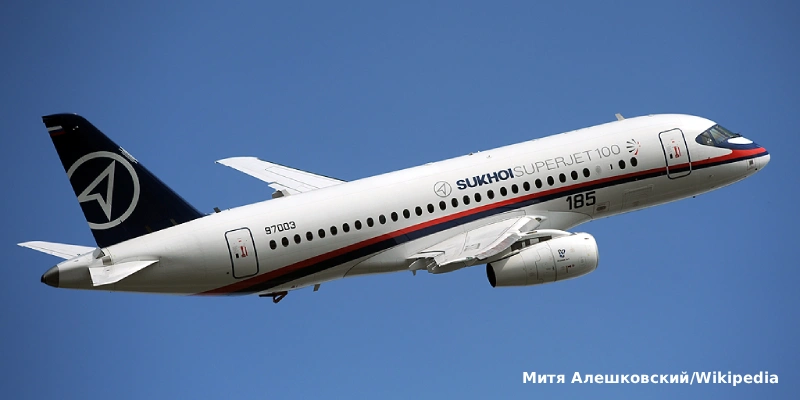
Russia Extends Superjet 100 Service Life to 20 Years

ITA Airways and Venezuela Sign Agreement to Resume Direct Flights Between Rome and Caracas Starting March 2027

Heathrow Expansion Push Reaches Parliament: A £33 Billion Investment to Unlock Connectivity


Plataforma Informativa de Aviación Comercial con 13 años de trayectoria.