Qatar Airways Phases Out Airbus A330 Fleet and Secondes Pilots to RwandAir Amid Iran Conflict Impact
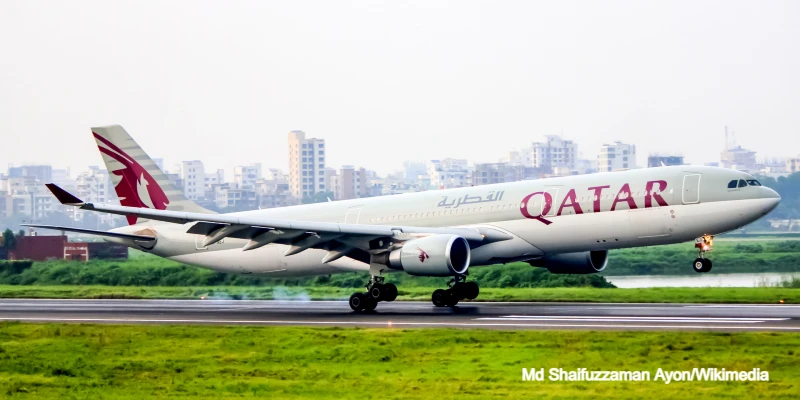




Qatar Airways has definitively retired its final Airbus A330 passenger aircraft and has begun seconding flight crews to RwandAir, the national carrier of Rwanda, according to an exclusive report by Reuters. The decision comes in response to operational disruptions in Gulf aviation and the doubling of jet fuel prices caused by the prolonged military conflict in Iran, accelerating the phase-out of earlier-generation aircraft.
Accelerated Phase-Out of Airbus A330s and Cost Containment
The Doha-based carrier had leased four Airbus A330 twinjets from Oman Air last year, with the operational projection of keeping them in active service through 2026. However, the aircraft never operated commercial flights for the company. With this move, Qatar Airways has fully and comprehensively decommissioned its A330 fleet.
The twofold increase in fuel quotations since the onset of hostilities eliminated the global necessity of retaining older jets to supply post-COVID-19 travel demand. According to industry analysts, keeping these aircraft grounded proves significantly more economical than operating them under current crude oil price levels:
- Leased fleet status: The units originating from the agreement with Oman Air remain parked at storage facilities in Teruel, Spain, and in Doha.
- Return to lessors: Two A330 units parked in Doha, under contract with leasing firm Jetran, will be formally returned to the lessor in October.
- Fleet composition: As of last March, A330s accounted for 7% of Qatar Airways’ passenger fleet, which totals 239 commercial jets and 30 freighters belonging to the Airbus and Boeing manufacturing families.
A company spokesperson stated that it is standard procedure to regularly evaluate the fleet, phasing out older models as more efficient, next-generation aircraft are delivered.
Secondment of Pilots to RwandAir via Bilateral Agreements
As part of this fleet adjustment, Qatar Airways has launched a voluntary temporary assignment scheme to transfer just over a dozen qualified Airbus A330 pilots to RwandAir, in which the Qatari carrier holds a 49% stake. Several of these crew members had not operated commercial flights since the conflict began.
- Asset transfer: One of the A330s was acquired earlier this year by the Rwandan state-owned company. In August, RwandAir confirmed via the social network X the delivery of the first of a scheduled batch of five A330s.
- Objective of the measure: The assignment enables Qatar Airways flight crews to maintain their flight hours and type ratings on the A330 variant, while meeting the operational requirements of the African carrier, with which it maintains codeshare agreements and historical ties of cooperation.
- Timeline: The Qatari airline did not specify the duration of this assignment period.
→ Qatar Airways Becomes First Airline to Operate Starlink-Equipped Boeing 787-9
Airspace Restrictions and Capacity Contraction in the Middle East
The impact of the military conflict has critically affected Middle Eastern hubs, especially following the strikes executed by combined United States and Israel forces against targets in Iran on February 28. Although overall traffic volumes have shown a recovery close to pre-conflict levels, Gulf operators face significant overflight restrictions.
Dan Taylor, head of consultancy at analytics firm International Bureau of Aviation (IBA), noted that Middle Eastern airlines have reduced the utilization of their equipment due to severe limitations on regional airspace. This is compounded by the diversion of connecting passengers to competing hubs.
According to fleet tracking records calculated on seven-day averages by data firm Cirium Ascend:
- Available Seat-Kilometers (ASK): Qatar Airways’ standard offered capacity metric recorded a 10% year-on-year contraction in September, matching the 10% drop reported by Emirates, in contrast to flat global industry capacity.
- Flight operations: Qatar Airways operates 12% fewer daily flights and utilizes 4% fewer aircraft compared to the same period of the previous year.
- Global A330 fleet trend: International operations of the A330-200 and A330-300 models have dropped by nearly 12% compared to September 2025.
Operational Projections and Fleet Delivery Program
Despite short-term demand weakness, Cirium’s technical projections anticipate that Qatar Airways will resume network and capacity growth by 2027. The company has indicated that it will soon initiate pilot recruitment processes aimed at crewing state-of-the-art aircraft.
So far this year, the airline has incorporated two widebody jets from Airbus and two from Boeing. Between September 2026 and the end of 2027, the company is scheduled to phase out 6 aircraft and receive 19 factory-fresh units.
To sustain its operational strategy toward the 2030s, Qatar Airways’ firm order backlog stands at 410 aircraft pending delivery from Boeing and Airbus, including a batch of 160 units announced in May of last year during the official visit of U.S. President Donald Trump to the emirate.
Related Topics

FAA Poised to Certify Boeing 737 MAX 10 Next Week Following Key Safety Review Clearance

Boeing Posts Best Month of 2026 With 57 Aircraft Delivered in September
Southwest Airlines Evaluates Widebody Aircraft, Eyes Boeing 787

Avolon Orders 250 Aircraft from Airbus and Boeing

Plataforma Informativa de Aviación Comercial con 13 años de trayectoria.