Airbus A321XLR: Reshaping Transatlantic Routes and Replacing Boeing 757
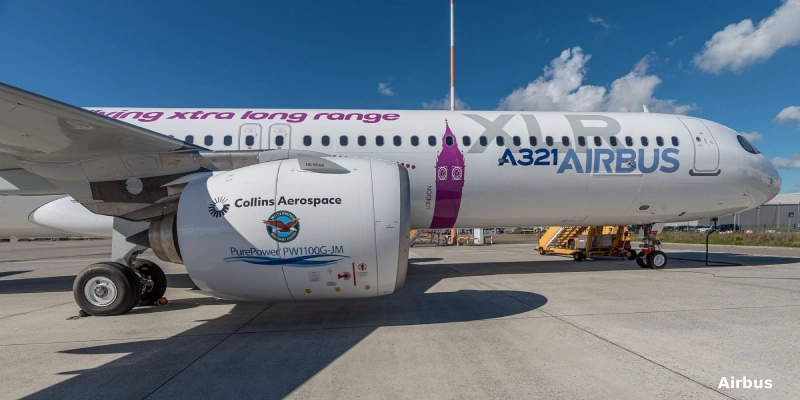




The Airbus A321XLR is redefining long-range aviation by pairing up to 30% lower fuel burn compared to the venerable Boeing 757 with unit costs below those of widebody aircraft, enabling airlines to open point-to-point secondary markets nonstop.
Long-Haul Narrowbody Revival: From the 757 to the A321XLR
Scheduled commercial long-haul passenger flights on twin-engine narrowbody aircraft gained momentum in the early 2000s, primarily driven by the unique capabilities of the Boeing 757. However, these operations remained largely confined to the US “Big Three” legacy carriers, a select group of secondary operators such as Icelandair, and now-defunct premium boutique airlines like OpenSkies (a British Airways subsidiary).
Boeing 757 production ended in 2004, and its deployment on routes exceeding 5,000 kilometers steadily declined after 2010, nearly vanishing following the onset of the pandemic in 2020. Only United Airlines and Icelandair retained their commitment to the type throughout the post-pandemic recovery.
Unlike the 757, whose extended range was baked into its baseline design (compromising its efficiency on shorter sectors), Airbus pushed the development envelope of the A321 to engineer the XLR. The prospect of slashing fuel burn per seat by up to 30% versus the 757, coupled with fleet commonality synergies for large Airbus A320neo family operators, has driven solid commitments:
- 440 firm orders and lease commitments: Spread across 28 airlines.
- 50 aircraft delivered: 44 of which are already in active commercial service.
- 40 additional commitments: Held by aircraft lessors pending airline placement, according to Cirium fleet data.
In contrast, the Boeing 737-10 MAX, which remains pending certification and was designed to rival the A321neo in capacity, offers a manufacturer-advertised range of up to 3,100 nautical miles (5,740 km)—falling well short of the A321XLR’s 4,700 nautical miles. This leaves the Boeing 787-8—a twin-aisle widebody seating 200 to 275 passengers with a 60.1-meter wingspan—as Boeing’s smallest offering for carriers requiring range beyond the MAX’s capabilities.
The In-Flight Experience: Passenger Perception vs. Twin-Aisle Aircraft
While public Net Promoter Score (NPS) data for single-aisle long-haul flying remains limited, passengers often gravitate toward widebody aircraft due to a greater perception of cabin cross-section space and comfort. Nonetheless, the A321XLR offsets this preference by unlocking competitively priced, nonstop service on city pairs that previously required mandatory connections.
→ United Airlines Takes Delivery of First Pratt & Whitney GTF Advantage-Powered Airbus A321XLR
Structurally, twin-aisle aircraft experience less aisle congestion from service carts, easier lavatory access, and smoother boarding and deplaning. Conversely, they do not inherently guarantee wider seats, greater recline, or more legroom—parameters dictated entirely by each carrier’s specific cabin interior configuration.
Initial Operator Cabin Configurations
Most early operators have opted for lie-flat seating in business class, while several have incorporated dedicated premium economy cabins:
| Operator | Total Seats | Business Class (Lie-flat) | Premium Economy (Seat Pitch) | Economy Class (Seat Pitch) |
|---|---|---|---|---|
| JetBlue | 138 | 24 (Yes) | — | 114 (32″) |
| Saudia | 144 | 24 (Yes) | — | 120 (33″) |
| United Airlines | 150 | 20 (Yes) | 12 (37″) | 118 (33″) |
| American Airlines | 155 | 20 (Yes) | 12 (37″) | 123 (31″) |
| Iberia | 182 | 14 (Yes) | — | 168 (30″) |
| Air Canada | 182 | 14 (Yes) | — | 168 (31″) |
| Aer Lingus | 184 | 16 (Yes) | — | 168 (31″) |
| Qanot Sharq | 190 | 16 (Yes) | — | 174 (31″) |
| IndiGo | 195 | 12 (No) | — | 183 (31″) |
| Qantas | 197 | 20 (No) | — | 177 (30″) |
| Qantas | 200 | 20 (No) | — | 180 (30″) |
| Wizz Air | 239 | — | — | 239 (28″) |
Operational Deployment and Range Performance Divergence
Launch operator Iberia boasts the largest active fleet with eight aircraft since taking delivery of its first frame in November 2024. By July 2026, the Spanish flag carrier had operated over 400 flights exceeding 5,000 km, serving destinations that fell outside its initial projections.
During International Airlines Group’s (IAG) H1 2026 earnings call, Iberia CEO Marco Antonio Trujillo underscored the aircraft’s performance:
“[It is] even better than expected in terms of stage length. In fact, we are currently operating to the Caribbean—San Juan and Santo Domingo—where we initially did not anticipate the range would reach. In unit cost terms, it is significantly lower than the A330. It feels counterintuitive: typically a smaller gauge aircraft carries a higher unit cost, but that is not the case with the A321XLR. It allows us to open up destinations where demand is simply too thin for a widebody.”
Fellow IAG carrier Aer Lingus operates six frames. In July 2026, it logged more than 300 sectors over 5,000 km alongside over 200 flights under 2,000 km, showcasing the XLR’s flexibility when slotted onto short-haul feeder runs between transatlantic rotations.
In contrast to Iberia’s bullishness, United Airlines has adopted a more cautious operational stance. Holding a firm order for 50 airframes (having taken delivery of one) to replace its 40-strong 757 fleet, Patrick Quayle, Senior Vice President of Global Network Planning and Alliances, noted that the carrier has curated its route portfolio conservatively after finding the jet unable to reliably cover certain routes originally envisioned:
“The routes we are focusing on are Spain and France, which we consider comfortably within the aircraft’s operational envelope.”
Projected Routes and Network Schedules
Global schedule intelligence from Cirium’s Sky platform projects the A321XLR network rollout over the coming months:
- IndiGo: Launches Mumbai–Amsterdam in October, with an average block time approaching 10 hours.
- American Airlines: Debuts New York (JFK)–Barcelona in October (roughly 9 hours block time) and Philadelphia–Vienna starting next May.
- Air Canada: Deploys the aircraft on Toronto–Copenhagen beginning in November (approximately 9 hours block time).
- United Airlines: Inaugurates transatlantic service with the type in December to Amsterdam and Dublin. By summer 2027, the airline will deploy the aircraft—internally dubbed “Born to Explore”—on new routes serving Toulouse, Luxembourg, Marseille, Ibiza, and Valencia.
By the second quarter of 2027, forecasts indicate that Aer Lingus, Air Canada, American Airlines, Iberia, IndiGo, and Qantas will collectively operate more than 500 monthly round-trip services on sectors exceeding 5,000 km, utilizing a combined fleet of over 70 aircraft.
Strategic Trade-Off: Route Connectivity vs. Belly Cargo Capacity
The long-term fleet integration of the A321XLR involves a commercial compromise: while it unlocks thin, long-haul point-to-point markets with low capital exposure, airlines forfeit substantial cargo revenue by sacrificing the multi-ton lower-deck palletized freight capacity standard on widebody aircraft. The next phase of network deployment will determine whether the XLR remains an optimized niche tool or permanently redraws intercontinental secondary-market connectivity.
Related Topics

Embraer Reports Record Third-Quarter Performance With 66 Aircraft Delivered
Embraer Nears Key Regional Jet Order from Japan Airlines

BermudAir Becomes Second Global Operator of Embraer E-Freighter

ANA Expands Regional Fleet with Additional Order for Eight Embraer E190-E2s

Plataforma Informativa de Aviación Comercial con 13 años de trayectoria.