
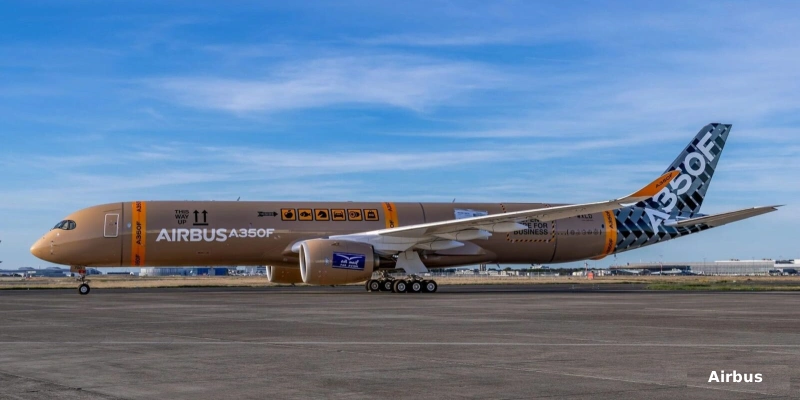
European airframer Airbus forecasts a 46% expansion in the global dedicated freighter fleet through 2045, driven by the replacement of aging aircraft and sustained momentum in high-value international trade.
According to Airbus’s 2026 Cargo Global Market Forecast, unveiled at the Cargo Facts Symposium, the world’s operational dedicated freighter fleet is set to grow from 2,360 units in 2026 to 3,460 aircraft by 2045.
This growth will require 2,670 freighter deliveries over the next two decades, with 1,580 aircraft slated to replace previous-generation models and 1,090 catering to net fleet expansion.
Demand Breakdown: Segments, Conversions, and Factory-Built Deliveries
Of the 2,670 cargo aircraft required over the next 20 years, demand across size and payload categories is distributed as follows:
- 1,140 single-aisle aircraft
- 860 mid-size widebody aircraft
- 670 large widebody freighters
Regarding aircraft supply, the industry will rely heavily on passenger-to-freighter (P2F) conversions. Airbus projects that 1,700 airframes will be converted, while 970 will be delivered directly from the factory as purpose-built freighters.
→ Airbus Plans to Accelerate A350 Production Ramp-Up and Evaluates Higher-Capacity Variants
Macroeconomic Drivers and Air Cargo Resilience
The forecast is underpinned by projected long-term global trade growth at a Compound Annual Growth Rate (CAGR) of 2.9%, driving air cargo traffic to expand at an annual rate of 3.2% over the next two decades. The air freight sector has continued to demonstrate resilience against elevated jet fuel prices, geopolitical headwinds, and supply chain constraints.
While air cargo accounts for less than 1% of global trade volume by weight, it represents over 30% of total world trade by value, solidifying its role as an indispensable mode of transport for time-sensitive goods. Key demand drivers include:
- Advanced technology and computing hardware: Over the past three years, its share by value within air transport has doubled, reaching 15% of the total in 2026.
- E-commerce.
- A modal alternative to ocean shipping for select cargo categories.
Regional Demand and the Critical Role of Transpacific Corridors
North America and the Asia-Pacific region will account for two-thirds of all projected freighter deliveries. The regional distribution of the 2,670 required freighters breaks down as follows:
- North America: 925 aircraft
- Asia-Pacific: 850 aircraft
- Europe and the Commonwealth of Independent States (CIS): 515 aircraft
- Latin America: 165 aircraft
- Middle East: 125 aircraft
- Africa: 90 aircraft
Asia-Pacific will maintain its leadership in international air cargo traffic, with transpacific routes to North America posting the highest annual growth rate (3.8%), closely followed by Asia–Europe trade lanes. According to the manufacturer, these long-haul operations can be efficiently served by its latest widebody platform, the A350F.
The progressive phase-out of older-generation freighters is expected to accelerate the transition toward more fuel-efficient, next-generation platforms. This fleet renewal will encompass both factory-built models such as the A350F and passenger-to-freighter conversion programs across the A320, A321, and A330 families—solutions engineered to reduce fuel burn and lower carbon emissions for cargo operators.
Related Topics
GE Aerospace Ramps Up GEnx Deliveries, Outpacing Boeing 787 Handover Rate
FAA Certifies Boeing 737-10: Largest Member of MAX Family Is Cleared for Deliveries
Boeing Unveils Dataliner: Next-Gen AI-Powered Aircraft Data Platform
FAA Poised to Certify Boeing 737 MAX 10 Next Week Following Key Safety Review Clearance


Un apasionado por la aviación, Fundador y CEO de Aviación al Día.