
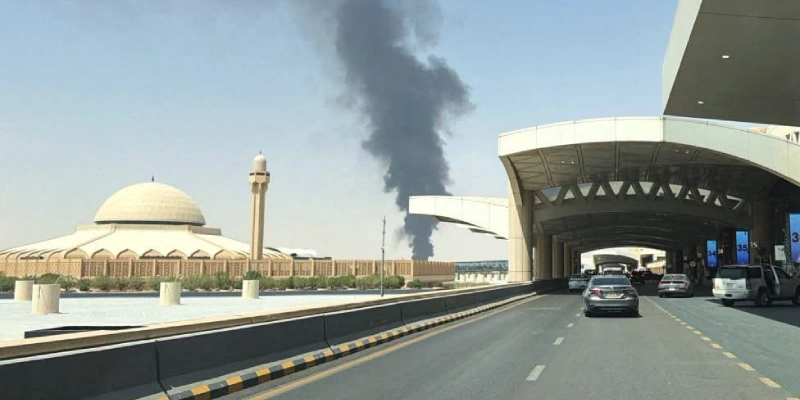
Flight operations at King Khalid International Airport in Riyadh, Saudi Arabia, were suspended on Saturday following a fresh strike targeting airport infrastructure, Saudi Arabia’s General Authority of Civil Aviation confirmed in an official statement. The incident prompted the dispatch of more than a dozen ambulances to the passenger terminal and triggered maximum emergency protocols across local healthcare facilities.
Operational Impact and Flight Cancellations
The strike has caused severe disruptions to connectivity across the Saudi hub:
- Suspension of Operations: All inbound flights to Riyadh were either cancelled or diverted, according to tracking data from Flightradar24.
- Airline Cancellations: Several Gulf carriers cancelled their scheduled services to and from the airport. Among them, Kuwait Airways confirmed flight suspensions, citing the ongoing “security situation” at the terminal.
- Damage at Domestic Terminal: Eyewitnesses reported an impact in the immediate vicinity of Gate 401 within the domestic terminal, describing scenes of panic and injured passengers at the scene.
Casualty Assessment and Emergency Medical Response
Dozens of people were injured in Saturday’s strike, according to local hospital sources cited by news agency AFP. Healthcare personnel were urgently summoned to medical facilities, stating they were managing a “critical emergency situation”.
This event follows a series of recent attacks against the country’s civil aviation infrastructure:
- Previous Riyadh Attack: Just a day earlier, authorities reported the deaths of three Saudi nationals, including a pilot, resulting from two earlier strikes against the same airport claimed by Iran-backed Houthi rebels.
- Additional Strikes: Three other fatalities were reported following strikes carried out against two Saudi airports between October 6 and October 7.
Diplomatic Warnings and Conflict Background
Following the incident, the U.S. Embassy stated it was monitoring reports of attacks targeting King Khalid International Airport and urged U.S. citizens to avoid the airport and surrounding areas. Similarly, other Western diplomatic missions issued advisories, including the UK Foreign, Commonwealth & Development Office (FCDO), which advised British nationals to stay clear of the area until Saudi authorities confirm the facility is secure.
The attack takes place against the backdrop of a sharp escalation in hostilities between Yemeni government forces—backed since 2015 by the Saudi-led coalition—and the Houthi movement, which maintains control over most of northwestern Yemen.
An informal truce established in 2022 began unraveling in July, after which the rebels declared a “maritime embargo” and launched missile and drone campaigns targeting Saudi airports, oil infrastructure, and commercial tankers in the Red Sea, claiming these actions are retaliation for the ongoing blockade and airstrikes against Sana’a International Airport (SAH).
Related Topics

LOT Polish Airlines Launches Direct Flights Between Warsaw and Bangkok
Lufthansa Group Boosts Connectivity to Japan, Reaching Up to 50 Weekly Flights in Summer 2027

Thai Airways Cuts Flights and Faces Baggage Handling Collapse Following Severe Bangkok Flooding

Akasa Air in Talks With Boeing for Over 200 737 MAX Jets


Plataforma Informativa de Aviación Comercial con 13 años de trayectoria.