
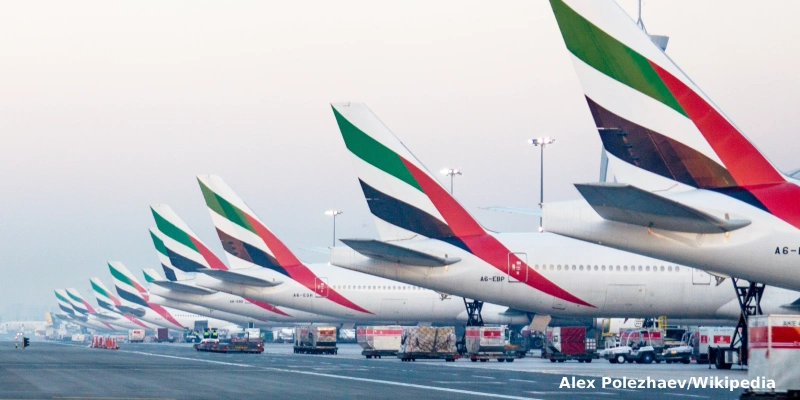
Emirates reported a 66% drop in net profit for the first half of its fiscal year, hit hard by operational constraints stemming from the conflict involving the United States, Israel, and Iran, coupled with escalating jet fuel prices. Despite the phased reopening of its global network, passenger traffic and operational capacity remain significantly below prior-year levels.
Financial Impact: Revenue Decline and Margin Pressure
During the first six months of its 2026–27 fiscal year (ending September 30), the Dubai-based carrier posted a net profit of AED 3.3 billion (approximately USD 903 million). This marks a 66% decrease compared to the same period of the previous fiscal year.
Total revenue fell 13% to AED 56.9 billion. However, financial statements reflected sustained contributions from its air cargo division, alongside what the airline characterized as resilient travel demand across key markets.
Key drivers affecting the half-year results include:
- Airspace Disruptions: Hostilities triggered flight diversions, widespread delays, and routine cancellations caused by intermittent airspace closures across the Middle East.
- Government Travel Advisories: Warnings issued by multiple foreign governments disrupted conventional passenger flows and shifted consumer booking patterns.
- Geopolitical Uncertainty: While Gulf carriers have gradually restored operations, recent strikes carried out by Iran-aligned Houthi rebels in Yemen against targets in Saudi Arabia have dampened prospects for a full recovery. In the United Arab Emirates (UAE), while direct strikes from Iran have not occurred within its territory since May, an Iranian drone was intercepted over UAE territorial waters in August.
→ Emirates Launches Nonstop Flights Between Dubai and Helsinki, Finland
Traffic and Capacity Metrics: Contraction in ASKs and Passenger Load Factor
By late September, Emirates had restored operations to 91% of its route network. Nevertheless, operational volumes and seat capacity still show substantial gaps compared to the previous financial year.
Key half-year operational metrics:
- Passengers Carried: 21.8 million passengers, down 22% year-on-year.
- Available Capacity: Available Seat Kilometers (ASKs)—the industry standard metric for passenger carrying capacity—contracted by 17%.
- Passenger Load Factor: The average proportion of seats filled by revenue passengers dropped to 72%, compared to 79.5% recorded in the prior-year period.
Jet Fuel Prices Double, Straining Operating Costs
The conflict drove aviation jet fuel prices to nearly double their pre-hostility baselines. High volatility has created industry-wide hesitation to enter new fuel hedging contracts, the financial instruments typically used to lock in forward rates and hedge against sudden price spikes.
Emirates’ fuel expenses—prior to accounting for financial hedges—surged 60% year-on-year. Despite this, total operating costs (including fuel uplift) fell 2%, aligning with reduced flight activity.
The airline’s financial risk management strategy generated AED 7.1 billion in gains, containing the net increase in half-year fuel expenditure to 13%.
Cash Position and Second-Half Outlook
The cash position of the parent holding company, Emirates Group, closed the half-year at AED 54.1 billion, down from AED 59.6 billion recorded six months earlier. The decrease reflects capital deployments, including pre-delivery payments (PDPs) for aircraft orders and debt servicing obligations.
Addressing the regional climate, Sheikh Ahmed bin Saeed Al Maktoum, Chairman and Chief Executive of Emirates Group, emphasized the organization’s operational resilience:
“We have navigated challenges before. Backed by our robust cash position and the strong foundations built over the years, the Group is well-positioned to navigate the headwinds created by market volatility and elevated fuel prices.”
The airline group confirmed it enters the second half of the fiscal year with measured optimism, while continuing to monitor regional airspace developments and operating cost dynamics.
Related Topics

LATAM Airlines Reports US$441 Million Q3 2026 Net Profit, Raises Full-Year Guidance
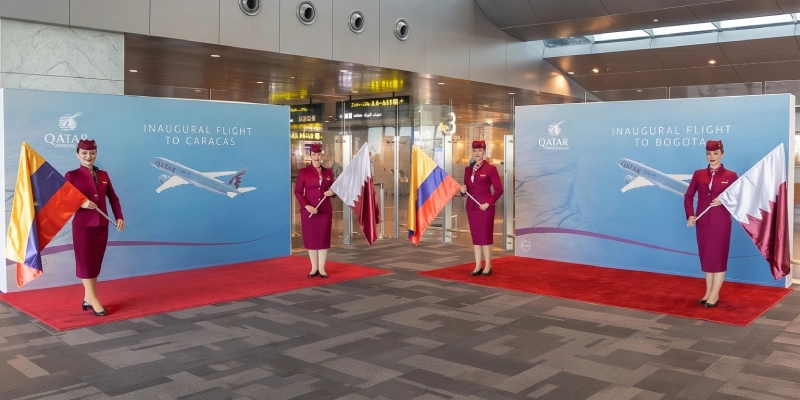
Qatar Airways Lands in Colombia and Venezuela: Inaugurates Triangular Route Linking Doha, Bogota, and Caracas

Latin America and the Caribbean Passenger Traffic Edges Up 0.8% in August

Copa Airlines Expands Connectivity in Venezuela with a Fifth Weekly Frequency to Barcelona


Plataforma Informativa de Aviación Comercial con 13 años de trayectoria.