FAA Deploys First Digital Control Towers in Florida and Alaska to Modernize Air Traffic Management
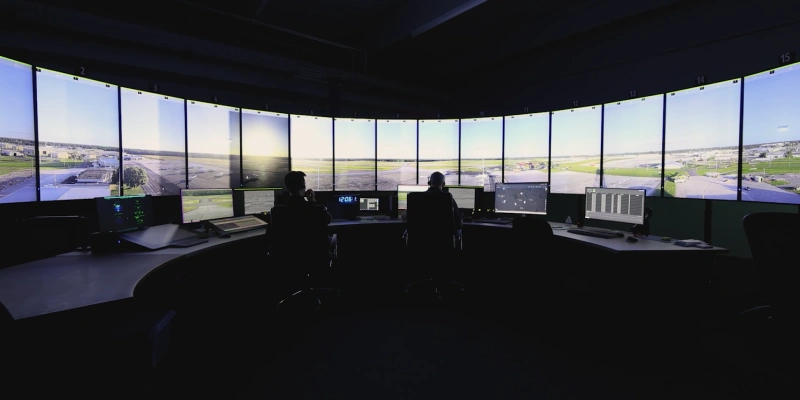




The Federal Aviation Administration (FAA) has announced the commissioning of its first digital control towers at airports in Florida and Alaska. This advanced technology equips air traffic controllers with modern visual tools to monitor operations with greater precision while maintaining the highest operational safety standards across the national airspace.
Technological Innovation and 360-Degree Situational Awareness
The deployment of these facilities replaces conventional tower configurations with digital systems that enhance operational capabilities without altering the core responsibilities of air traffic controllers. Controllers continue to manage the airspace, now supported by upgraded facilities and purpose-built tools designed to streamline traffic monitoring.
The digital towers feature:
- Advanced camera arrays: Capture real-time activity on the airfield and within the immediate operating environment.
- Digital displays: Provide an uninterrupted 360-degree panoramic view of runways, taxiways, and surrounding airspace.
- Supplemental data overlays: Deliver critical situational data directly to controllers to support real-time decision-making.
For this rollout, the FAA selected the digital tower solution developed by Frequentis.
Initial Operational Sites and Expansion Plans
The first operational systems are now active at two key general aviation and regional airfields:
- Bartow Executive Airport in Florida
- Kenai Municipal Airport in Alaska
Funded through the Working Families Tax Cut Act enacted under President Donald Trump, the agency plans to expand this infrastructure to five additional currently non-towered airports:
- Winter Haven Regional Airport (Florida)
- Venice Municipal Airport (Florida)
- Montgomery County Airpark (Maryland)
- Johnston Regional Airport (North Carolina)
- Durango-La Plata County Airport (Colorado)
FAA Administrator Bryan Bedford underscored the direct impact this technology has on operational safety:
“Our air traffic controllers continue to do the critical job of keeping aircraft safely separated, and we are giving them better technology to do that. Digital towers give controllers enhanced visibility of airport activity and more information to make critical decisions. This is about putting better tools in the hands of our workforce so they can continue to deliver the safe, reliable air traffic services the flying public depends on.”
The operational rollout follows years of extensive operational evaluations and testing spearheaded by the agency at the William J. Hughes Technical Center in Atlantic City, New Jersey, alongside other evaluation sites. These trials enabled the FAA to establish technical baseline standards and certify that digital tower systems meet all operational safety, precision, and technical reliability requirements mandated by U.S. civil aviation authorities.
Related Topics

Air France Takes Delivery of Its 60th Airbus A220

World2Fly to Connect Lisbon and Margarita Island with Direct Flights in Summer 2027
Volotea Restores Presence in A Coruna with Five Domestic Routes

KLM Unveils Restructuring Plan to Cut Costs and Reshape European Fleet

Plataforma Informativa de Aviación Comercial con 13 años de trayectoria.