

KLM has announced a comprehensive package of strategic measures designed to cut structural costs, streamline core operations, and overhaul its European network. The initiative aims to deliver an annual earnings improvement of €1.0 billion, raising its overall target to €1.4 billion in response to global instability, high fuel prices, and mounting operational pressure across the airline industry.
A Financial Leap to Safeguard Future Capital Investments
Despite securing more than €750 million in structural gains in recent years and largely resolving shortages of pilots and maintenance technicians, the Dutch flag carrier determined that its prior efforts fall short. Internal forward-looking scenario modeling revealed that delaying operational decisions would severely restrict the airline’s long-term strategic optionality.
According to Bas Brouns, KLM Chief Financial Officer, shoring up financial fundamentals is essential to weather uncertainty and secure ongoing investment in next-generation aircraft, passenger experience, and human capital:
“Improving our annual earnings by €1.0 billion is vital to delivering on our strategy and focusing on what sets KLM apart,” Brouns noted.
Meanwhile, Marjan Rintel, President and Chief Executive Officer (CEO) of KLM, underscored the mounting headwinds in the current operating environment:
“The environment in which we operate is becoming increasingly complex, marked by global volatility, elevated fuel costs, and sustained pressure across the aviation sector. At this defining juncture for KLM, we are taking far-reaching and, at times, painful steps. KLM’s future cannot be taken for granted.”
Fleet Realignment: More Embraer E195-E2s, Phasing Out the Boeing 737, and Dropping Planned A320s
The core strategic shift across the carrier’s short- and medium-haul footprint centers on rebalancing regional and mainline capacity:
- Fleet Substitution: Previously planned Airbus A320 aircraft will be replaced by smaller Embraer E195-E2 regional jets to calibrate capacity more accurately against market demand.
- Narrowbody Core Continuity: The Airbus A321neo will remain the backbone of the mainline single-aisle fleet.
- Scheduled Phase-Outs: The legacy Boeing 737 fleet and Embraer E190s will be progressively retired over the coming years.
- KLM Cityhopper Expansion: The regional subsidiary will take on an expanded operational role fueled by the induction of smaller gauge airframes.
Across its broader network, the airline will continue to fly and modernize a streamlined fleet of 185 aircraft spanning Airbus, Boeing, and Embraer platforms, preserving connectivity across its hub-and-spoke operation of 160 non-stop destinations from Amsterdam Airport Schiphol (AMS).
In terms of cabin interior and passenger amenities, free high-speed Wi-Fi will be rolled out across long-haul intercontinental routes, alongside an enhanced culinary offering on European flights and the integration of artificial intelligence and digital tools for bookings and workflow optimization.
Operational Reorganization, Outsourcing, and Air France-KLM Synergies
To reduce overhead and sharpen operational agility, KLM plans to carve out or consolidate several business units outside direct airline management:
Ground Handling and Ramp Operations
- Apron and Baggage Services: Ramp handling for KLM Cityhopper and baggage operations at East Hall will be transitioned to specialized third-party ground handling providers.
- Passenger Handling: Greater self-service adoption across check-in, boarding gates, and flight disruptions via digital channels, redeploying frontline ground staff toward passenger service and hospitality.
- Hub Control Center: The Schiphol Hub Control Center (HCC) will deploy modernized operating procedures and cross-functional technical workflows to optimize passenger throughput, aircraft turnarounds, and baggage flows at the capacity-constrained hub.
KLM Cargo and MRO
- Cargo Consolidation: KLM Cargo will centralize all freight operations—covering full-freighter operations and passenger belly-cargo—at its dedicated warehouse at Schiphol, paving the way for the opening of a new cargo terminal slated for 2035. This capacity surge will be managed without headcount growth through automation and cross-skilling.
- Engineering and Maintenance (MRO): A sharpened focus on future fleet types, accelerating maintenance phase-out schedules for retiring models. Maintenance turnarounds and line checks will be timed during scheduled ground turn times to maximize dispatch reliability and aircraft availability, while component and engine support divisions will integrate more closely with the wider Air France-KLM group.
Furthermore, the proposed acquisition and integration of Scandinavian Airlines (SAS) into the Air France-KLM Group—currently pending European Commission regulatory approval—is set to unlock additional operational synergies and scale efficiencies across Europe.
Workforce Restructuring and Headcount Reductions
KLM anticipates an additional workforce reduction of approximately 15% across total positions, nested within an organizational restructuring affecting roughly 5,000 roles:
- Inflight Catering: Operational duties covering 1,250 positions at KLM Catering Services have been managed in partnership with gategroup since last spring.
- Ground Handling: Approximately 800 positions will gradually shift to third-party ground handling service providers.
- Group Consolidation: Around 2,000 roles (including 1,500 agents at customer contact subsidiary Cygnific) will be absorbed directly into Air France-KLM.
- Productivity Optimization: Roughly 1,000 positions will be phased out through internal efficiency gains.
The Dutch carrier has set a target of achieving a structural productivity increase of at least 8% by 2028, coupled with modest wage growth and the negotiation of revised collective labor agreements (CLAs) with trade unions. KLM stated that it will seek to mitigate the impact on affected personnel through natural attrition, voluntary departure programs, and internal redeployment.
Related Topics

IndiGo in Talks to Acquire Up to 150 Regional Jets from Embraer to Boost Domestic Network
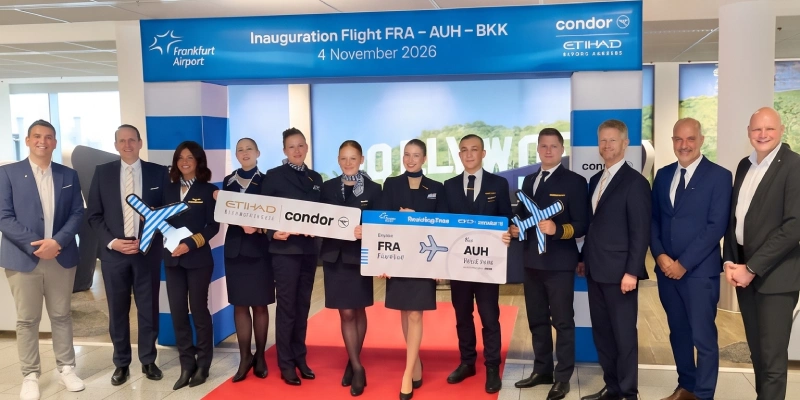
Condor Launches Frankfurt–Bangkok Flights via Abu Dhabi in Codeshare with Etihad Airways

Boeing Projects China’s Commercial Fleet Will More Than Double, Surpassing 9,800 Aircraft Over the Next 20 Years
Air India Eyes Expanded Widebody Orders and Projects Near-Term Profitability


Un apasionado por la aviación, Fundador y CEO de Aviación al Día.