Fourth Air Traffic Control Incident Investigated in Less Than a Month at Sydney Airport
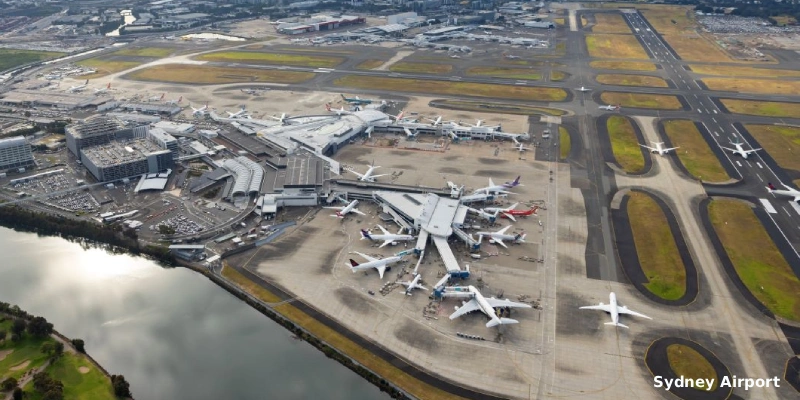




The Australian Transport Safety Bureau (ATSB), Australia’s transport safety regulator, has confirmed the launch of a formal investigation following a fourth high-risk operational incident at Sydney Airport. The most recent event involved two Qantas aircraft directed toward the same taxiway intersection.
In this incident, a Qantas Airbus A321 preparing to depart for the Gold Coast was forced to apply its brakes to avoid a collision with a Qantas Boeing 737 arriving from Melbourne. According to the ATSB’s official statement, the Boeing crew had been cleared to continue onto a taxiway onto which the Airbus had already received prior clearance to turn.
Although the ATSB noted that there was no immediate danger of a collision due to the braking response, the agency decided to open a comprehensive investigation to determine whether common contributing factors exist between this event and the three other incidents reported at the same airport over the past month.
Chronology of the Operational Incidents
The accumulation of runway incursion and loss-of-separation events in less than four weeks has led investigators to order the collection of recorded data and conduct interviews with the air traffic controllers and flight crews involved.
Below is the technical breakdown of the four events under investigation:
- July 27 — Active Runway Incursion: Two Qantas aircraft narrowly avoided a collision. A QantasLink De Havilland Canada Dash 8 was completing its landing roll when the pilots of a Qantas Boeing 737 reported being cleared to cross the same runway. The Boeing 737 managed to stop, though only after passing the holding point.
- August 9 (First Event) — Emergency Braking on Taxiway: A Jetstar Airbus A320 had to brake sharply on the apron/taxiway to avoid colliding with a Qatar Airways Boeing 777. The rapid deceleration resulted in an injury to a cabin crew member.
- August 9 (Second Event) — Rejected Takeoff: A Virgin Australia Boeing 737 cleared for takeoff observed a Qantas aircraft crossing the runway ahead. The Boeing 737 aborted its takeoff roll approximately 1 km (0.62 miles) short of the crossing point of the other aircraft, which had also been cleared to cross by the control tower.
- Latest Incident (Tuesday) — Taxiway Conflict: The aforementioned traffic conflict between the Qantas Airbus A321 and Boeing 737 at a taxiway intersection.
Airspace Restructuring and Labor Controversy
Parallel to these incidents, the ATSB revealed that in early June it received a formal report filed by an air traffic controller. The report warned that Sydney Airport personnel were not adequately prepared to handle the complex procedural and airspace changes resulting from the opening of a new international airport in the city’s west.
Technical Staff Warnings and International Comparison
- Union Survey Results: More than 50 airport air traffic controllers responded to a survey conducted by their union. A majority expressed deep concern over the lack of allocated time to absorb “a massive amount of highly detailed and complex material” before the airspace modifications took effect on July 9.
- Washington, D.C. Precedent: The controller’s report noted similarities between Sydney’s operational situation and the air traffic control environment in Washington, D.C. prior to a fatal mid-air collision in January 2025, where staff had repeatedly requested changes from local management in the months leading up to the accident.
Regulatory Authority Assessment and Next Steps
In response to these allegations, the Civil Aviation Safety Authority (CASA), the Australian civil aviation regulator that investigated the controller’s report, determined that Airservices Australia (the government entity employing the air traffic controllers) had indeed implemented appropriate training, procedures, and operational support arrangements for the transition.
The ATSB confirmed that the current evidence-gathering phase will include:
- Detailed interviews with air traffic control personnel and flight crews.
- Retrieval and analysis of recorded radar, audio, and flight data parameters.
- Evaluation of common operational backgrounds across all four cases.
The official ATSB preliminary report is expected to be published within six to eight weeks, providing the first technical conclusions regarding the root causes of these ground and runway separation failures.
Related Topics

WestJet expands Latin America and Caribbean network for winter 2026/2027 season
Peru Conditionally Approves Abra Group’s Acquisition of Sky Airline
Arajet Announces New Direct Route Between Montevideo and Punta Cana

Passenger Traffic in Latin America and the Caribbean Dropped 2.3% in June: First Monthly Contraction Since 2021

Plataforma Informativa de Aviación Comercial con 13 años de trayectoria.