United Airlines Posts Record Third-Quarter Revenue Driven by Corporate Demand and Premium Segment





United Airlines reported its financial results for the third quarter of 2026, highlighted by a 17.4% year-over-year increase in total operating revenue, which reached $17.9 billion.
The carrier posted pre-tax earnings of $1.3 billion with a pre-tax margin of 7.3%, while on an adjusted basis the figure stood at $1.1 billion (an adjusted pre-tax margin of 6.2%). Net income reached $1.0 billion ($833 million adjusted), resulting in diluted earnings per share of $3.14 ($2.54 adjusted).
Commercial performance demonstrated broad-based growth across all business units compared to the third quarter of 2025:
- Contracted Corporate Revenue: Up 26%, reflecting resilient close-in booking demand across diverse industry sectors.
- Air Cargo: Posted a 23% increase after carrying more than 352 million pounds, marking the highest third-quarter cargo volume in the company’s history.
- Premium Revenue and Loyalty Program: Both rose by 17%.
- Basic Economy and Main Cabin: Basic Economy revenue grew 16%, while overall economy cabin revenue expanded for the third consecutive quarter, driven by a 17% year-over-year increase in unit revenue.
This commercial momentum offset higher fuel expenses, which climbed by $1.8 billion compared to the prior-year period due to jet fuel price volatility, averaging $3.90 per gallon.
Regarding unit metrics and operating performance:
- Capacity: Increased by 1.3% versus Q3 2025.
- TRASM (Total Revenue per Available Seat Mile): Rose 15.9%.
- CASM (Cost per Available Seat Mile): Increased 17.3%, while CASM-ex (cost per available seat mile excluding fuel) rose 7.8%.
- Net Leverage: Stood at 2.4x for the trailing twelve months.
- Available Liquidity: Closed at $17.7 billion, supported by an upsized revolving credit facility finalized on October 16 that boosted available liquidity from $3.0 billion to $5.0 billion, aimed at securing an investment-grade credit rating.
→ United Airlines Takes Delivery of First Pratt & Whitney GTF Advantage-Powered Airbus A321XLR
Inflight Connectivity: Starlink as a Structural Competitive Advantage
Chief Executive Officer Scott Kirby underscored the resilience of the carrier’s brand-loyalty-driven business model. A central catalyst for passenger experience has been the rollout of Starlink inflight Wi-Fi.
United currently operates over 640 aircraft equipped with Starlink, retrofitting approximately three aircraft per day. The airline operates more daily flights featuring this low Earth orbit (LEO) satellite system than the rest of the U.S. airline industry combined, and plans to equip its entire mainline and regional fleet by year-end 2027.
- Adoption and Engagement: During September, over 5.4 million passengers utilized the service, which is offered free of charge across all cabins for MileagePlus loyalty members.
- Customer Satisfaction Scores: The carrier logged its highest third-quarter Net Promoter Score (NPS) since 2022. Customer satisfaction ratings on Starlink-equipped aircraft were nearly double those recorded on aircraft fitted with legacy Wi-Fi providers.
- Partnerships and Inflight Entertainment: Through an agreement with DISH, United rolled out live television streaming on seatback inflight entertainment (IFE) screens for professional and collegiate football matchups. Additionally, in collaboration with Disney Advertising, the airline hosted the first-ever live airborne ESPN fantasy football draft.
Operations, Infrastructure, and Passenger Experience
Operationally, United carried a record 49.5 million revenue passengers during the quarter, averaging nearly 538,000 customers per day. July marked the highest-traffic month in company history with 18.4 million passengers flown, while also posting the best on-time departure rate among the top seven U.S. carriers. When measured by Available Seat Miles (ASMs), United registered the lowest summer seat cancellation rate among the U.S. legacy network airlines.
In parallel, the airline advanced key infrastructure and capital investments:
- Denver Flight Training Center: Completed a four-year expansion program with the addition of 40 full-flight simulators, bringing the total to 86 devices capable of training up to 860 pilots daily.
- Houston George Bush Intercontinental Airport: Unveiled a new three-level concourse in Terminal B, home to the largest United Club in the Americas, offering seating for 800 guests and an outdoor terrace.
- Washington Dulles International Airport: Announced modernization plans in coordination with the Metropolitan Washington Airports Authority (MWAA) and the U.S. Department of Transportation (USDOT).
- Digital Tools and Onboard Amenities: Over 87% of passengers used digital check-in channels. The carrier launched Flight Finder to streamline rebooking during delays and cancellations, introduced 10 new United Polaris menu items designed alongside Chef’s Table, and partnered with Aperture Cellars to craft a custom wine blended for 35,000 feet, slated to debut in 2028.
Network Expansion: Massive International Buildup for 2027
United operated the largest domestic schedule in its history, serving 241 airports across the United States and Canada. On the international front, the airline announced its largest historical route expansion, unveiling 10 new destinations planned for Summer 2027 (subject to government approval):
- Europe: Catania (Italy), Olbia (Italy), Ibiza (Spain), Valencia (Spain), Marseille (France), Toulouse (France), Luxembourg, Ljubljana (Slovenia), and Terceira (Portugal).
- Asia: Okinawa (Japan).
Additionally, supplemental capacity was confirmed for Summer 2027 on existing long-haul routes: Los Angeles–Osaka, Washington Dulles–Milan, Denver–Paris, and San Francisco–Tel Aviv, alongside the resumption of Newark–Tel Aviv service in September and the launch of nonstop Newark–Seoul flights.
On the fleet and premium cabin front, United expanded Boeing 787-9 Elevated operations from San Francisco to Zurich and Seoul (following its debut to Singapore and London in Q2 2026). These widebody aircraft feature a 99-seat premium configuration, including eight United Polaris Studio suites and 56 United Polaris business class seats.
Outlook
With total debt, finance lease obligations, and financial liabilities totaling $26.4 billion at the close of the period, United Airlines expects to sustain this operational momentum and achieve record top-line performance in the fourth quarter, leveraged by maturing passenger experience investments, a widened global network, and strong corporate and high-yield leisure demand.
Related Topics
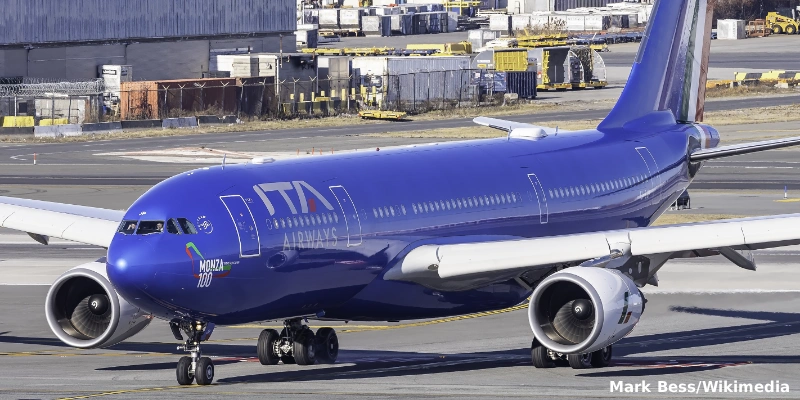
ITA Airways Opens Ticket Sales for New Rome–Caracas Route
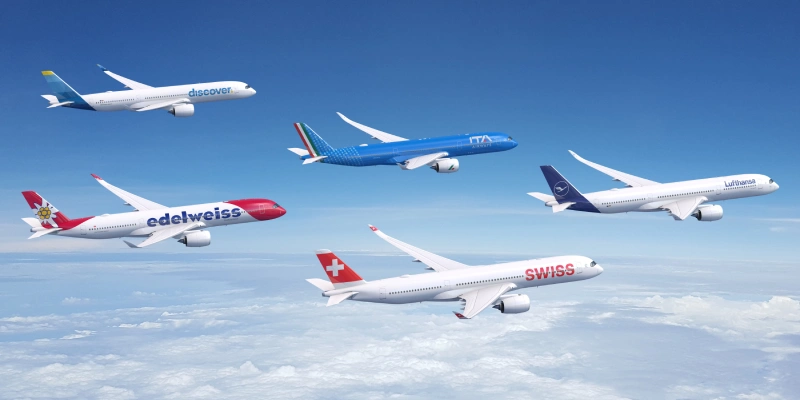
Lufthansa Group Unveils Largest Route Expansion Since 2020: 10 New Long-Haul Destinations for Summer 2027

Ryanair CEO Warns of Steepest Airfare Hike in European History: Ticket Prices Could Surge by up to 20%

Icelandair Completes Acquisition of 49% Stake in Fly Play Europe to Secure Maltese Air Operator Certificate

Plataforma Informativa de Aviación Comercial con 13 años de trayectoria.