LATAM and Siemens Finalize Their First Agreement in South America to Reduce Corporate Travel Emissions Through SAF
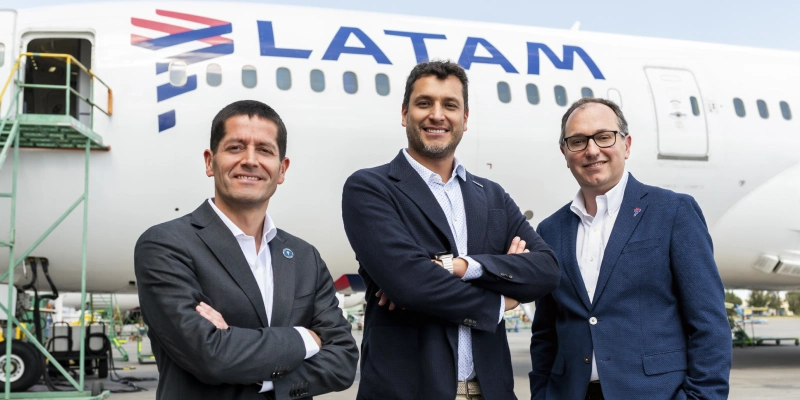




LATAM Airlines and Siemens Chile signed their first corporate agreement in South America on Tuesday in Santiago, Chile, to decarbonize business travel using environmental attributes derived from Sustainable Aviation Fuel (SAF). The initiative enabled the allocation of a 40-metric-ton reduction in carbon dioxide equivalent (CO2e) emissions to scheduled commercial flights taken by employees of the technology firm between January and September 2026, marking an unprecedented milestone for the airline in the region.
Scope of the Agreement and Traceability via Book & Claim
For the first time, LATAM is making SAF environmental attributes available to a corporate client for business travel on scheduled commercial flights. For Siemens, the transaction represents its first commitment of this kind in South America and its third globally.
The transaction was executed under the Book & Claim model, a mechanism that allows the environmental benefits of sustainable fuel to be allocated to Siemens without the fuel needing to be physically uplifted onto the specific aircraft operating its flights. To ensure process transparency, the following standards are applied:
- Official Registry: The environmental attributes are registered in the SAFc Registry.
- External Audit: All processes undergo verification by an independent third party.
- Accounting Integrity: The system incorporates specific safeguards against the double counting of reduced emissions.
Fuel Feedstock Origin and Impact on Siemens’ Scope 3 Emissions
The SAF from which these attributes are derived was produced from used cooking oil (UCO). According to its International Sustainability and Carbon Certification (ISCC), this biofuel achieves up to an 84.35% reduction in lifecycle emissions compared to conventional fossil jet fuel.
According to Siemens’ estimates, mitigating 40 metric tons of CO2e is roughly equivalent to Siemens Chile’s average monthly emissions. This initiative directly supports its Scope 3 decarbonization strategy, a category encompassing indirect emissions generated across its value chain, including those resulting from corporate air travel.
→ LATAM Unveils Cabin Design for Future Airbus A321XLR Fleet: Private Suites and 4K Screens
Role of Corporate Partnerships in the South American Market
The agreement establishes a traceable and verifiable pathway for other companies in the region to integrate SAF into their corporate travel policies, at a time when regional supply still faces scalability challenges.
Juan Jose Toha, Director of Corporate Affairs and Sustainability at LATAM Group, emphasized the need for coordinated efforts between airlines and corporate partners:
“Moving toward more sustainable aviation is a challenge we cannot tackle alone. In South America, SAF production is extremely limited and has not yet reached commercial scale, making the participation of corporate clients and commercial partners essential to driving its development and adoption. This agreement demonstrates that companies can play an active role in reducing the emissions associated with their travel. We hope Siemens will be the first of many to join.”
For his part, Christian Candela, Managing Director of Siemens Chile, underscored the strategic importance of this alliance in meeting the organization’s climate targets:
“Siemens has ambitious global decarbonization goals, and executing this strategy requires concrete actions, strategic partnerships, and the capacity to innovate across the entire value chain. This agreement in South America represents a milestone in scaling our sustainability impact, and we are pleased to have moved forward alongside LATAM in this process.”
Climate Strategies of LATAM and Siemens
LATAM’s Roadmap to 2050
This initiative falls under the climate change management pillar of LATAM Group’s sustainability strategy, which aims to achieve net-zero emissions by 2050. To reach this goal, the airline structures its environmental management around four core pillars:
- Fleet modernization to incorporate more fuel-efficient aircraft.
- Operational efficiency across its flight routes and procedures.
- Promoting the adoption of SAF within the aviation industry.
- Carbon offsetting as a complementary measure through strategic environmental projects in South America.
In the latest Corporate Sustainability Assessment (CSA) conducted by S&P Global, LATAM ranked as the fifth best-performing airline globally in sustainability and took first place in the Americas.
Siemens’ Global Commitment
With a presence in more than 190 countries and a track record spanning over 170 years focused on innovation and operational excellence, Siemens maintains public decarbonization targets for its Scope 1, 2, and 3 emissions, reporting its progress annually through its Sustainability Statement.
With this inaugural agreement in South America, both LATAM and Siemens Chile establish an operational precedent to accelerate the corporate adoption of SAF-linked environmental attributes and foster the development of verifiable decarbonization solutions in the region’s commercial aviation sector.
Related Topics
Panama: Tocumen Airport Surpasses 19.8 Million Passengers Through October

Emirates Opens New First Class Lounge in Dubai, Kicking Off Network-Wide Lounge Transformation

Strategic Expansion: American Airlines to Modernize and Triple Admirals Club Lounge Space in Phoenix

Dubai Airport Passenger Traffic Drops 28% in First Nine Months of 2026 Amid Middle East Conflict
Plataforma Informativa de Aviación Comercial con 13 años de trayectoria.