
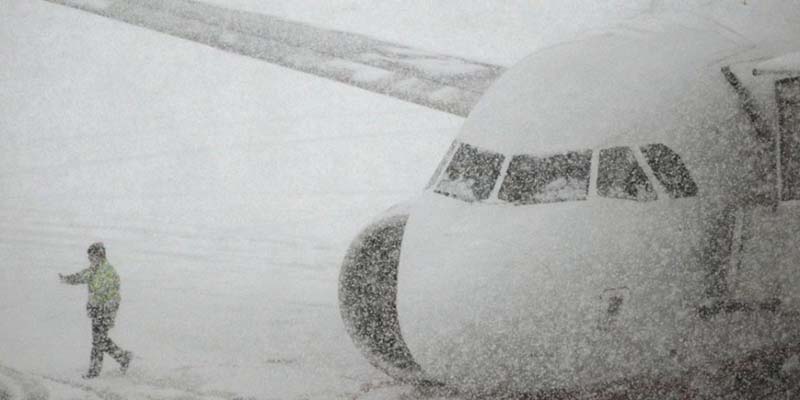
U.S. commercial aviation begins the week under significant operational pressure. Following a severe winter storm, airlines are attempting to restore their operations after the highest volume of cancellations since the early days of the Covid-19 pandemic. This event once again highlights the fragility of air networks in the face of extreme weather events.
A Massive Impact on the Air Network
According to data from FlightAware, around 3,500 flights were canceled by 1:30 a.m. Monday (New York time). Although this figure represents an improvement compared to the approximately 11,600 cancellations on Sunday, the level of disruption remains high and is affecting the start of the workweek in the United States.
Sunday bore the brunt of the operational impact. The storm, described as the most severe in years, covered large areas of the South and Mid-Atlantic with ice, critically affecting some of the nation’s most congested hubs.
Key Airports, Virtually Paralyzed
Cirium data shows the scale of the collapse:
- At Newark, LaGuardia, and John F. Kennedy (JFK), more than 80% of departures were canceled by mid-morning Sunday.
- At Ronald Reagan Washington National (DCA), cancellations exceeded 90%, an exceptional figure even for severe weather events.
These percentages reflect not only the intensity of the phenomenon but also the high dependency of these airports on continuous and synchronized operations.
→ U.S. Awards New Radar Contracts to RTX and Indra to Modernize Its Air Traffic Control System
Invisible Challenge: Fleets and Crews Out of Position
Beyond the weather, airlines face a classic structural problem in these crises: aircraft and crews out of position. With hubs closed or severely restricted, the rotation chain is broken, making it difficult to return to a normal schedule even as the weather begins to improve.
This is compounded by extremely low temperatures, icy runways, and hazardous conditions on roads and access routes, affecting the arrival of operational personnel at airports.
Response from Major Airlines
Companies have begun outlining their recovery strategy, albeit cautiously:
- United Airlines confirmed it will begin a gradual restoration of operations on Monday, warning that residual impacts will persist in areas with extreme cold and ice.
- JetBlue Airways, which canceled over 70% of its flights on Sunday, plans to resume its normal schedule once the weather system dissipates, including adding extra flights to assist affected passengers.
- Delta Air Lines indicated that freezing conditions in the Northeast could affect Monday morning operations, though it reported that flights in Ohio and the Tennessee Valley began a slow resumption from Sunday night.
Weather Still Offers No Respite
Although the main storm is moving out of the country, the Weather Prediction Center warned that a mass of extremely cold air will prolong risks to transportation and infrastructure throughout the week. Heavy snowfall is expected in the Northeast, along with episodes of sleet and freezing rain in areas of the Mid-Atlantic and Southeast, a scenario that could continue to affect on-time performance and operational capacity.
A Record Harking Back to the Pandemic
Sunday was marked as the day with the most cancellations since the beginning of the Covid-19 pandemic. To illustrate the parallel, Cirium notes that on March 30, 2020, there were 22,751 scheduled flights, of which 12,143 were canceled. The current figures, though in a completely different context, once again approach those historical levels of disruption.
Related Topics

Fly2Galicia Set to Launch from Santiago de Compostela in December with Network Covering Eight Domestic and European Destinations

Fuel Shortages in Namibia Force Operational Diversions on Discover Airlines Routes to Europe

LOT Polish Airlines Announces Direct Flights Between Gdansk and Paris-Orly Starting April 2027

Alaska Airlines Strengthens Its Seattle Hub with New Transatlantic Flights to Paris and Athens


Plataforma Informativa de Aviación Comercial con 13 años de trayectoria.