Airbus CEO Warns of New Geopolitical Risks Due to U.S. Protectionism and U.S.-China Trade Tensions





Airbus enters 2026 with a clear warning from its top leadership. In an internal letter to employees, obtained by Reuters, Group CEO Guillaume Faury acknowledged that the European manufacturer has suffered “significant collateral damage, both logistical and financial” as a direct result of U.S. protectionism and the trade tensions between the United States and China.
According to Faury, the current industrial environment is “littered with difficulties,” exacerbated by the confrontation between the world’s two largest economic powers. The message comes amid a context of growing geopolitical fragmentation, with visible friction between Washington and its traditional allies, and with Airbus occupying an especially sensitive position as a major European supplier in both commercial aviation and defense.
“The beginning of 2026 is marked by an unprecedented number of crises and unsettling geopolitical developments. We must move forward with a spirit of solidarity and self-sufficiency,” the executive stated in the internal communication.
Concrete Impact of the Trade War
Faury did not provide specific figures but made it clear that the consequences are already being felt in the group’s daily operations. In April last year, U.S. President Donald Trump announced new broad-ranging tariffs, to which China responded with restrictions on the export of rare earths, critical inputs for the aerospace industry.
Subsequently, Washington temporarily froze exports of engines and other key components to China, used by both the COMAC C919 program and Airbus aircraft assembled in the Asian country. Although the aerospace sector secured a partial exemption from U.S. tariffs, the damage was already done.
The message is clear: even for a group with the scale and diversification of Airbus, cross-dependency on global supply chains has become a strategic risk factor.
→ How Airbus is Revolutionizing Aircraft Manufacturing with Titanium 3D Printing
Solid Results, But with Underlying Tensions
Despite this challenging backdrop, Faury congratulated the group’s 160,000 employees for what he called “good results” in 2025, although he avoided giving details ahead of the official results publication scheduled for February 19.
The conglomerate’s performance has been mixed but overall positive. Airbus Defence and Space, historically one of the most volatile segments, is now “in a much stronger position” after a deep restructuring. Airbus Helicopters, meanwhile, maintains a performance that the CEO described as “remarkably consistent.”
Faury insisted on the need to learn from recent mistakes, particularly from the largest recall in the group’s history, which occurred in November and was linked to a software update.
Just days later, Airbus was forced to cut its delivery targets due to fuselage panel issues, although it managed to maintain its financial goals, partly thanks to progress in a commercial cost reduction plan.
“We must be more rigorous in the management of our systems and products overall,” the executive emphasized.
Engines: The Link Still Under Pressure
Although post-COVID supply chains have shown improvement, Faury acknowledged they remain a source of disruption, with a particular focus on propulsion systems.
“Our most serious difficulties have been with Pratt & Whitney and CFM engines,” he stated. The comment reinforces recent remarks from the now-retired head of Commercial Aircraft, Christian Scherer, who noted that engines for the A320 family continue to arrive with delays, specifically pointing to Pratt & Whitney, which declined to comment.
For airlines and lessors, this point remains critical: engine availability directly impacts utilization rates, fleet planning, and return on investment.
Eyes on the Next Major Industrial Battle
Looking beyond the current situation, Faury’s message has a clearly defined horizon. Airbus is preparing to prioritize margin and cash generation for the rest of the decade, with the explicit goal of building a “financial cushion” ahead of the next major product development cycle.
That cycle will arrive in the 2030s, dominated by the development of a successor to the A320, whose entry into service is scheduled for the second half of the next decade.
“Achieving profitable growth in the second half of the 2020s is essential: we need to enter this crucial period in true ‘Olympic shape’,” wrote Faury. He concluded with a phrase that sums up the tone of the entire communication: “The future of Airbus will depend on our ability to execute this strategy.”
Related Topics

FAA Clears Path for Boeing 737 MAX 10 Certification After Dismissing Flight Software Safety Risks
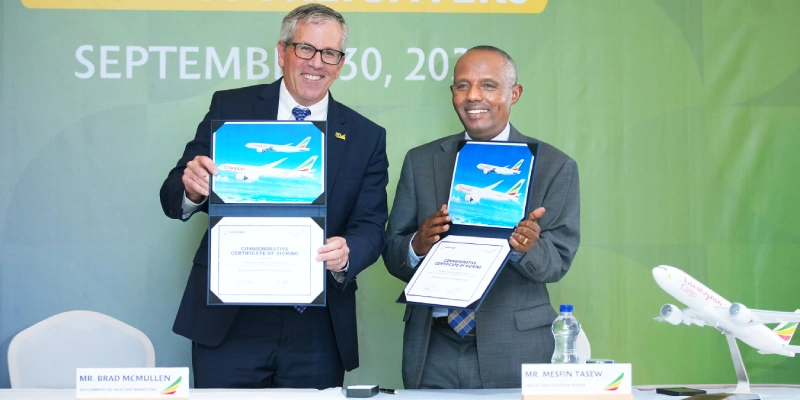
Ethiopian Airlines Orders Ten Boeing Freighters: Eight 777-8Fs and Two 777Fs to Boost Global Logistics Network

US Transportation Secretary Rules Out Safety Risks From Boeing 737 MAX Software Glitch
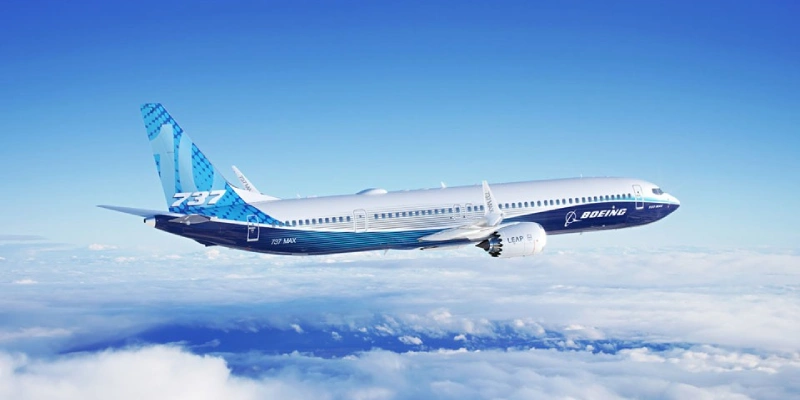
FAA Delays Boeing 737 MAX 10 Certification Following Software Issue

Plataforma Informativa de Aviación Comercial con 13 años de trayectoria.