
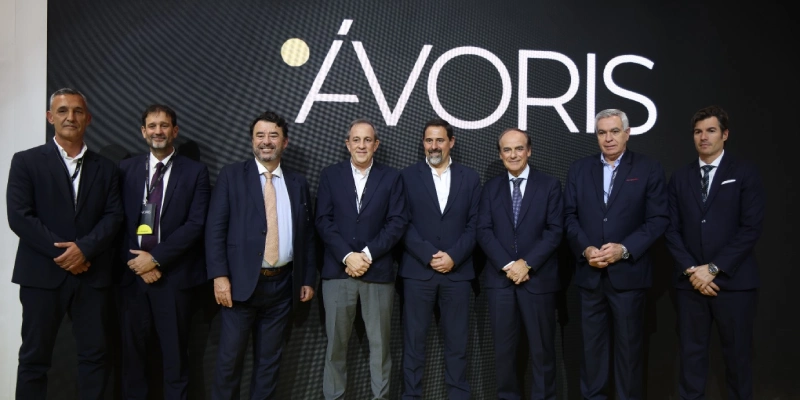
Within the framework of FITUR, Ávoris Corporación Empresarial, Iberojet, and TAP Air Portugal have formalized a strategic cooperation agreement directly targeting the heart of the transatlantic market: connectivity between Europe and Latin America. This is not a short-term announcement but the beginning of a shared roadmap combining interline agreements, potential code-sharing deals, operational support, analysis of new routes, and the development of air cargo as a growth lever.
The partnership stems from a clear logic: uniting complementary capabilities between a large integrated tourism ecosystem (Ávoris), a hybrid and flexible mid-to-long-haul airline (Iberojet), and a historic operator with deep know-how in transatlantic operations (TAP Air Portugal).
Interline, Code-Sharing, and Network Efficiency
A central pillar of the agreement is the implementation of interline solutions and the analysis of potential code-sharing schemes between the airlines. The aim is to expand connection options for passengers and optimize the joint network, particularly in flows between the Iberian Peninsula and Latin America.
This approach would enhance connectivity from Madrid and Barcelona to strategic markets in the Americas, leveraging TAP’s strength in long-haul operations and Iberojet’s growing presence in Latin American destinations. While the document does not detail specific routes or timelines, it makes clear that analyzing new joint routes will be an immediate priority.
→ TAP Air Announces New Routes and Construction of a New Maintenance and Engineering Hub in Porto
Operational Support and Maintenance: TAP’s Technical Role
Beyond commercial aspects, the agreement includes a significant industrial component: TAP will provide operational and maintenance support, making its technical and long-haul operational management expertise available.
For Iberojet, which operates a modern fleet comprising Airbus A350-900, A330-300, A330-900neo (including one aircraft with business class), and A320-214 models, this backing represents a key reinforcement in terms of operational efficiency, reliability, and scalability. This is an especially attractive point for any industry executive, as it points to real synergies in costs and processes beyond the alliance’s marketing.
Latin America as a Shared Strategic Axis
Both Ávoris and TAP emphasize that Latin America is the priority focus of this cooperation. Vicente Fenollar, CEO of Ávoris, summarizes it as a “shared long-term vision” aimed at offering more connectivity, greater operational efficiency, and a stronger value proposition for both customers and partners.
From TAP, its COO Mário Chaves frames the agreement as a “natural step” within the Portuguese airline’s international cooperation strategy, highlighting service quality, operational efficiency, and the sustainable development of long-haul routes as common pillars.
Air Cargo and Travel Experience: Beyond the Seat
The agreement is not limited to passenger transport. It explicitly includes the development of air cargo as an additional growth lever, an aspect increasingly relevant to the profitability of long-haul operations.
Furthermore, the creation of synergies with Ávoris’s experience programs is contemplated, integrating tourism products and air connectivity. This approach reinforces the group’s vertical ecosystem model, where airline, tour operation, and destination experience work in a coordinated manner to enrich the traveler’s offering.
The Companies’ Context: Pieces That Fit
Ávoris, the travel division of Grupo Barceló, presents itself as the largest tourism ecosystem in the Iberian Peninsula, with a presence across the entire travel value chain and more than 6,400 professionals, 3,000 direct sales points, and over 35 brands.
Iberojet, integrated within Ávoris, operates from Madrid, Barcelona, and Lisbon with a hybrid business model combining scheduled flights, charter flights, wet lease operations, and cargo. Its network spans over 15 destinations in Europe and routes in the Americas, Africa, and Asia, including destinations such as Costa Rica, Cancun, Punta Cana, Honduras, Cuba, Mexico, El Salvador (coming soon), as well as Boa Vista, Dakar, Uzbekistan, Mauritius, and Bangkok. It is an IATA member and holds IOSA, ISO 9001, and ISO 14001 certifications.
TAP Air Portugal, for its part, is a historic player in connectivity between Europe, Africa, and the Americas, with a particularly strong network to Latin America, making it a natural partner for this type of structural cooperation.
Related Topics

Tocumen Airport and Copa Airlines Resume Operations Following Powerful Earthquake in Panama

Birmingham Airport Plans £2 Billion Investment to Reach 30 Million Passengers in New Master Plan
Missile Strikes Damage Saudia Aircraft at Riyadh Airport, Triggering Mass Flight Cancellations

American Airlines to Build Network’s Largest Admirals Club at Charlotte


Plataforma Informativa de Aviación Comercial con 13 años de trayectoria.