
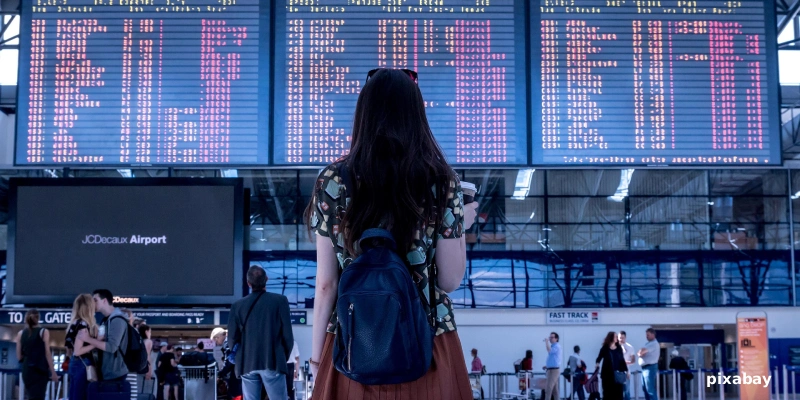
The European Parliament voted to maintain the current three-hour delay threshold as a condition for air passengers to claim financial compensation, within the framework of the upcoming revision of the European Union’s passenger rights regime. The decision, adopted in a plenary session, again highlights the profound differences between the European Parliament and the 27 member states, and foreshadows a long and technically complex legislative process before any changes take effect.
The vote not only affects the delay time, but also introduces significant amendments regarding cabin baggage and the rights of vulnerable passengers. These aspects directly impact cost models and the customer experience, especially for short- and medium-haul airlines.
Three Hours Remain the Red Line for Compensation
Under the regulations in force since 2004, passengers can claim compensation for delays exceeding three hours, with amounts starting at 250 euros and increasing according to flight distance. The European Parliament not only decided to preserve this threshold but also endorsed a compensation scheme ranging from 300 to 600 euros, depending on the journey.
This position contrasts with that of the member states, which last year agreed to raise the threshold to four hours for short-haul flights, while proposing to reduce the maximum compensation to 500 euros. For national governments, the goal is to ease financial pressure on airlines, particularly in an environment of tight margins and recurrent operational disruptions.
A Reform Stalled for Over a Decade
The package of measures under discussion is not new. It was originally presented by the European Commission over ten years ago, but disagreements between the Council and the Parliament have so far prevented a definitive agreement. This week’s vote reignites the debate but also confirms that months of negotiations will be needed before reaching a compromise text and turning it into EU law.
Cabin Baggage: A Sensitive Point for the Low-Cost Model
One of the aspects most closely watched by the industry is the Parliament’s stance on hand luggage. MEPs support passengers’ right to one free piece of cabin baggage, with a maximum weight of 7 kilograms.
Although this limit is lower than what is currently allowed by some airlines, it is particularly relevant for companies like Ryanair, which charge for larger or heavier pieces, up to 10 kilograms. If this final wording is approved, the impact on ancillary revenue could be significant, especially in the low-cost segment, where baggage represents a key source of profitability.
Undisputed Rights: Protection for Minors and Passengers with Reduced Mobility
Not all points generate friction. There is consensus to maintain rules such as a free seat next to an accompanying adult for children or persons with reduced mobility. These provisions, already accepted by all parties, reinforce the social focus of European regulations and do not present significant economic implications for airlines.
Related Topics

Satena to Launch Direct Flights Between Montería and Panama City in October

LATAM Airlines Dismisses Rumors Regarding the Creation of a Venezuelan Subsidiary

Avianca Bolsters Argentina Connectivity: Daily Service to Cordoba and Revamped In-Flight Experience
British Airways Expands Network for Summer 2027: Touches Down in Tanzania and Boosts Latin American Capacity by 25%

Plataforma Informativa de Aviación Comercial con 13 años de trayectoria.