FAA Rejects Being Bottleneck for 737 MAX 7 and MAX 10 Certification, Placing Pressure on Boeing
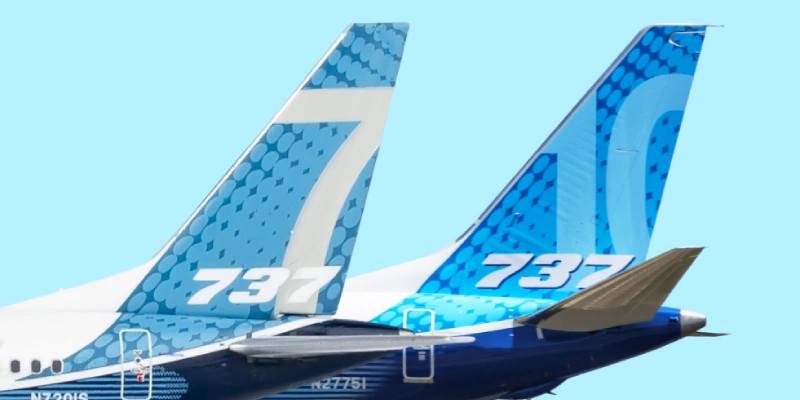




The certification of the Boeing 737 MAX 7 and MAX 10 is once again at the center of the debate in U.S. commercial aviation. This time, with a direct message from the top of the regulator: the FAA does not see itself as the obstacle preventing Boeing from achieving approval for the two pending variants of the MAX program. This was stated by Federal Aviation Administration (FAA) Administrator Bryan Bedford in remarks made this Wednesday in Washington.
“The FAA is not the hold-up”: Bryan Bedford’s Message
After a public speech, Bedford was clear with reporters: the FAA has dedicated significant resources to assist Boeing in the certification process for the MAX 7 (the smallest in the family) and the MAX 10 (the highest capacity). However, he drew a precise boundary for the regulator’s role.
“We can help get them there, but they have to do the work, and they are doing it. I don’t believe the FAA is the obstacle to certifying the -7 and the -10,” Bedford stated.
This comment shifts the focus onto the manufacturer itself, in a context where every additional delay has financial and operational impacts for customers and suppliers.
Current Status of the Program: Progress, but No Dates
Earlier this month, Reuters reported that the FAA approved the 737 MAX 10’s move to the second phase of flight testing, citing a source familiar with the program. This is a relevant technical step, although it does not, by itself, imply a definitive certification date.
From Boeing, executives have previously reiterated that they expect to complete the certification of the MAX 7 and MAX 10 within this year, although without offering a detailed public timeline. This lack of precision remains a point of attention for airlines and analysts.
→ Boeing delivered 600 commercial aircraft in 2025: its highest number since 2018
Commercial Weight of the MAX 10: Over 1,200 Orders at Stake
The importance of the MAX 10 goes beyond the technical. According to data from analytics firm Cirium, Boeing has accumulated over 1,200 orders for this variant in its backlog. For many airlines, the aircraft is key as a replacement for higher-capacity models within the single-aisle segment.
A concrete example came this month: Alaska Airlines ordered 105 MAX 10 units, and its CEO, Ben Minicucci, publicly expressed his confidence that the aircraft will be certified this year. This support is significant in an environment where fleet commitments are often conditional on regulatory certainty.
Everett, Industrial Bet for the MAX 10
Parallel to the certification process, Boeing is advancing with the industrial preparation of the program. The 737 MAX 10 will be assembled in Everett, Washington, on a new line known as the “737 North Line.”
This decision is not coincidental: the MAX 10 is too long to be assembled efficiently at the historic Renton plant, where Boeing has produced the 737 since 1966.
This move reinforces the signal that Boeing is preparing for a potential entry into service, although certification remains the critical milestone.
Delays: Engine Anti-Ice System
The road has not been linear. Boeing has faced delays in the certification of the MAX 7 and MAX 10 due to a problem with the engine anti-ice system, a technical aspect sensitive from a safety perspective.
On the production front, there was positive news in October, when the FAA authorized Boeing to increase 737 MAX production to 42 aircraft per month, lifting the cap of 38 units that had been in place since January 2024. Nonetheless, the pace remains under strict regulatory supervision.
Reforms to the Certification Process: An Open Debate
Both Bryan Bedford and his predecessor, Mike Whitaker, have agreed on the need to reform the aircraft certification process in the United States. Bedford revealed that the FAA is working on several “Skunk Works” type projects with the industry, aiming to analyze how to streamline processes, although he avoided jumping to conclusions.
“I’m not going to prejudge the outcome,” the FAA administrator said.
With the FAA rejecting the role of bottleneck and Boeing advancing in parallel on testing, production, and industrial preparation, the focus now falls on the manufacturer’s ability to close the pending technical items. The industry is watching closely: the outcome for the MAX 7 and MAX 10 will be a key test of the new relationship between Boeing and its regulator, and a confidence thermometer for the future of the 737 program.
Related Topics
FLYONE Armenia Firms Up Order for Two Airbus A321neos
Airbus A350F Successfully Completes Maiden Flight, Kicking Off Certification Campaign

Airbus Expects Drop in September Deliveries Following Quality Issue on A321neo
Airbus Detects Quality Issue on A321neo
Plataforma Informativa de Aviación Comercial con 13 años de trayectoria.