Jeju Air and Muan Accident: When Airport Infrastructure Becomes Lethal Factor





A report commissioned by the South Korean government has introduced a critical turn in the investigation of the Jeju Air accident that occurred in December 2024 at Muan International Airport. According to preliminary technical conclusions, the crash that claimed 179 lives might not have been fatal had it not been for a concrete structure located at the end of the runway, which did not comply with international safety standards.
This revelation, disclosed by an opposition legislator who is a member of the parliamentary special committee on the case, reopens the debate on the responsibility of airport infrastructure and increases political and social pressure on the country’s aviation authorities.
An Emergency Landing That Should Not Have Ended in Tragedy
The Jeju Air flight, operated by a Boeing 737-800 arriving from Bangkok, performed a belly landing following an emergency on approach to Muan. The aircraft overran the runway and violently collided with a concrete mound that supported an ILS system localizer antenna, leading to the destruction of the plane and the death of nearly all on board.
The only survivors were two cabin crew members located in the rearmost section of the fuselage, a fact consistent with the impact dynamics described in the report.
Structural Simulations: The Initial Impact Was Not Lethal
770 Meters That Change Everything
According to a technical simulation conducted by a South Korean structural engineering institute and cited in the document, the initial impact of the aircraft with the runway was not severe enough to cause serious injuries. In the absence of the concrete obstacle, the 737 would have slid approximately 770 meters before coming to a complete stop.
The conclusion is stark: all occupants could have survived if the aircraft had not hit that rigid structure.
A Poorly Designed Antenna
The report also notes that if the navigation installation had been mounted on a frangible structure, as recommended by international regulations for critical safety areas (Runway End Safety Areas, RESA), the aircraft would have passed through a perimeter fence with minor damage and light injuries.
A Known Irregularity for Decades
Legislator Kim Eun-hye, who made the existence of the report public, stated that the concrete mound was built in 1999 and had violated regulations from its inception. Despite being identified for years as an unsafe element, it was never removed.
For Kim, the accident is the result of prolonged government negligence, rather than a one-time operational failure.
Political Pressure and Demands from the Families
The victims’ families have intensified their demands for transparency and accountability, accusing authorities of delaying the publication of key analyses. A representative of the victims’ association described the report as “solid proof that the disaster was man-made,” and demanded a formal apology for the alleged concealment of information.
The Aviation and Railway Accident Investigation Board (ARAIB), the agency leading the official investigation, has not yet published the full report or issued final conclusions.
What Is Known: Bird Strikes and Cockpit Decisions
In a preliminary report published in January 2025, the ARAIB confirmed that both of the aircraft’s engines suffered bird strikes. Subsequently, in a July update—which was not made public due to objections from the families—investigators indicated that the pilots shut down the less damaged engine after the bird strikes.
This point, highly sensitive from an operational and crew training perspective, still lacks a detailed public analysis.
Inconclusive Investigation and Closed Airport
The structural report does not yet constitute an official conclusion of the accident. The publication of the final report remains pending, even though authorities missed the one-year deadline for presenting a progress report.
Meanwhile, Muan Airport has remained closed since the accident and is not scheduled to reopen until April, adding economic and operational impact to a region already facing heavy scrutiny.
Beyond South Korea, the Jeju Air accident poses an uncomfortable question for airports and regulators worldwide: How many inherited critical infrastructures still fail to meet modern standards and are just waiting for an event to reveal their real risk?
The answer, for now, remains pending.
Related Topics

Madrid-Barajas Airport Tops 6.3 Million Passengers in September, Consolidating Operational Growth
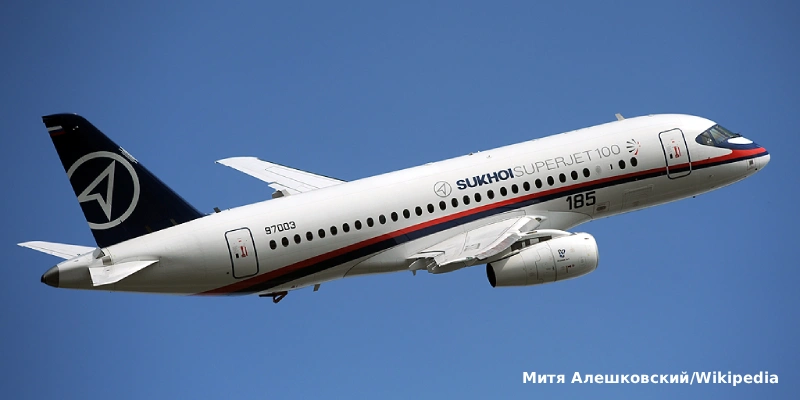
Russia Extends Superjet 100 Service Life to 20 Years

ITA Airways and Venezuela Sign Agreement to Resume Direct Flights Between Rome and Caracas Starting March 2027

Heathrow Expansion Push Reaches Parliament: A £33 Billion Investment to Unlock Connectivity

Plataforma Informativa de Aviación Comercial con 13 años de trayectoria.