
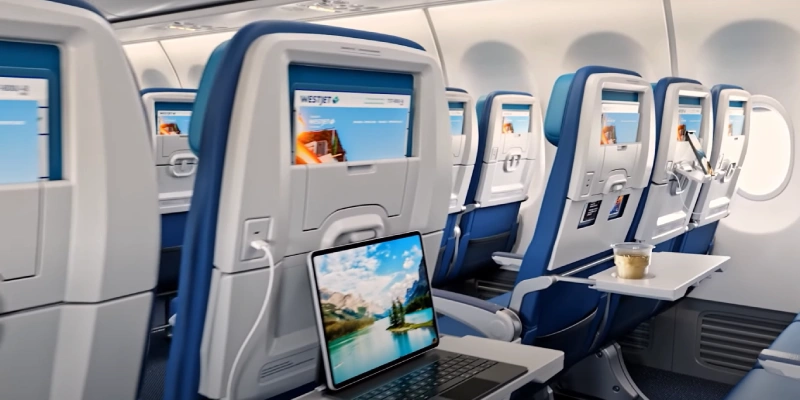
WestJet has decided to adjust its cabin configuration strategy after analyzing operational data and direct feedback from passengers and employees. The Canadian airline confirmed it will remove one row of seats from a limited portion of its fleet, returning to the previous standard seat pitch in economy class on aircraft that had been recently densified.
This move marks a turning point in an initiative that sought to align WestJet with common densification practices in other markets but ultimately did not meet its customer base’s expectations.
From Trial to Correction: What Changed and Why
Over recent months, WestJet had implemented higher seat density in a specific portion of its fleet, following models used by multiple airlines globally to sustain lower fares. However, after an internal review combining operational data, passenger comments, and staff (“WestJetters”) experience, the company concluded the product was not aligned with its customers’ needs.
“As an entrepreneurial airline founded to make air travel more accessible, it is in our DNA to test new products. But it is equally important to react quickly if they don’t meet our guests’ expectations,” stated Alexis von Hoensbroech, CEO of the WestJet Group.
→ SAS and WestJet Expand Cooperation with New Codeshare Agreement
Accelerated Timeline and Early Decision
WestJet had paused the reconfiguration plan in December, intending to complete the evaluation of the new interior by mid-February. However, the company decided to accelerate the process to provide clarity sooner than planned and respond more swiftly to the feedback received.
This acceleration is significant in industrial terms: modifying a cabin layout involves engineering processes, certifications, and operational planning that typically extend over time.
Technical Impact: From 180 to 174 Seats
Once the corresponding engineering certification is obtained, WestJet will begin converting aircraft configured with 180 seats to a 174-seat layout, removing one full row in economy class. The airline clarified that the completion timelines are still being defined.
From a technical and regulatory standpoint, the company emphasized that all interior modifications are managed under the highest standards of safety and engineering rigor, with multiple phases preceding operational implementation.
What Doesn’t Change: Investment in Product and Onboard Experience
Although densification is being reversed, WestJet is not abandoning its modernization strategy. The airline confirmed it continues to evaluate other aspects of the new layout while broader investments in cabin reconfiguration progress, including:
- Refreshed interiors
- Enhanced amenities
- Modernized design
All of this is part of a stated commitment to a more contemporary onboard experience, while maintaining cost discipline and a focus on reliability and fare accessibility.
Strategic Reading: A Signal to the Market
Beyond the number of seats, the decision sends a clear message to the Canadian market and the industry: WestJet is willing to correct quickly when a low-cost initiative conflicts with passenger perception of value.
“WestJet was founded as a guest-focused airline. In that spirit, we will take what we’ve learned to continue being innovative and cost-disciplined, without losing sight of what our customers and our people expect from us,” concluded von Hoensbroech, also highlighting the staff’s role during the process.
Related Topics
Panama: Tocumen Airport Surpasses 17.8 Million Passengers Between January and September 2026
Emirates and El Dorado Airport Conduct Colombia’s First Travel Rehearsal for Individuals on the Autism Spectrum
Argentine Airports Record All-Time Passenger Traffic High in September

US Lawmakers Demand FAA Halt Use of New AI Tool in Washington Airspace


Plataforma Informativa de Aviación Comercial con 13 años de trayectoria.