
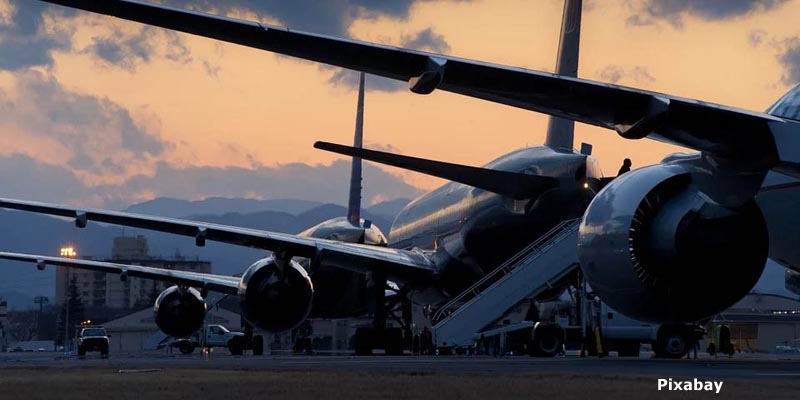
The global commercial aviation industry has entered a paradoxical and structurally complex phase: passenger demand is reaching historic highs, yet the industry continues to operate under severe supply constraints that are no longer perceived as a temporary anomaly, but rather a persistent condition. Airline executives, manufacturers, and suppliers agree on a troubling diagnosis: supply chain chaos is becoming the industry’s “new normal”.
This phenomenon, clearly outlined during the Singapore Airshow and in statements reported by Reuters, is forcing a rethink of operational, financial, and even industrial strategies at every level of commercial aviation.
An Incomplete Recovery After the Pandemic
Years after the initial impact of COVID-19, the aerospace industry has yet to normalize its industrial workflows. Delivery delays from Airbus and Boeing, primarily caused by bottlenecks at engine manufacturers and critical component suppliers, are forcing airlines to keep older, less efficient aircraft in service longer than planned.
Jeffrey Lam, President and COO of Commercial Aerospace at ST Engineering—the world’s largest provider of airframe maintenance, repair, and overhaul (MRO) services—was categorical in describing the situation: prolonged delays and bottlenecks “seem to have become the new normal,” a condition he described as “completely unacceptable”.
Rising Costs and Aging Fleets: The Operational Price of Delay
The direct consequence of this disruption is economic. To absorb demand, airlines are operating their aircraft approximately two years beyond their historically planned service life, according to data from the International Air Transport Association (IATA).
This decision, driven by necessity rather than strategy, has a significant financial impact:
- Increased fuel consumption
- Rising maintenance costs
- Greater dependence on engine leasing
- Expansion of spare parts inventories
Collectively, IATA estimates these factors increased industry costs by approximately $11 billion in 2025. Willie Walsh, Director General of IATA, expressed his frustration openly, stating that the volume of additional costs “makes it clear that it is time for key suppliers to catch up and improve the situation”.
→ Rolls-Royce Defends Engine Pricing Amid Airline Criticism
Record Demand: The Engine Aggravating the Crisis
Far from easing the pressure, the market is accelerating. Global passenger air traffic in 2025 exceeded 2019 levels by 9.3%, marking a historic record, with a further growth projection of 4.9% for 2026.
While celebrated from a commercial standpoint, this growth has surpassed any pre-pandemic industrial forecast, overwhelming the supply chain’s capacity to respond. Gaël Méheust, CEO of CFM International, summarized the dilemma with technical precision: the industry has indeed managed to increase production, but demand has reached “unimaginable” levels. CFM—a joint venture between GE Aerospace and Safran—increased its production by 25% in 2025, with further growth plans of at least 10% annually. Even so, the imbalance persists.
Engines, Materials, and Lead Times: Industrial Bottleneck
The problem is not limited to final assembly; lead times for critical components have skyrocketed. ST Engineering notes that while manufacturing an engine nacelle may take only six weeks, the total supply lead time for materials and components now extends to one year, compared to nine months before the pandemic.
Even preventive strategies, such as placing advance orders to secure inventory, are losing effectiveness. According to Lam, some parts are simply unavailable on the global market, regardless of how far in advance one attempts to purchase them.
Geopolitical Factor: Critical Materials Under Pressure
A high-impact geopolitical component adds to this equation. The war in Ukraine has restricted access to strategic materials, specifically titanium and nickel tubing, which are essential inputs for manufacturing aircraft engines. Before the conflict, Russia accounted for nearly 50% of the world’s titanium supply. The disruption of this flow has further strained an already weakened chain.
Paul Wingfield, account manager at Future Metals (a Berkshire Hathaway subsidiary), detailed that current lead times for these materials range between 50 and 60 weeks. While this is a slight improvement from the 60–70 weeks seen the previous year, it remains far from the 20 weeks considered normal before the pandemic. The structural issue is clear: plants reduced production for four years, and as global demand reactivated simultaneously, supply simply cannot keep up.
Defensive Strategies of Airlines
Faced with this scenario, airlines are adopting unusual measures. Scoot, the low-cost subsidiary of Singapore Airlines, is acquiring additional spare engines with its own resources to mitigate the risk of Aircraft on Ground (AOG) situations resulting from technical failures or maintenance delays. CEO Leslie Thng acknowledged that these decisions raise costs but are necessary to protect operational continuity in an environment where engine availability can no longer be taken for granted.
Unexpected Winners in a Distorted Market
Not all players are losing. The disruptions have also opened opportunities for alternative suppliers, particularly outside the traditional Western ecosystem.
A clear example is Shandong Stopart Brake Material, a Chinese manufacturer of carbon brake discs. According to its sales engineer, Feng Haotian, the difficulties some clients faced in obtaining parts from Western manufacturers prompted the company to double its international sales in the last year. The price differential is significant: a set of four Stopart brake discs costs between 200,000 and 300,000 yuan ($27,400 to $41,100), approximately half the price of equivalent products. For some operators, the choice is no longer strategic, but forced: either diversify suppliers or assume greater operational risks.
The takeaway is clear: the aviation industry is not facing a transitory crisis, but a structural transformation of its supply chain. The combination of record demand, limited industrial capacity, and persistent geopolitical tensions is redefining the rules of the game.
Related Topics

Panama: Tocumen Airport Surpasses 17.8 Million Passengers Between January and September 2026

Emirates and El Dorado Airport Conduct Colombia’s First Travel Rehearsal for Individuals on the Autism Spectrum
Argentine Airports Record All-Time Passenger Traffic High in September

US Lawmakers Demand FAA Halt Use of New AI Tool in Washington Airspace


Plataforma Informativa de Aviación Comercial con 13 años de trayectoria.