Report Criticizes FAA Oversight of United Airlines’ Maintenance Practices
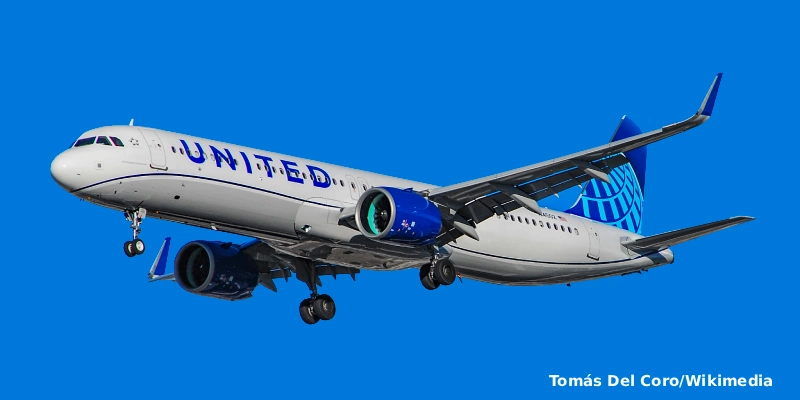




A recent report suggests that the Federal Aviation Administration’s (FAA) oversight of United Airlines’ maintenance practices faces structural limitations that compromise its effective surveillance capabilities.
These findings were concluded in a report published Friday by the U.S. Department of Transportation’s Office of Inspector General (OIG). The document points out that the regulator’s oversight is hampered by staffing shortages, inadequate training, and difficulties in accessing critical operator data. This comes at a time when the airline has been under increased scrutiny following a series of safety incidents.
A Surveillance System Under Structural Pressure
The audit was announced in early 2024, after the FAA intensified its supervision of United following several operational safety events. According to the OIG report, the regulator’s current oversight capacity is “insufficient to oversee safety risks”.
Among the most significant findings is a 33% vacancy rate in the FAA certificate management office responsible for United, an office that has also experienced high staff turnover. The report is direct: the failure to fill vacancies in a timely manner and a lack of planning for upcoming retirements have left the office “understaffed and without adequate resources to meet its surveillance responsibilities”.
In some instances, due to the shortage of inspectors, the agency conducted inspections virtually rather than postponing them—a practice the OIG characterizes as a result of current operational limitations.
United’s Boeing 737 Fleet: The Greatest Oversight Challenge
The report places a particular focus on the oversight of United’s Boeing 737 fleet, which includes the MAX 8 and MAX 9 variants.
- Currently, the FAA has only four inspectors assigned to oversee approximately 521 Boeing 737 aircraft.
- These aircraft represent more than half of United Airlines’ total fleet.
- Due to this constraint, the agency has had to pull inspectors assigned to other aircraft types to cover surveillance tasks for the 737 family.
The contrast is stark: for United’s Boeing 767 fleet—consisting of only 53 aircraft—the FAA has three assigned inspectors. The OIG concludes that “resources are not sufficient to fulfill all required surveillance of the Boeing 737 fleet,” a claim that carries significant weight given the model’s operational importance within the airline’s domestic and international networks.
FAA Official Response and Conclusion of Enhanced Oversight
When asked about the findings, the FAA pointed to a letter included in the OIG report. In the letter, the agency acknowledges the need for a more systemic approach to strengthen inspector capabilities. It also ensures that additional measures will be implemented to maintain proper staffing levels to meet oversight requirements.
Notably, in October 2024, the FAA announced it had not detected significant safety issues following its review of United Airlines. Consequently, it ended the enhanced oversight process that had previously restricted the airline’s ability to add new aircraft and services.
A Broader Context of Scrutiny
The OIG has previously questioned the FAA’s oversight of other airlines. Concurrently, the National Transportation Safety Board (NTSB) determined in January that systemic FAA failures contributed to a mid-air collision in January 2025. That accident, involving an American Airlines regional jet and a U.S. Army helicopter, resulted in 67 fatalities.
While this specific report focuses exclusively on United Airlines, the institutional backdrop increases pressure on the FAA to overhaul its internal processes for resource allocation, training, and risk management. The progress of the measures promised by the FAA will be vital in determining if the regulator can close identified gaps and restore confidence in its oversight system.
With information from Reuters.
Related Topics

American Airlines to Build Network’s Largest Admirals Club at Charlotte

British Airways Launches Multi-Million-Pound Heathrow Airport Lounge Transformation
Venezuela Opens Temporary Domestic Arrivals Terminal at Maiquetia Airport
Caracas and Margarita Airports Have Potential to Attract Private Investment but Require Legal Certainty, Says ACI-LAC

Plataforma Informativa de Aviación Comercial con 13 años de trayectoria.