

The Donald Trump administration’s decision to reconfigure its tariff policy is once again altering the aerospace trade landscape. This time, the move has an immediate impact on Embraer, U.S. airlines, and the sector’s industrial ecosystem.
Under the new regime announced Tuesday, commercial aircraft, engines, and aerospace parts will be exempt from the temporary 10% global tariff—later announced at 15%—imposed under Section 122 of the Trade Act of 1974. This change replaces the tariffs that had been struck down on Friday by the U.S. Supreme Court.
Beyond a technical adjustment, the move redefines the competitive environment in the world’s largest executive and regional aviation market.
Broad Exemption and Competitive Rebalancing
The exclusion of the aerospace sector is broader than the already generous exemptions previously applied to major exporters to the United States under prior trade agreements, including the European Union, the United Kingdom, Japan, Canada, and Mexico.
In the case of Brazil, the context is particularly relevant. Last July, Trump imposed a 50% tariff on most Brazilian products in response to what he termed a “witch hunt” against former President Jair Bolsonaro. Although aircraft were excluded from the most severe levy, U.S. importers of Embraer executive and regional jets still faced a 10% tariff.
The new exemption eliminates that cost, correcting a competitive disadvantage against manufacturers such as Bombardier (Canada) and Dassault (France), whose private planes entered the U.S. duty-free.
Katie DeLuca, a Florida-based attorney specializing in private aviation and partner at Harper Meyer, described the measure as “very encouraging and quite good news for our industry” during a webinar organized by the National Business Aviation Association (NBAA).
Strategic Coincidence: Evolution of the Praetor
The announcement coincides with a key industrial move. This same Tuesday, Embraer confirmed the launch of a new variant of its Praetor executive jet family, originally introduced in 2018. This marks the first evolution of the program since its entry into service.
The elimination of the levy comes, therefore, at a sensitive commercial moment, as the product update can benefit from a more favorable import environment in the United States.
Impact on U.S. Regional Airlines
The effect is not limited to executive aviation; U.S. regional airlines are also watching the window opened by the exemption.
Last July, Alaska Airlines reported receiving two E175s after a brief delay related to the tariff context. This week, it noted that its next E175 delivery is scheduled for the summer, indicating it has time to evaluate how the pricing landscape evolves. SkyWest Airlines and American Airlines also have orders for the E175.
Industry sources suggest that U.S. companies could accelerate the import of Embraer regional jets while the exemption remains in effect.
Tobias Kleitman, president of TVPX—a U.S. company providing fiduciary and customs services—stated during the NBAA seminar:
“Now it seems we have at least a window in which we can import these aircraft duty-free. The question is how long that window will last. But it is a surprising change.”
Uncertainty Persists: Section 232 Investigation
Despite the immediate relief, the sector is not breathing entirely easily.
Dave Hernandez, an executive aviation attorney at the law firm Vedder, warned that the Trump administration is maintaining separate investigations into Brazil’s trade practices and the aerospace sector. Additionally, U.S. tariffs on steel and aluminum continue to drive up the final costs of aircraft, engines, and components.
“It is excellent that aircraft, engines, and parts are exempt under Section 122, but there remains a real concern that steel and aluminum tariffs are increasing the final cost,” Hernandez noted.
In parallel, the Department of Commerce is evaluating potential national security risks under the so-called Section 232, an investigation that could enable the imposition of tariffs on imported planes, engines, and parts.
Alex Krutz, managing director of the consultancy Patriot Industrial Partners and former Deputy Assistant Secretary for Manufacturing at the Department of Commerce, considers it unlikely that the investigation will result in generalized tariffs on the aerospace sector. “Internally, it is recognized that the aerospace industry is a net exporter,” he stated.
In an environment where trade policy shifts rapidly, the U.S. aerospace sector is moving between immediate relief and strategic caution. For Embraer, the turn represents a tangible competitive boost. For regional airlines, an operational opportunity. For the industry as a whole, it is a sign that aviation continues to hold a unique place within Washington’s trade policy.
The window is open. The question is for how long.
With information from Reuters
Related Topics

Boeing Posts Best Month of 2026 With 57 Aircraft Delivered in September
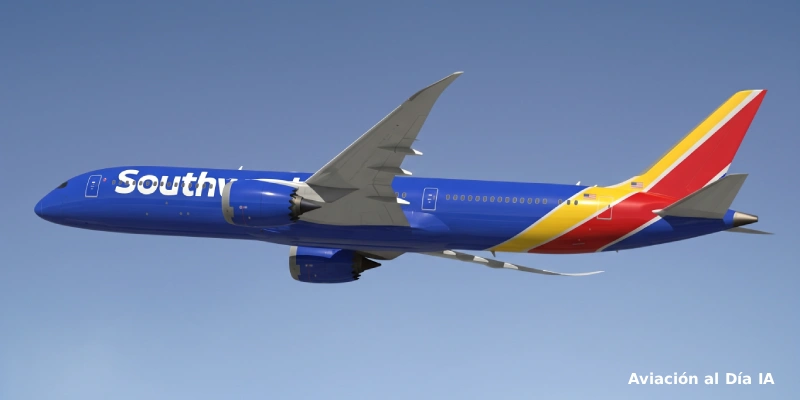
Southwest Airlines Evaluates Widebody Aircraft, Eyes Boeing 787

Avolon Orders 250 Aircraft from Airbus and Boeing

FAA Clears Path for Boeing 737 MAX 10 Certification After Dismissing Flight Software Safety Risks


Plataforma Informativa de Aviación Comercial con 13 años de trayectoria.